|
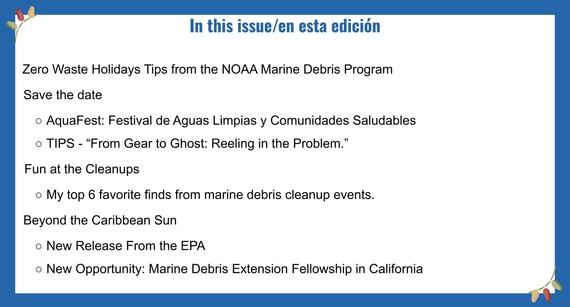
Zero Waste Holidays Tips from the NOAA Marine Debris Program
By Madison Piascik, Digital Communications Specialist NOAA Marine Debris Program | Lynker
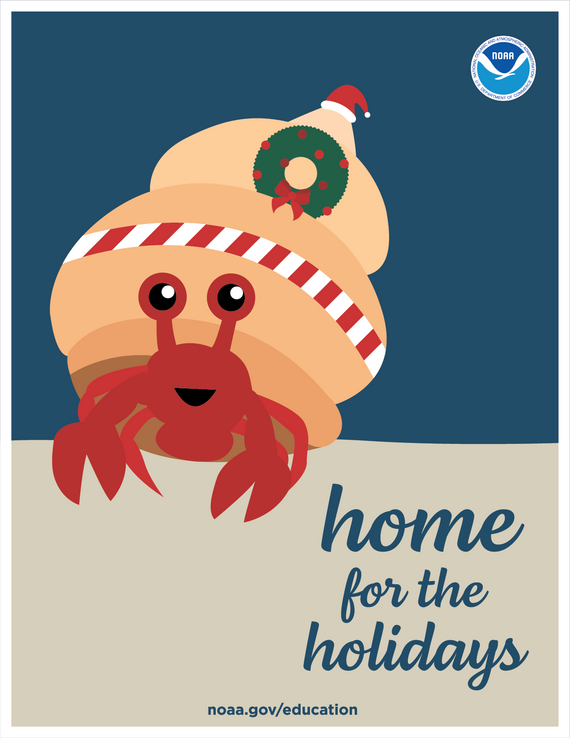
It's the season of giving! Gift wrapping, shipping packaging, and gifts themselves often result in large sums of waste that can end up in our oceans and Great Lakes.
This holiday season, the NOAA Marine Debris Program has thought of everyone on your list for a debris-free gift exchange. We hope that these ideas spark creativity for the friends and family you’re shopping for this year! Many of these gift ideas can be personalized without creating marine debris and tailored to anyone special in your life.
As you make your list, and check it twice, these Debris-Free Gift Guides will make your holidays greener!
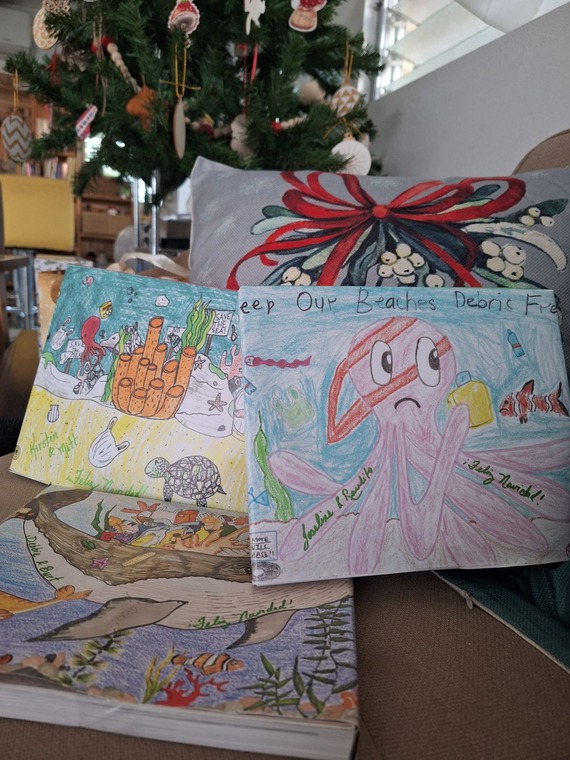 You can use old calendars to wrap your gifts. (Photo credit: NOAA).
|
|
AquaFest: Festival de Aguas Limpias y Comunidades Saludables
Con el lema “Unidos por la Prevención de la Contaminación Acuática” el equipo del AquaFest está listo para recibirlos el 7 de diciembre desde las 10AM en Finca Higuaca en la primera edición del festival que tiene los siguientes objetivos:
- Concientizar sobre los desechos acuáticos y su impacto en el medio ambiente.
- Involucrar a la comunidad en actividades prácticas y talleres educativos.
- Promover prácticas y soluciones sostenibles para reducir los desechos acuáticos.
- Fomentar la colaboración entre organizaciones locales y partes interesadas en los esfuerzos de conservación de los océanos.
Esta primera edición del festival está siendo organizada por distintas organizaciones ambientales y se celebrará el 7 de diciembre a partir de las 10AM en los predios de la Finca Higuaca en Cabo Rojo, Puerto Rico.
Durante el AquaFest, los participantes podrán gozar de una variedad de actividades educativas y recreativas, incluyendo:
- Charlas informativas sobre la importancia de mantener las aguas limpias y la implementación de la Ley 51-2022.
- Talleres de reúso y reciclaje, dirigidos a fomentar prácticas sostenibles en el manejo de residuos.
- Bioblitz
- Exposiciones de artesanos locales, quienes mostrarán productos elaborados con materiales reciclados y reusados.
- Presentaciones de música en vivo por Yulfo, Flor de Viento, Lizbeth Román y bomba de Estudio 353, ofreciendo un ambiente festivo y atractivo para todas las edades.
Las mesas educativas, presentaciones, talleres y bioblitz durante la actividad estarán a cargo de varias organizaciones e individuos incluyendo a: Alelí Environmental, AmandOcéano, Alianza Para las Aguas Limpias, BoriCorps, Centro Educativo de Riesgos Costeros de la Escuela Montessori La Parguera, Chelonia Investigación y Conservación de Tortugas Marinas, Escuela CIMATEC, Clearwaters, Conservación ConCiencia, Conservación Costera, Conservation Opportunity, Coalición Restauración Ecosistemas Santurcinos, DRNA -Programa de Corales, Estuario de la Bahía de San Juan, Finca Higuaca, Hongos de Puerto Rico, IslaMar Expeditions , HJR Reefscaping, Museo del Reciclaje, NOAA Marine Debris Program, Por Onza en Cabo Rojo, Protectores de Cuencas, PR Recycling Partnership, Roots & Shoots, Scuba Dogs Society, Puerto Rico Sea Grant, Sierra Club, Smithsonian Institution, Taller Ecológico de Puerto Rico, Universidad de Puerto Rico en Mayagüez, U.S. Virgin Islands Department of Planning and Natural Resources.
Para más información visita la página del evento o accede a Facebook e Instagram. Comunicate con Fabiola Torres de Conservation Opportunity (ftorres@conservationopportunity.org) para más información.
Esta iniciativa surge como una acción identificada dentro del marco del Plan estratégico de Puerto Rico para reducir los desechos acuáticos, publicado por la NOAA y EPA, pero liderado por distintos grupos alrededor de la isla. Además cuenta entre sus auspiciadores con el Marine Debris Foundation.
La mesa de NOAA Marine Debris tendrá disponible varias copias del calendario 2025 durante la actividad. ¡No te quedes sin la tuya!
|
|
Save the Date!
TIPS - “From Gear to Ghost: Reeling in the Problem.”
|
|
 Promoción de la campaña que busca unir esfuerzos entre distintas organizaciones. (Imágen proporcionada por Estuario).
|
|
|
Tropical Islands Partnering on Solutions for Marine Debris (TIPS) is a bimonthly online webinar series hosted by the NOAA Marine Debris Program. The goal of the TIPS series is to help tropical island communities connect and share perspectives from across the tropics on common marine debris issues and proposed solutions.
Join us on December 10th at 4pm AST (Caribbean time) for our next webinar, “From Gear to Ghost: Reeling in the Problem.” Speakers from Florida, the Caribbean, and the Pacific Islands will discuss their work on mitigating abandoned, lost, or otherwise discarded fishing gear. Register here.
If you’re interested in learning more about TIPS or watching past webinars, you can visit our website or subscribe to our newsletter.
|
|
|
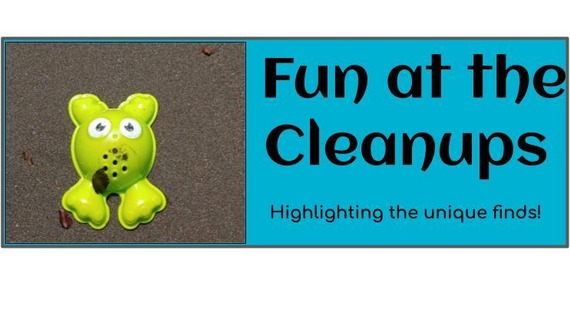
We want to see the unique (aka weird) items you have found during your cleanups or walks on our Caribbean beaches. Please submit them to me at yaritza.rivera@noaa.gov with a short explanation and photo credits.
|
|
My top 6 favorite finds from marine debris cleanup events
By Allie Durdall MSc., Program Manager GRROE USVI mangroves, Center for Marine and Environmental Studies, University of the Virgin Islands
I have been a part of many marine debris cleanup over my years as a marine scientist in the U.S. Virgin Islands. My experience started as many volunteers do, at sandy beach cleanup events during Ocean Conservation’s ‘International Coastal Cleanups’, organized locally by the Virgin Islands Marine Advisory Service. As a volunteer at those events, I was introduced to the importance of data collection during marine debris removals, but also to how fun and rewarding a cleanup can be. I couldn’t get enough, so my experience evolved as I became part of the planning team that put on the first “Great Mangrove Cleanup” in the territory in 2018—an event that has since grown to host annual cleanups in mangroves across all three islands. And most recently, with support from the NOAA Marine Debris Program, the Forgotten Shorelines project was born, taking our cleanups beyond the waves to offshore cays around the territory.
In every flavor—beach, mangrove, offshore cay—I love these events. It is inspiring to see the community gather with a shared purpose around a pervasive and unsightly issue. It brings me hope to see the difference that we can make in these environments in such a short time. And, true to my science background and training, I also love the data that volunteers collect. Working with my team, we have used this data to create infographics that highlight the types of debris that aggregate on our coasts year after year. Trends in the data give us a platform to advocate for policy and behavior changes to reduce the new debris coming in. Already, data from these events have been incorporated in educational curricula and territorial management plans.
The data collected is powerful, but it is also fun! My favorite thing about these cleanup events is seeing the “weird finds.” We even have a special place on our data sheets dedicated to the documentation of the strangest objects found. Over the years, I myself have found many strange objects. Without further ado, in my opinion, here are the best (and weirdest!) things I’ve found during USVI marine debris cleanups.
 |
|
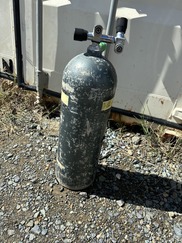
6. Coming in at number 6 is an old SCUBA tank. This fella was buried in the mangroves of Coral Bay on St. John. As a diver myself, I was immediately excited by the find. But I take points off because it was quite bulky, and unfortunately non-operational. The tank now has a full-time job as a door stop at the Marine Science Center at UVI, where he serves us well. |
 |
|
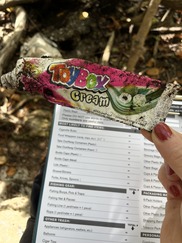
- Next we’ve got this anomaly: “TOYBOX CREAM.” This was found on Ruth Cay of St. Croix, and I honestly have no idea what it is. The ingredients like “chocolate hazelnut cocoa” descriptors led me to believe that it was at some point edible. The different languages make me think it likely drifted to our shorelines from somewhere else—this is rare to find on USVI debris and a cool observation in itself. But what is it? It makes the list for its ridiculous name and the intrigue of the mystery surrounding it. Part of me wants to know, but part of me hopes it’s forever an enigma because sometimes that is just more fun.
|
The top four items for me get the unique honorific of a place on my desk at the University of the Virgin Islands.
 |
|
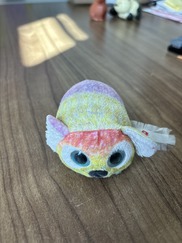
4. Coming in at number 4 is the rainbow pastel gerbil. This adorable—albeit slightly dingy—marine debris find was a test of my faith in its potential. Like most things found at mangrove cleanups, when I first came across this in the Vessup Bay mangroves on St. Thomas, it was completely covered in mud. The only tell-tale sign of its cuteness potential were its big blue eyes, begging me to give it another shot at life. I took it home, and after many washes, was pleasantly surprised to unveil its rainbow colors. |
 |
|
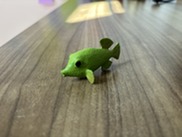
3. Third on the pyramid is this little green fish. It is small, it is cute, it was easy to clean up, and at the time I found it, green was my favorite color. A very good marine debris find overall. Its perpetually pouty, kissy lips make me feel loved. What more can I say? |
 |
|
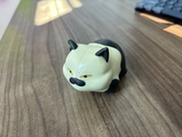
2. In second place: a sassy Siamese cat. It is hard to top the little green fish, but this sassy Siamese cat for me is an easy winner. I love her ceaseless scowl—the endless grumpiness endears her to me. She’s got a personality. She’s got stories. The nick out of one of her little ears is evidence of that—although she’ll never tell. A woman of mystery and intrigue, it took me several weeks of owning her to realize that she also has a secret surprise squirt gun feature?! Amazing. |
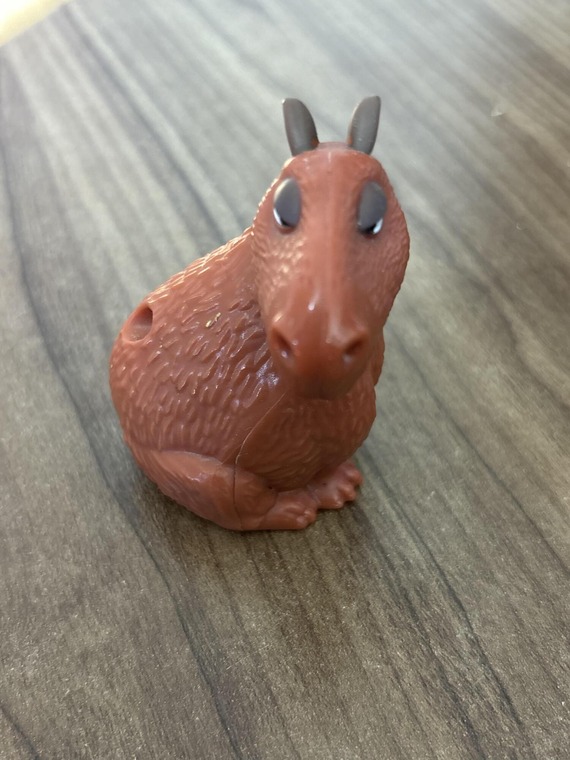
1. And coming in at number one, the top of the pyramid, is Mr. Capybara. What is not to love about him? His half-closed eyelids lend to many interpretations of mood. Is he sleepy? Is he sultry? Is he irritable? The posture and tuck of his feet seems cozy and cute, and it’s hard not to be a fan of the little pointed ears. But what delights me most about Mr. Capybara is that he was actually a surprise present from a mystery friend. Left on my desk with a note that he was found at a beach cleanup event, and that it was his destiny to live among my desk marine debris guardians.
And for me, that is the beauty of these marine debris cleanups and why they still energize me after all these years. They bring people together! So get out there and sign up for one in your community. Who knows what fun experiences (and potential strange treasures) are waiting for you?
|
|
New Release From the EPA
The United States Environmental Protection Agency released the “National Strategy to Prevent Plastic Pollution,” outlining opportunities for action to protect communities from the impacts of plastic production and waste and detailing how government agencies, businesses, non-profits, and communities can take additional action to prevent plastic pollution.
Learn more here
New Opportunity: Marine Debris Extension Fellowship in California
Apply by December 16, 2024 5:00 PM Pacific
California Sea Grant and the NOAA Marine Debris Program are soliciting applications for a 2-year fellowship to support the NOAA Marine Debris Program’s work in California and assist with the planning and implementation of the next iteration of the state’s Ocean Litter Prevention Strategy (OLS).
Trash and plastic pollution are entering the environment and impacting local communities at unprecedented rates. Solutions to manage this debris must be implemented to protect not only oceans and coastlines, but also the human communities that live amongst this degradation. The NOAA Marine Debris Program coordinates local marine debris initiatives across the state, guides the implementation of the OLS in coordination with the Ocean Protection Council, and identifies and addresses the needs of the marine debris community. The Marine Debris Extension Fellow will work to support these efforts, including assisting in OLS workshop planning and facilitation, expanding equity efforts, coordination of multiple partners across various sectors, and informing a strategic state effort to effectively address trash and plastic pollution across California.
The hybrid position will be physically based in either Oakland or San Diego, CA and be mentored by both the Marine Debris Program’s California Regional Coordinator and the California Sea Grant Marine Debris Research Associate.
Applications are due December 16, 2024. The position is expected to begin March 2025.
Learn more and apply
|
|
The articles written by partners are not the opinions of the National Oceanic and Atmospheric Administration (NOAA) and do not imply that NOAA recommends or endorses those expressed by partner organizations. These opinions and their associated actions will be carried out by interested partner organizations and are not affiliated with NOAA or the NOAA Marine Debris Program. |
|
|
|
|