|
December/Diciembre
2023
You can subscribe to the Marine Debris in the Caribbean Newsletter on this link.
Puede suscribirse al boletín en este enlace.
We also invite you to subscribe to the NOAA Marine Debris Program Blog and Newsletter and visit the Caribbean webpage.
Take a look at the September issue of the newsletter.
Please address questions to yaritza.rivera@noaa.gov
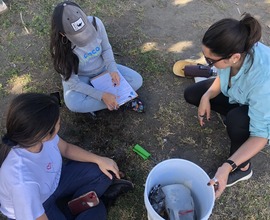 Participantes de taller de monitoreo de desechos en Mayagüez, Puerto Rico durante febrero 2023. Esta es una de las acciones completadas durante el 2023 para el nuevo Plan Estratégico de Puerto Rico sobre el cual puedes aprender más en esta edición del boletín. (Photo credit: NOAA)
|
In this issue / En esta edición
Is It Possible to Have Zero Waste Holidays? (Versión en español disponible)
¡Puerto Rico tiene un plan estratégico para el manejo de desechos acuáticos!
Queremos invitarles a participar de la reunión anual del Plan Estratégico
The 2023 U.S. Virgin Islands Marine Debris Action Plan (USVI MDAP) Stakeholder Workshop
Proyecto bajo fondos de la Ley Bipartidista de Infraestructura - Estableciendo la base para un Puerto Rico libre de desechos marinos
Marine Debris Evaluation within the Guánica Biosphere Reserve and La Parguera Natural Reserve (Versión en español disponible)
Unión de esfuerzos por la seguridad comunitaria ante desechos producidos por desastres (English version available)
Limpieza de Costas, Siembra y Rotulación Educativa en la Playa Guayanés en Yabucoa
Mangroves and NOAA’ Marine Debris Funding Brings Opportunities to Share, Connect, and Explore
Announcements: Reminder of funding opportunity and job announcement
|
|
Is It Possible to Have Zero Waste Holidays?
The answer is YES! And the good news is that it doesn’t require a lot of effort.
First of all, ask yourself: “Do I or does the person I’m giving a specific present to really need it?” Be smart in deciding on your gifts, and you will not only save money but our environmental resources.
Gifts
Get creative! Who doesn't love freshly baked cookies (or tembleque, coconut or guava tart, coquito, etc…)? Fruit trees are always appreciated in our tropical climate and we have plenty of delicious fruit in the Caribbean. Perhaps give your loved ones a certificate for a hike or dive in one of the many tropical landscapes we have around. Or how about offering to babysit for family members or friends so they can go out on a romantic dinner (or parranda)?
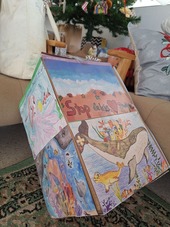
This year I got different books for my family, and guess what, I wrapped them using the Marine Debris 2023 Calendar, which expires soon (the 2024 calendar is available to download)! Please access the Marine Debris Program Guide to a Greener Holiday - Zero Waste Gifts and Gift Wrapping for more ideas.
|
|
|
Wrapping gifts in old calendars or magazines can make them look fun while helping reduce waste (Photo credit: NOAA).
|
|
|
Hosting parties
Have stickers or ribbons guests can write their names on and attach to their mugs or cups, so they can refill their drinks during the party. As an alternative you can ask your friends and family to bring their reusable ones. If you live in an area where composting is feasible, you can always use compostable ones.
You can incorporate fun activities. For example, this holiday, I’m planning to host a party with a Secret Santa component in which I will provide guests with canvas bags or aprons and fabric paints to make their own art for the gift exchange. The Marine Debris Program prepared a Guide to a Greener Holiday - Zero Waste Holiday Parties and Decorations if you need more inspiration.
|
|
|
Español:
¿Es posible tener una época de festividades basura cero?
La respuesta es SÍ. Y la buena noticia es que no requiere mucho esfuerzo.
En primer lugar, pregúntese: "¿Necesito lo que voy a comprar o lo necesita realmente la persona a la que voy a regalárselo?". Sé inteligente a la hora de decidir tus regalos, y no sólo ahorrarás dinero, sino también protegerás nuestros recursos ambientales.
Regalos
¡Sé creativo! ¿A quién no le gustan las galletas recién horneadas (o el tembleque, la tarta de coco o guayaba, el coquito, etc.)? Los árboles frutales siempre son apreciados en nuestro clima tropical, y en el Caribe abundan las frutas deliciosas. Quizás regalar a tus seres queridos un certificado para una excursión o una salida a bucear en uno de los muchos paisajes tropicales que tenemos alrededor. ¿O qué tal ofrecerte de niñero o niñera a familiares o amigos para que puedan salir a una cena romántica (o a parrandear)?
Este año compré diferentes libros para mi familia, y adivina qué, los envolví usando el Calendario de Desechos Marinos 2023, que caduca pronto (¡el calendario 2024 está disponible para descargar!). Accede a la Guía del Programa de Desechos Marinos para unas fiestas más ecológicas - Regalos y envoltorios basura cero para obtener más ideas.
Anfitrión de fiestas
Ten “stickers” o cintas en las que los invitados puedan escribir sus nombres y pegarlas a sus tazas o vasos, para que puedan rellenar sus bebidas durante la fiesta. Como alternativa, puedes pedir a tus amigos y familiares que traigan sus vasos reutilizables. Si vives en una zona donde el compostaje es factible, siempre puedes utilizar materiales compostables.
Puedes incorporar actividades divertidas. Por ejemplo, durante esta temporada de celebraciones, tengo previsto organizar una fiesta con un componente de amigo secreto en la que proporcionaré a los invitados bolsas de tela o delantales y pinturas de tela para que hagan su propio arte para el intercambio de regalos. El Programa de Desechos Marinos ha preparado una Guía para unas fiestas más ecológicas: fiestas y decoraciones basura cero, por si necesitas más inspiración.
Echa un vistazo también a la Guía para unas vacaciones más ecológicas - Planes de viaje para las fiestas si tienes pensado viajar y si te preguntas cómo celebrar el Año Nuevo sin brillo (“glitter”).
¡Puerto Rico tiene un plan estratégico para el manejo de desechos acuáticos!
El 11 de octubre de 2023 fue un día de celebración para los sobre 70 participantes que colaboraron en la creación del Plan Estratégico de Puerto Rico 2023-2028 para Reducir los Desechos Acuáticos (Plan Estratégico). Esta publicación, que está disponible en español e inglés, fue un proceso de varios pasos liderados por el Programa de Desechos Marinos de la NOAA, y varias divisiones de la EPA, incluyendo la División de Aguas de la Región 2, el Programa Aguas Libres de Basura y la División del Caribe. El Plan se enfoca en buscar soluciones a los retos identificados por los participantes (lista incluida en el plan), a través de metas y objetivos, y a través de acciones que proponen y desarrollan las partes interesadas. Aunque el Plan fue publicado, nuevos grupos son bienvenidos a participar o proponer acciones ya que éstas se revisan anualmente. Puede acceder al blog del Programa de Desechos Marinos de la NOAA para conocer más sobre el esfuerzo.
Queremos invitarles a participar de la reunión anual del Plan Estratégico
|
|
|
La reunión que está siendo organizada por NOAA MDP y la EPA se llevará a cabo entre el 17 al 19 de enero de 2024. Como objetivos para al reunión buscamos fomentar las colaboraciones y coordinación entre grupos trabajando con la finalidad de tener un Puerto Rico libre de desechos acuáticos, y revisar las acciones del 2023 para establecer acciones para el 2024.
Entre los temas a discutir estarán la implementación de leyes, recursos educativos, arte de pesca abandonados, escombros de mayor tamaño, monitoreo, entre muchos otros. Agradecemos que si le interesa participar de las actividades se comunique conmigo (Yaritza.Rivera@noaa.gov) para enviarle la forma de inscripción. Se dará prioridad a quienes se inscriban en o antes del 20 de diciembre pues los espacios serán limitados.
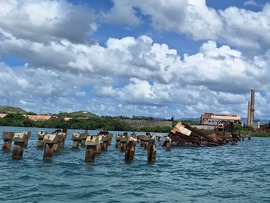 Entre los temas a discutir estarán los escombros de mayor tamaño, como este muelle azucarero en Bahía Jobos. (Photo credit: NOAA)
|
|
Agenda general:
17 de enero
- 9AM-12PM- virtual
- Reportes sobre acciones completadas en el 2023
- Identificar acciones del 2024 para la Meta de Respuesta a Emergencias y la Meta de Coordinación
- 5PM-7PM - en persona
- “Meet & Greet” en el kiosko de Arrecifes Pro Ciudad. Es una actividad informal, sin agenda, por lo que pueden llegar en cualquier momento.
18 de enero - en persona, San Juan (8:30am-4:30pm)
- AM
- Recursos, oportunidades de fondos y de colaboraciones en desechos acuáticos
- Resumen de las acciones del 2023 que están en progreso
- PM
- Identificar acciones del 2024 para la Meta de Prevención y la Meta de Remoción y Disposición: identificar acciones para el 2024
|
|
The 2023 U.S. Virgin Islands Marine Debris Action Plan (USVI MDAP) Stakeholder Workshop
by: Zola Roper, zola.roper@dpnr.vi.gov
USVI Marine Debris Coordinator, Coastal Zone Management
Department of Planning & Natural Resources
The USVI MDAP team, which included members from the Department of Planning and Natural Resources, the University of the Virgin Islands, and the NOAA Marine Debris Program, recently hosted the 2023 USVI MDAP Stakeholder Workshop in St. Thomas, USVI. The workshop was a significant gathering that highlighted key concerns and potential solutions addressed within the MDAP. Among the various discussions, the issue of Abandoned and Derelict Vessels (ADVs) emerged as a paramount concern for participants. It was suggested that a specific position be created to handle ADVs, with attendees even proposing potential funding avenues for its establishment. Furthermore, participants actively contributed by proposing actions for strategies that had previously not been addressed. There was a shared consensus that additional resources are necessary to effectively tackle these strategies, emphasizing the need for collaborative efforts and support. The workshop also proved instrumental in expanding partnerships, with new stakeholders offering fresh perspectives. Notably, a potential partner interested in waste management expressed interest in collaborating following the workshop. An important outcome was the update of strategies, allowing for a more comprehensive understanding of marine debris issues not typically on participants' radar. This provided valuable insights into the complexities surrounding marine conservation. Moving forward, several crucial steps have been outlined: (1) A summary of the workshop for partners unable to attend, ensuring wider dissemination of the discussed insights and outcomes, (2) Brainstorming sessions to devise strategies for an upcoming workshop involving legislators, aiming to garner support and action at a governmental level, and (3) The establishment of a Marine Debris Action Plan Committee to orchestrate coordinated efforts and oversee the execution of outlined strategies. The workshop served as a catalyst for meaningful dialogue and actionable steps in addressing marine debris concerns. It highlighted the importance of collaborative efforts and proactive measures in safeguarding the marine ecosystem in the US Virgin Islands.
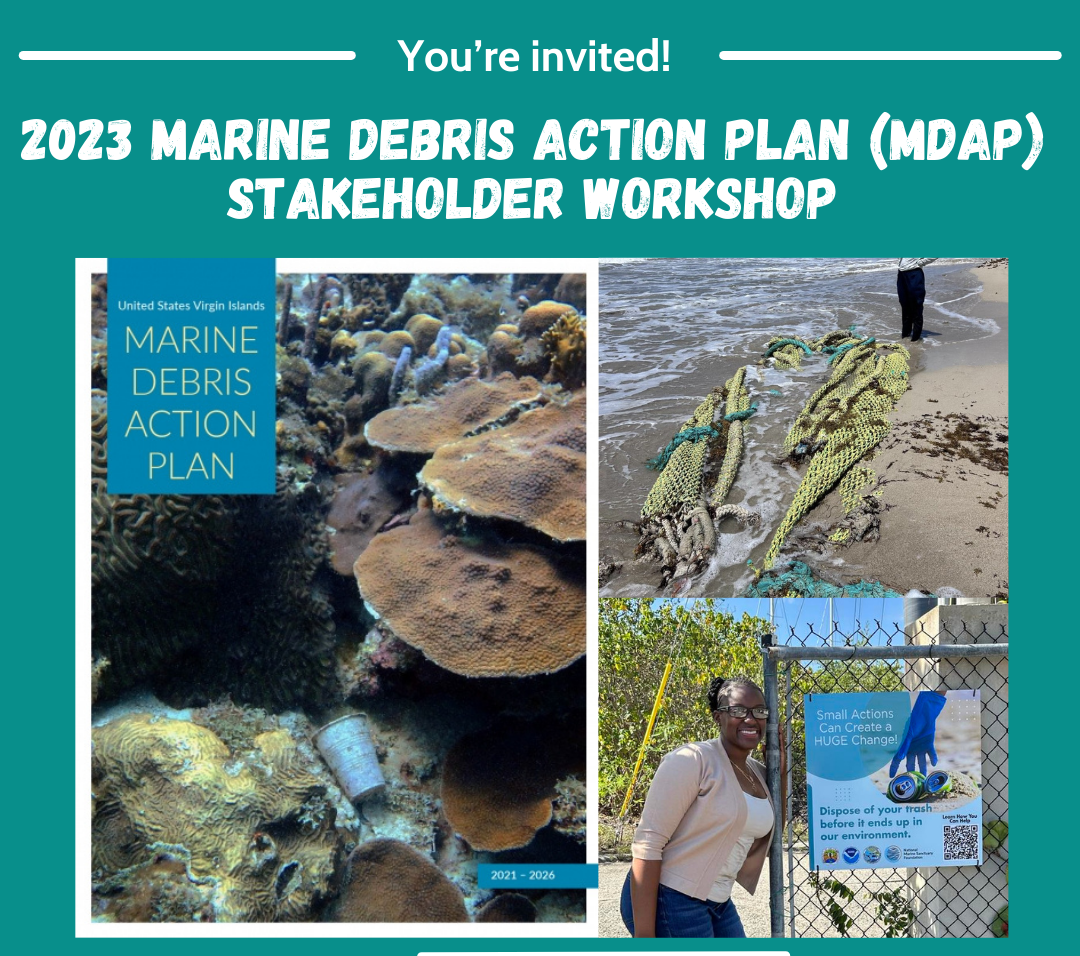 The USVI MDAP team hosted during November the 2023 USVI MDAP Stakeholder Workshop in St. Thomas, USVI. (Photo credit:Department of Planning & Natural Resources
|
|
NUEVO
Estableciendo la base para un Puerto Rico libre de desechos marinos
|
|
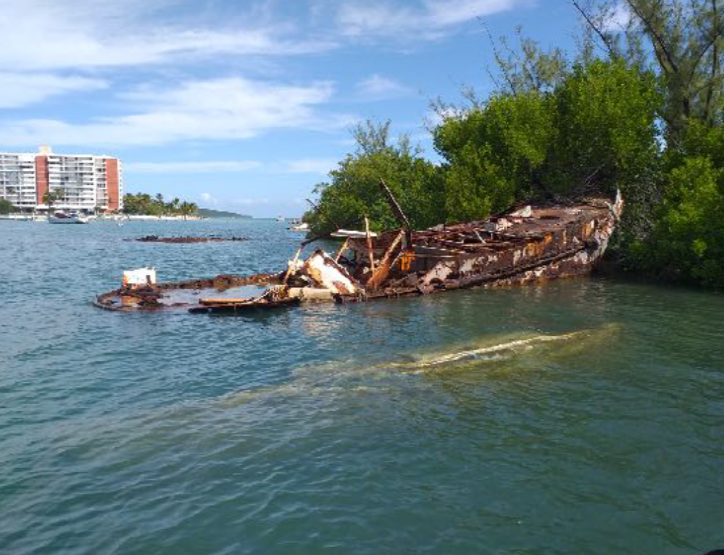 Abandoned and sunken vessels at Fajardo, Puerto Rico. (Photo credit: Isla Mar Expeditions, HJR Reefscaping and DNER).
|
|
|
Las embarcaciones abandonadas constituyen una grave amenaza para los recursos naturales. Contaminan las vías fluviales, dañan los arrecifes de coral y otros hábitats marinos, además de suponer un peligro para la navegación. Es por esto que Isla Mar Research Expeditions en colaboración con el Departamento de Recursos Naturales y Ambientales de Puerto Rico y HJR Reefscaping, removerán cerca de 70 embarcaciones abandonadas en todo Puerto Rico y establecerán estrategias de prevención. Esto con el apoyo del Programa de Desechos Marinos de la NOAA a través de la financiación de la Ley Bipartidista de Infraestructura.
Este proyecto tiene tres objetivos principales: (a) gestión y participación de las partes interesadas en talleres que sirvan como base para una coordinación efectiva, acceso a información y la implementación de un protocolo; (b) remoción de embarcaciones abandonadas a gran escala y (c) desarrollo de estrategias de prevención y concienciación que incluirán a estudiantes, voluntarios y empresas locales.
Para más información sobre el proyecto, visite la página Marine Debris Program Clearinghouse.
|
|
Marine Debris Evaluation within the Guánica Biosphere Reserve and La Parguera Natural Reserve (Versión en español disponible)
by: Sahara Ríos-Bonilla,
Villanova University’s Research Team
|
|
|
Villanova University (VU) has proposed a multi-ecosystem approach to evaluate the transport and deposition of waste from upstream sites to coastal environments in southwest Puerto Rico. In the last two years, the research team has characterized and quantified the debris found during wet and dry season assessments. Our focus is on watercourses (Fig.1, A & B) that lead to the Guánica Biosphere Reserve and La Parguera Natural Reserve.
Last October VU research team went back to Puerto Rico for sampling collection, this time for a rainy season assessment. The removal of more than 800 pounds of trash from two beaches, Las Pardas and Playa Ballenas (Fig. 1, C), was possible in a period of only 4 hours thanks to the partnership with two local organizations (Protectores de Cuencas y Alelí Environmental), the coordination with Para La Naturaleza, the involvement of community leaders, and more than 70 volunteers.
Results show that plastic (Fig. 2, B) is the predominant debris found across all sites evaluated as we have determined on previous assessments. Coastal environments seem to accumulate more marine debris, up to ten-fold the magnitude found on the freshwater sites. For upstream locations, plastic also predominates (more than 69%) the type of trash transported by watercourse, compared to the debris found deposited along the riverbanks, which included a variety of materials (e.g., glass, fabric, rubber, metal, paper, and ceramics).
After monitoring for two years, our data shows that for southwest Puerto Rico, plastic pollution is a paramount management problem. Because of this, sharing our process with the local community through sampling gatherings has proven to be key to understanding, considering, and incorporating socioeconomic, infrastructure, management, and historical factors that could be playing an important role in the plastic pollution problem in southwest Puerto Rico.
|
|
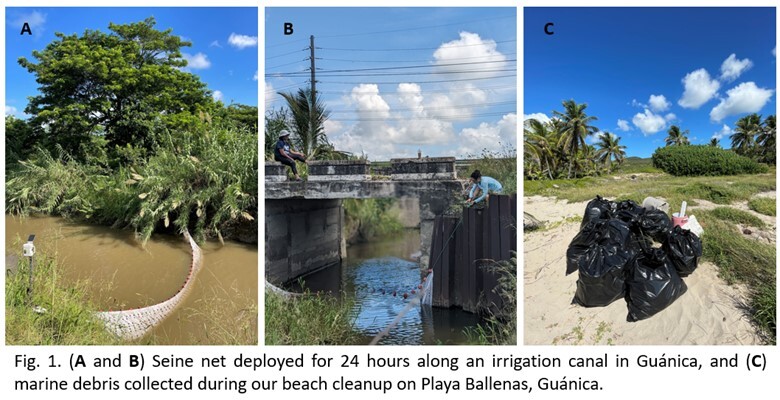 (Photo credit: Villanova University)
|
|
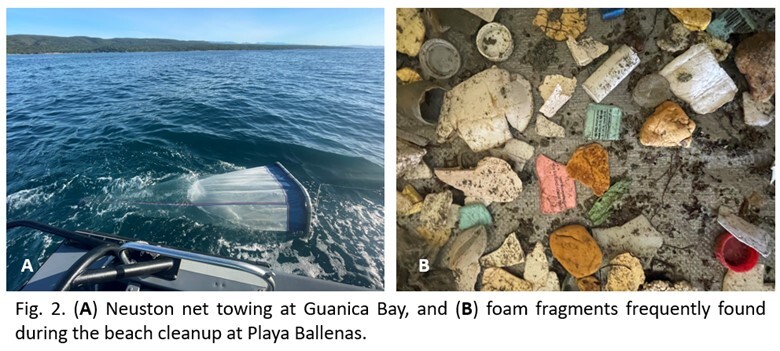 (Photo credit: Villanova University)
|
|
Español:
Evaluación de desechos marinos dentro de la Reserva de la Biosfera de Guánica y la Reserva Natural La Parguera, suroeste de Puerto Rico
por: Sahara Ríos-Bonilla,
Villanova University’s research team
La Universidad Villanova (VU) ha propuesto un enfoque multiecosistémico para evaluar el transporte y la deposición de desechos desde zonas río arriba hasta ambientes costeros en el suroeste de Puerto Rico. Para ello, en los últimos dos años el equipo de investigación ha caracterizado y cuantificado los escombros encontrados durante las evaluaciones en estaciones de lluvia y secas; centrándose en los ríos y canales de riego (Fig.1, A & B) que conducen a la Reserva de la Biosfera de Guánica y la Reserva Natural La Parguera.
En octubre pasado, el equipo de investigación de VU regresó a Puerto Rico para recolectar muestras, esta vez para una evaluación de la temporada de lluvias. La remoción de más de 800 libras de basura de dos playas, Las Pardas y Playa Ballenas (Fig. 1, C), fue posible en un período de sólo 4 horas gracias a la alianza con dos organizaciones locales (Protectores de Cuencas y Alelí Environmental), la coordinación con Para La Naturaleza, el involucramiento de líderes comunitarios y más de 70 voluntarios.
Los resultados muestran que el plástico (Fig. 2, B) es el residuo predominante encontrado en todos los sitios evaluados; así como lo hemos determinado en años anteriores. Los entornos costeros parecen acumular más desechos marinos; hasta diez veces la magnitud encontrada en los sitios de agua dulce. Para las localidades agua arriba, el plástico también predomina (más del 69%) en el tipo de basura transportada por el curso de agua, en comparación con los escombros encontrados depositados a lo largo de los bancos de los ríos, que incluían una variedad de materiales (vidrio, tela, caucho, metal, papel, y cerámica).
Tras monitorear durante dos años, nuestros datos muestran que, dentro de los desechos marítimos, la contaminación plástica es un problema de gestión primordial. Por esto, compartir nuestro proceso con la comunidad local a través de muestreos ha demostrado ser clave para comprender, considerar e incorporar factores socioeconómicos, de infraestructura, de gestión e históricos que podrían estar jugando un papel importante en la contaminación plástica en el suroeste de Puerto Rico.
|
|
Unión de esfuerzos por la seguridad comunitaria ante desechos producidos por desastres
Por: Sandra Schleier; sschleier@scubadogssociety.org
Scuba Dogs Society
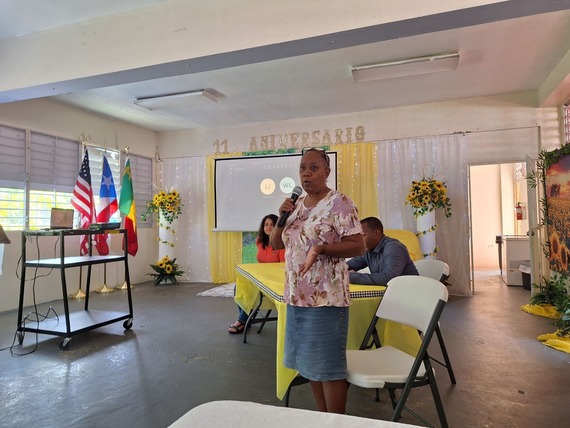 Evelyn Allende from the Parcelas Suárez explains the great positive impacts of having a plan for the community (Photo credit: NOAA).
Scuba Dogs Society (SDS) ha estado colaborando con la comunidad de Parcelas Suárez durante los últimos 6 años. Una comunidad inspiradora y altamente organizada, Parcelas Suárez es un pilar de excelencia dentro del Municipio de Loíza, proporcionando servicios esenciales de salud y bienestar a sus comunidades circundantes. En 2017, como respuesta al huracán María, se dieron cuenta de que su comunidad no podía ser accedida por los funcionarios del gobierno para ayudar rápidamente en su manejo de residuos sólidos, lo que podría conducir a problemas de salud pública. El Líder Comunitario, Alexis Correa buscó la ayuda de nuestra organización para crear un Plan de Acción Comunitario de Emergencia para el manejo de desechos sólidos ante fenómenos naturales para prevenir inundaciones y la destrucción física de las casas por acumulación de desechos en sus calles y alcantarillas. Con la ayuda de las voluntarias de AmeriCorps, SDS pudo crear un borrador que sirviera tanto al municipio como a la comunidad permitiendo que los esfuerzos de ayuda fueran más rápidos y eficientes. Todo el mundo estaba orgulloso del Plan, pero en 2020 tuvo que ponerse en pausa debido a la pandemia mundial de Covid-19 ya que la atención se centró en prevenir la exposición a la enfermedad.
|
|
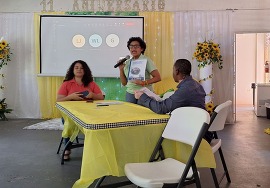 Ana Trujillo and Sandra Schleier from Scuba Dogs Society were able to talk about the process of creating the Community Plan (Photo credit: NOAA).
Click to edit this placeholder text.
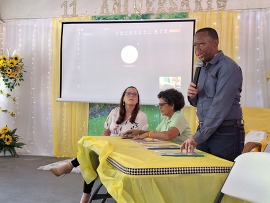 Alexis Correa, the Parcelas Suarez community leader providing welcome remarks together with Ana Trujillo and Karem Perez, from Scuba Dogs Society (Photo credit: NOAA).
|
En 2022, tras recibir la subvención del NOAA Marine Debris Program para la remoción de escombros de gran escala, la SDS reanudó el trabajo en el Plan de Acción Comunitaria reuniéndose con miembros de la comunidad y funcionarios del municipio de Loíza: la alcaldesa, directora de Planificación Medioambiental, directora del Departamento de Reciclaje, el director de Gestión de Emergencias y el director de Obras Públicas. En mayo de 2023, la SDS organizó un taller sobre cómo se creó el plan de acción comunitario e invitó a otros líderes de Loíza y San Juan a que hicieran un taller sobre cómo lo adaptarían a sus comunidades. Recibimos gran retroalimentación y luego de un año de incorporar sugerencias, comentarios, terminología pertinente, leyes relacionadas y procedimientos operativos estándar, ¡el documento estuvo listo! |
|
|
El 1 de noviembre de 2023, la comunidad, funcionarios del gobierno, el representante de la alcaldesa e invitados de otras comunidades de Loíza y San Juan se reunieron en el Centro Comunitario Gregorio "Goyín" Lanzó Cirino para firmar el Plan de Acción Comunitaria convirtiendo el documento en un compromiso oficial y legal entre la comunidad y el municipio que fortalecerá la colaboración, comunicación y manejo de desperdicios sólidos antes y después de un fenómeno natural.
Este documento es un documento vivo que se adaptará a las circunstancias cambiantes a medida que la comunidad crezca y se enfrente a los efectos del cambio climático. Se trata de un momento histórico para esta comunidad que demuestra cómo su arduo trabajo, dedicación y contribución les permite prosperar y satisfacer sus necesidades incluso cuando la situación hace difícil que alguien ajeno a su comunidad pueda ayudarles. Para la próxima temporada de huracanes, Parcelas Suárez está preparada para evitar proyectiles, desbordamientos del alcantarillado y acumulación de residuos sólidos procedentes de su comunidad.
English:
|
|
Joining efforts for community safety in the face of disaster-caused debris
Scuba Dogs Society (SDS) has been collaborating with the Parcelas Suárez Community for the past 6 years. An inspiring and highly organized community, Parcelas Suárez is a pillar of excellence within the Loíza Municipality providing essential health and wellness services to their surrounding communities. In 2017, as a response to Hurricane María, they realized their community could not be accessed by government officials to aid quickly in their solid waste management which could lead to public health issues. The Community Leader, Alexis Correa sought the help of our organization to create a Community Emergency Action Plan for solid waste management in the face of natural phenomena to prevent flooding and physical destruction by waste accumulation in their streets and sewers. With the help of AmeriCorps Volunteers, SDS was able to create a draft that serviced both the municipality and community allowing aid efforts to be quicker and more efficient. Everyone was proud of the Plan, but in 2020 it had to be put on pause as the worldwide Covid-19 pandemic hit and focus was shifted to preventing exposure to the disease.
In 2022, after being awarded the NOAA Marine Debris Grant for large-scale debris removal, SDS resumed work on the Community Action Plan meeting with community members and Loíza municipality officials: the Mayor, Environmental Planning Director, Recycling Department Director, Emergency Management Director, and Public Affairs Director. In May 2023, SDS held a workshop on how the community action plan was created and invited other leaders from Loíza and San Juan to workshop how they would adapt it to their communities. We received great feedback and after a year of incorporating suggestions, comments, pertinent terminology, related laws, and supporting standard operating procedures, the document was ready! On November 1st, 2023, the community, government officials, the mayor’s representative, and invited guest from other communities in Loíza and San Juan gathered in the Gregorio “Goyín” Lanzó Cirino Community Center to sign the Community Action Plan making the document an official and legal commitment between the community and municipality that will strengthen collaboration, communication, and solid waste management before and after a natural phenomenon hits.
This document is a living document to be adapted to changing circumstances as the community grows and faces the effects of climate change. This is a historic moment for this community demonstrating how their hard work, dedication, and contribution allows them to thrive and have their needs met even when the situation makes it difficult for anyone outside of their community to aid them. For the next hurricane season, Parcelas Suárez is prepared to prevent projectiles, sewer overflows, and solid waste accumulation originating from their community.
|
|
Limpieza de Costas, Siembra y Rotulación Educativa en la Playa Guayanés en Yabucoa
Por: Yvette Núñez, crespuertorico@gmail.com
Coalición Restauración Ecosistemas Santurcinos (CRES)
|
|
|
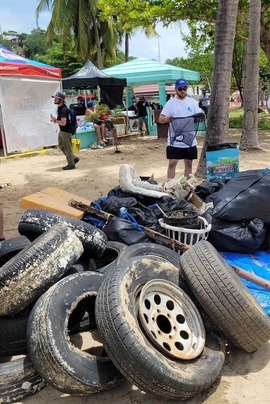
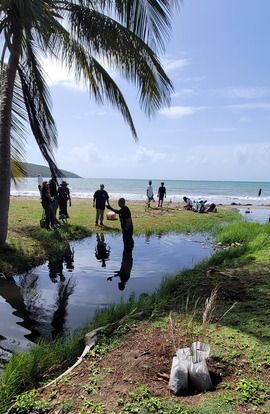
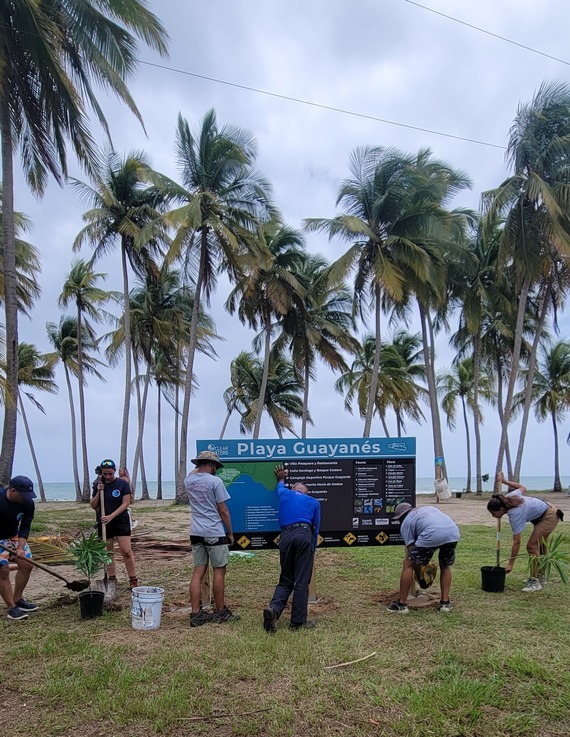
En común-unidad un junte de 250 personas lograron remover 947 lbs de basura de la playa y del mangle en la costa de Guayanés en Yabucoa, además de sembrar unas 600 plantas nativas y endémicas como el icaco, uva playera, lirio, mangles, entre otras. Este junte que se da gracias a la colaboración entre CRES, Clear Waters PR, Filler PR, De la Cruz Agency, Guayanés al Rescate, Líder Comunitaria Nilsa Márquez, Municipio de Yabucoa, Surfrider Puerto Rico, y toda la comunidad que se unió y logramos "Sembrar un bosque costero y reducir contaminantes". Más actividades en www.crespr.org."
Las siguientes fotos muestran al grupo de voluntarios removiendo los desechos y reforestando, en adición a varios de los desechos encontrados. (Crédito: CRES)
|
|
Mangroves and NOAA’ Marine Debris Funding Brings Opportunities to Share, Connect, and Explore
By Jordan Silva, jordan.silva@students.uvi.edu
Master of Marine and Environmental Science student, University of the Virgin Islands
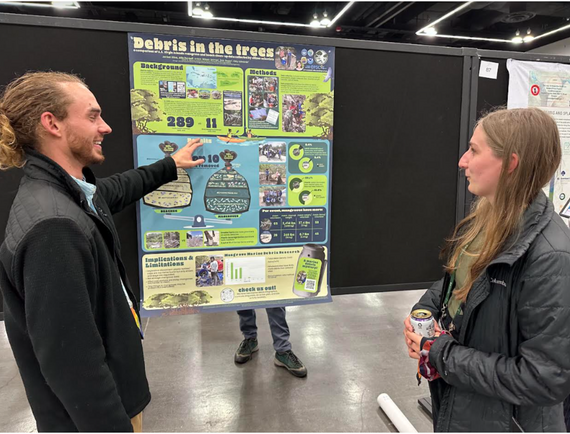 Presenting my poster (Photo Credit: Kristin Wilson Grimes).
|
|
|
Thanks to funding from NOAA’s Marine Debris Program, I attended the 27th Biennial Conference of the Coastal and Estuarine Research Federation in November 2023 in Portland, Oregon. At this conference, I presented a poster that compared sandy beach clean-up data collected for the past 30+ years to mangrove clean-up data which has been collected only since 2018 in the U.S. Virgin Islands. A small snippet highlighting newer mangrove marine debris research funded by NOAA’s Marine Debris Program and some preliminary results were also included in the poster. These preliminary results showcased the stark difference in debris accumulation in the windward sites vs the leeward sites of Bovoni Caye, a mangrove-dominated caye located in the St. Thomas East End Reserves (STEER). STEER is a marine protected area on St. Thomas, VI. The results also showed how there is a mean debris density of 2.0 items/m^2 across all 8 plots. That is a lot of trash! This means for every meter squared you walk through one of these plots, on average, you will see two pieces of debris. This is important because cayes serve as vital habitat for the mangroves and an array of marine and terrestrial organisms. A clean habitat without a bunch of debris can only benefit the organisms that reside on and around these cayes. Not only is this important for the cayes in general, but also this is important information for those managing these areas and understanding how frequently they may need to be cleaned.
This research and my travel to the conference were funded by the NOAA Marine Debris Program. This conference allowed me to gain experience in presenting in a conference setting, as this was my first conference. The conference helped me grow in a professional manner by giving me a better understanding of what exactly I want out of my career and networking with other professionals. The opportunity to hear so many bright minds sharing their research and experiences has really opened my eyes to just how much amazing work is being done and has only motivated me to continue contributing to this field, as well. Participating in this conference allowed me to make connections with many colleagues from around the world that I will forever cherish!
|
|
This NOAA-funded research has given me the opportunity to work directly alongside other professionals in the field from NOAA and DPNR, expanding my professional network in the process as well as gaining valuable insight into the marine science field. Aside from the conference, I got to explore some of Oregon’s culinary delights and one of the most beautiful Japanese gardens outside of Japan! |
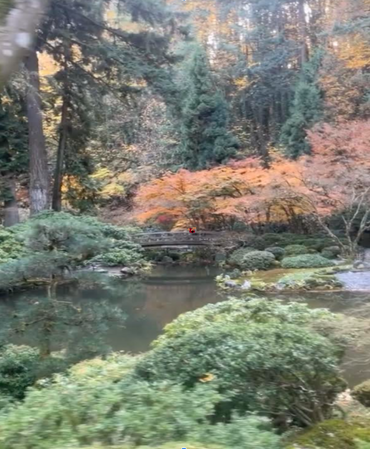 Colorful and Beautiful Japanese Garden (Photo Cred: Jordan Silva).
|
|
*Stay tuned for the 2024 Great Mangrove Cleanup events in the USVI. You can contact the author for more details but the preliminary dates are: |
- St. Croix - February 24th
- St. John - March 23rd
- St. Thomas - April 20th
|
|
Job Opportunity
The BoatUS Foundation received funding through the NOAA Marine Debris Program under the Bipartisan Infrastructure Law and they are currently searching for a Project Administrator. With this grant, the BoatUS Foundation is leading a nationally competitive grant program for the removal of abandoned and derelict vessels throughout coastal and marine areas of the United States, including the Great Lakes, U.S. territories, and Freely Associated States.
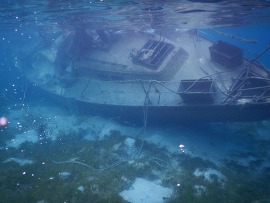 A derelict vessel in the Christiansted Harbor prior to removal. (Credit: Kitty Edwards, DPNR)
|
Reminder: Funding Opportunity
Closing soon - December 18!
With funding from the NOAA Marine Debris Program, the National Marine Sanctuary Foundation will award 10-15 grants, ranging between $5,000 and $7,500. These projects will support initiatives that investigate and prevent the adverse impacts of marine debris in communities that are underserved, underrepresented, or overburdened by marine debris. These projects may include marine debris prevention, research, monitoring, detection, response, removal, and coordination activities.
If you are interested in applying, please see the competition announcement and application template.
|
|
|
¡Felices Fiestas y Feliz 2024 Libre de Desechos!
El Programa de Desechos Marinos de la NOAA quiere dar las gracias a todos los colaboradores desde el primer número del Boletín del Caribe publicado en marzo 2023. Sus contribuciones son muy apreciadas y son clave en nuestra visión del océano global y sus costas libres de los impactos de los desechos marinos.
Happy Holidays and Happy Debris-Free 2024!
The NOAA Marine Debris Program wants to thank all the collaborators since the first issue of the Caribbean Newsletter back in March. Your contributions are greatly appreciated and are key in our vision of the global ocean and its coasts free from the impacts of marine debris.
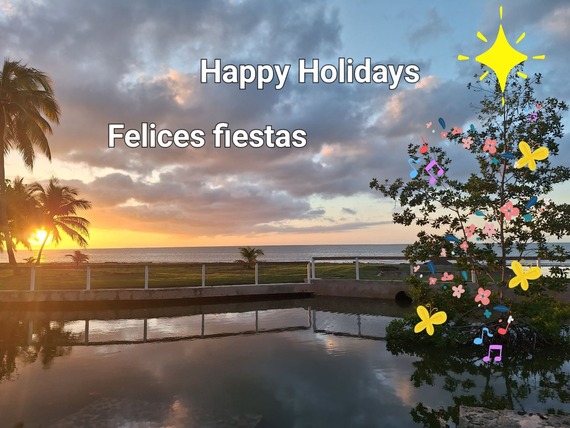 Atardecer en el litoral de Mayagüez, Puerto Rico. (Photo credit: yaritza.rivera@noaa.gov)
|
|
Subscribe to the Marine Debris in the Caribbean Newsletter on this link. |
|
|
|
|