
Licensing Opportunity: Monoclonal Antibodies That Bind to the Underside of Influenza Viral Neuraminidase—A Potential Vaccine Target
National Institute of Allergy and Infectious Diseases sent this bulletin at 04/30/2025 10:29 AM EDT
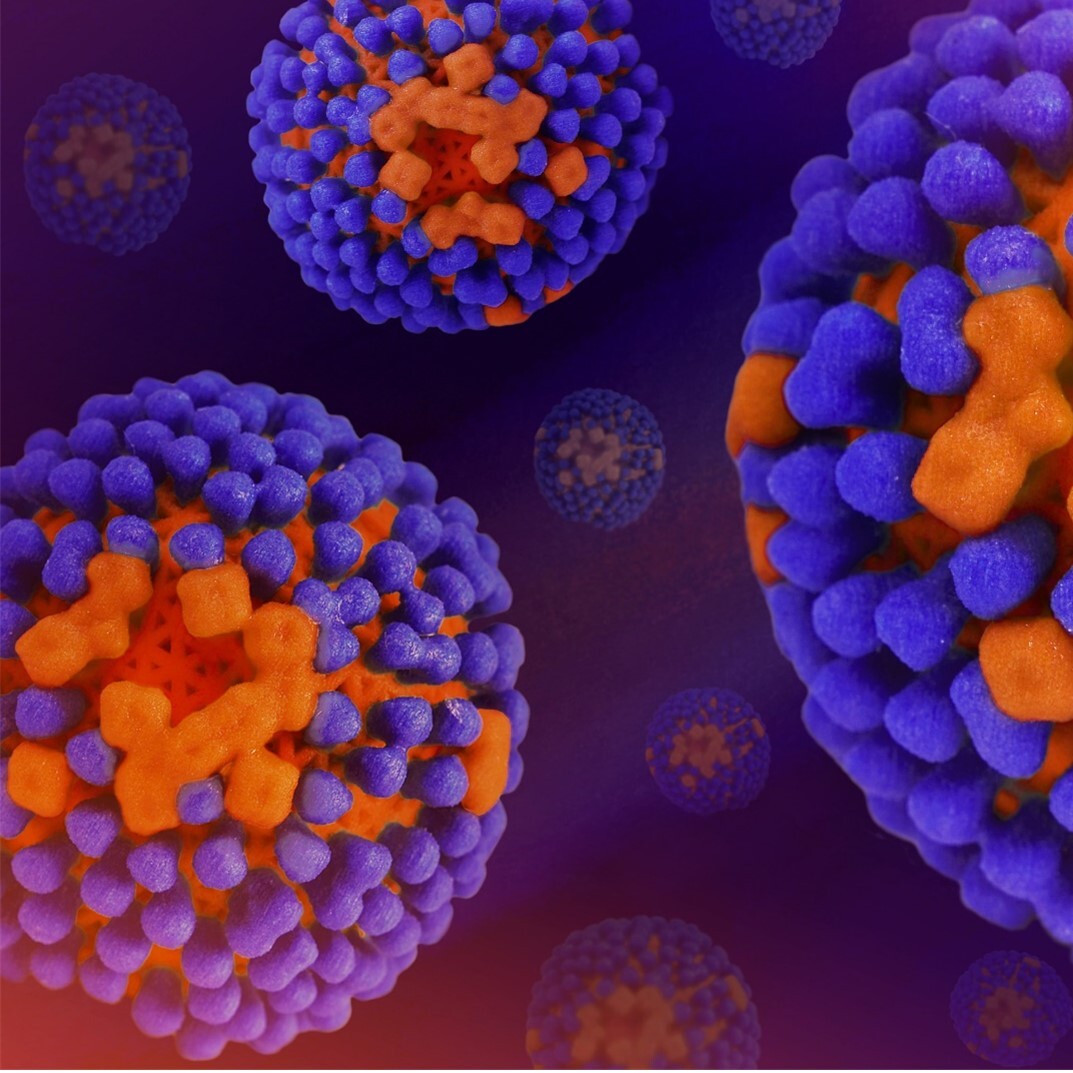
Image Description: Creative artwork featuring colorized 3D prints of influenza virus (surface glycoprotein hemagglutinin is blue, and neuraminidase is orange; the viral membrane is a darker orange). Credit: NIAID
Circulating seasonal influenza viruses cause substantial morbidity and mortality and pose global public health and economic challenges.
Current influenza vaccines mainly induce antibodies against the surface glycoprotein hemagglutinin (HA) that block viral attachment to its host receptors and viral membrane fusion to the host cell. However, antibodies directed to the head confer little cross-protections between strains or subtypes.
Researchers at the Vaccine Research Center of the National Institute of Allergy and Infectious Diseases have identified human monoclonal antibodies that each bind distinct epitopes on the less abundant yet critical viral surface glycoprotein neuraminidase (NA). These antibodies inhibit propagation of a wide range of H3N2, swine-origin variant H3N2, and H2N2 viruses and confer pre-exposure and post-exposure protection from lethal H3N2 infection in mice. Two of these antibodies bind non-overlapping epitopes covering the underside of the NA head, thus defining a potential vaccine target.
To learn more about this collaboration opportunity, visit https://ott.nih.gov/tech/tab-5005 or contact Wade Green at wade.green@nih.gov and reference E-177-2022.
Update your subscriptions, modify your password or e-mail address, or stop subscriptions at any time on your Subscriber Preferences Page. You will need to use your e-mail address to log in. If you have questions or problems with the subscription service, please contact Subscriber Help. Your subscription may be removed if you do not open our emails for a six-month period.
This service is provided to you at no charge by National Institute of Allergy and Infectious Diseases (NIAID).


