New Actions to Support Small Meat and Poultry Plants
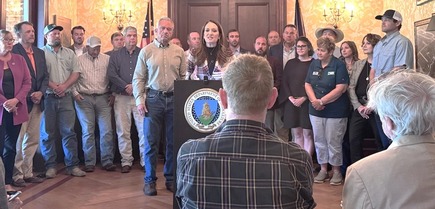
Yesterday, the U.S. Department of Agriculture (USDA) launched a Small Processors Action Plan, that includes a set of actions to better support small and very small meat and poultry processing plants, improve customer service, and reduce unnecessary regulatory burdens while maintaining strong food safety protections for consumers.
Your establishments make up the majority of federally inspected plants and play an important role in local food systems and rural economies. USDA and FSIS have heard your concerns about complexity, delays, and difficulty navigating agency processes. The actions announced today are intended to make it easier for you to interact with FSIS, get timely answers, and resolve issues so you focus on producing safe food and serving your communities.
As part of this effort, FSIS will improve how you submit and track appeals and requests, including clearer pathways for receiving responses and assistance. The agency will also expand access to support for establishments that may have limited internet connectivity and provide more visible points of contact to help you navigate processes and escalation options.
FSIS will update and expand plain-language guidance tailored specifically to you to make requirements easier to understand and apply. Additional training and guidance will be provided to ensure more consistent implementation across the field, helping to reduce confusion and improve predictability.
USDA is also strengthening coordination with the Small Business Administration to help ensure small plants are aware of available resources and support.
These actions do not change food safety standards or inspection requirements. Full federal inspection remains in place, and inspectors retain full authority to take action whenever food safety or process control concerns arise. The focus of these efforts is on improving service delivery and clarity, not reducing oversight.
FSIS will begin rolling out these improvements immediately and will continue engaging with small and very small plants throughout implementation to ensure the changes are effective and responsive to real-world needs. Additional information, including the full 2026 Small and Very Small Plant Support Plan, is available on the
|
New World Screwworm - What You Can Do
With a confirmed case in Texas, USDA is asking Americans to remain vigilant by checking their livestock and pets for signs of NWS. Look for draining or enlarging wounds and signs of discomfort. Also look for NWS larvae (maggots) and eggs in or around body openings, such as the nose, ears, and genitalia or the navel of newborn animals. If you suspect your animal is infested with NWS, immediately report it to your state animal health official or in charge.
NWS maggots can infest livestock and other warm-blooded animals, including people. They most often enter an animal through an open wound and feed on the animal’s living flesh. While not common in people, if you notice a suspicious lesion on your body or suspect you may have contracted NWS, seek immediate medical attention.
Learn more about NWS and USDA’s efforts, visit .
FSIS Small Plant Session Coming Next to Texas
Going to the American Meat Science Association Reciprocal Meat Conference? We’ll see you there! Our next in-person small plant session will take place in conjunction with the conference at West Texas A&M. These in-person sessions are designed to give you direct access to FSIS and other USDA subject matter experts. Registration information will be shared soon.
Instead of traditional presentations, participants will be able to rotate through hands-on demonstrations, short discussion sessions, and open Q&A with FSIS and other USDA subject matter experts (SMEs).
 |
|
National Small Plant Session
Wednesday, June 24, 2026
1:00 – 5:00 p.m. CT
West Texas A&M Campus
Canyon, Texas |
1:30 – 3:00 p.m. | Interactive Demonstrations and Discussion Stations
Join our “open house” where various SMEs will host various tables covering different themes. Participants can move freely between stations, ask questions, observe demonstrations, and spend more time on the topics that matter most to you and your operation.
3:00 – 5:00 p.m. | Presentations and Q&A: Navigating Your Regulatory Journey
Whether you’re exploring federal inspection for the first time, expanding your operation, or just looking for answers to day-to-day compliance questions, this session is designed to help you connect with the right resources at the right time.
Joins us as we follow the path many establishments take as they grow — from applying for inspection to accessing funding, navigating labeling requirements, and preparing for unexpected events such as recalls or outbreaks. Each presentation will be brief to allow plenty of time for questions and discussion.
Topics will include:
-
Getting Started with Federal Inspection
Learn what to expect during the grant of inspection process, who you’ll work with, and where to find help along the way.
-
Additional Financing and Business Support
Hear from the Small Business Administration about loans, business development resources, and tools that may help support your business growth.
-
Resources for When You’re Up and Running
Learn where to go for labeling questions, product standards information, policy clarification, and how we offer support through askFSIS and the Small Plant Help Desk.
-
Navigating Foodborne Illness Outbreaks and Recalls
Understand what happens during recalls and outbreak investigations — who does what and where to find assistance if an issue arises.
Our goal is simple: to connect you directly with the people, programs, and resources that can help you get answers, solve problems, and make informed business decisions.
Can't join us in June? More details about upcoming sessions will be shared in future Updates for Small Plants newsletters.
askFSIS Live!
On May 28, FSIS hosted a new style of outreach event: askFSIS Live! This format was designed to give small and very small establishments open access and flexibility to talk with FSIS subject matter experts. The virtual event had four breakout rooms that allowed establishments to connect directly with the folks who could answer their questions. Experts on labeling, inspection and grants of inspection, humane handling, and import/export topics were on hand during the event.
Your feedback is especially valuable as we develop future sessions and breakout room themes. If you were able to drop in during the event, we’d love to hear any additional thoughts you might have. If you did not attend, let us know what topics you might find most useful for future virtual events. Email askFSIS@usda.gov, subject line: askFSIS Live.
We expect the next virtual askFSIS Live event to take place in September and will share more information in future Updates for Small Plants newsletters.
Latest Regulatory and Program Updates
Lots of momentum across FSIS in the month of May. Below are some key updates to keep on your radar.
Policy
We are currently reviewing comments on the advanced notice of proposed rulemaking on establishment size definitions and considering next steps. Comment review also remains underway on the NPIS Line Speed and NSIS Line Speed proposals. Thank you to those who took the time to share your perspectives on how these potential rulemaking efforts may impact your operations.
On May 21, we finalized the rule updating the visual postmortem inspection procedures in swine slaughter establishments. The rule becomes effective July 20. Most small and very small establishments are unlikely to see significant operational impacts, but swine slaughter establishments should review the rule and monitor future implementation guidance to determine whether any changes may affect your operation.
Resources & Support
Temporary overtime and holiday inspection fee reductions remain available during FY 2026. We recognize that overtime use often looks different for smaller operators than it does for larger establishments. You may find periodic opportunities for overtime to accommodate seasonal demand, staffing needs, or production schedules. If you have questions about how the fee reduction applies to your operation, contact your district office team or reach out through askFSIS.
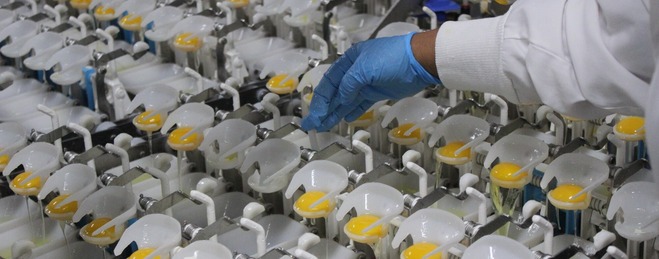
For egg products establishments, we recently issued an updated Food Safety Guideline for Egg Products and are accepting comments through July 6. The latest updates made in response to stakeholder questions include new guidance on support for sanitation standard operating procedures, including less-than-daily sanitation; the addition of Bacillus cereus as a potential hazard for enzyme-modified egg products; a new section on cooking egg products in lieu of pasteurization and revisions throughout to improve readability and usability. These guidelines are specifically designed with small and very small establishments in mind — providing practical examples to assist you with meeting compliance.
Guideline updates reflect the latest version of FSIS’ recommendations for meeting requirements. You may use alternative approaches if you can support and validate their effectiveness. For technical assistance on HACCP, consider contacting your state’s university extension specialists or HACCP coordinators, searching knowledge articles in askFSIS, or submitting a question through askFSIS. Feedback and questions we receive through askFSIS help us identify areas where future guidance and compliance assistance may be beneficial. All FSIS guidance documents are available through the FSIS website.
Sampling &Testing
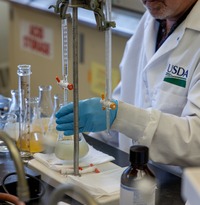
FSIS recently released its FY 2026 Annual Sampling Plan. The plan provides an overview of the agency’s sampling priorities, testing programs, and public health focus areas for the year. It outlines our current microbiological, chemical residue, and surveillance sampling activities, as well as planned enhancements to several programs. Each year, we evaluate our programs and make changes, as needed, to ensure they will provide the best data to inform our decision making. This annual plan can be a useful resource for understanding what we are sampling for, why certain products may be selected for testing, and how sampling data informs food safety decisions. Learn more about our sampling programs by visiting the Sampling & Data section of the FSIS website.
Listeria control efforts remain a major focus. Over the past year, we’ve implemented a new ready-to-eat (RTE) questionnaire to better understand practices and controls in RTE establishments. Based on feedback from our inspection personnel, we have been working to update the questionnaire and improve how we evaluate and support Listeria control efforts. We expect to share additional information later this month along with other steps to strengthening both prevention and verification activities. Effective Listeria control is a shared responsibility, and our goal is to provide you and our inspection personnel with the tools and information needed to support strong food safety systems.
FSIS also continues to advance our work on Salmonella. Recently, we began collaborating with USDA’s Agricultural Research Service to compare methods for quantifying Salmonella in samples from real-world conditions. This work will help us better understand how different testing methods perform so that we can be confident any future rulemaking activities are informed by reliable scientific data. While much of this work happens behind the scenes, it reflects our continued commitment to building food safety policies and programs on a strong scientific foundation.
|
Exports
FSIS officially onboarded Chile and Argentina to the Public Health Information System (PHIS) export component on June 1. Establishments exporting to either country should ensure appropriate staff are familiar with the updated process. Questions related to this transition can be directed to PHISImportExport@usda.gov. Direct general technical questions to PHISTechnicalQA@usda.gov.
Workforce
In May, we held our annual national frontline supervisor conference, bringing together supervisors from across the country to strengthen leadership, communication, and consistent decision making. We continue hiring and onboarding mission-critical positions. These efforts support building a stronger inspection workforce to promote the consistency, reliability, and clarity that you depend on. As we navigate the upcoming reorganization, we are prioritizing continuity: the same inspection presence, supported by stronger training, technical expertise, and behind-the-scenes coordination and support.
Items for your to-do list:
Continue using askFSIS and the Small Plant Help Desk when questions arise and monitor the weekly Constituent Update newsletter for future opportunities to provide feedback on policy and regulatory issues. Don't want to dig through your email to re-read these newsletters? Bookmark the Updates for Small Plants page on the News & Announcements section of the FSIS website.
Upcoming PHIS Export Enhancement
Knowledge Article
2026 Rates and Calculations
FSIS will continue to charge the 2025 rates through calendar year 2026, except for laboratory services, which were reduced starting January 11, 2026. The following lists the 2026 rates, by type of service:
| Service |
Rate |
|
| Basetime |
$73.04 |
|
| Overtime |
$89.68 |
|
| Holiday |
$106.32 |
|
| Export Application |
$4.83 * |
|
* Per application
Visit askFSIS for more knowledge articles on this and other topics or to submit a question.
|