|
March 31, 2015 | Volume 4, Issue 8
Feature
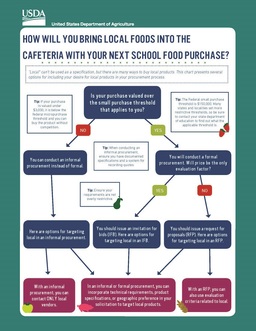
Buying Local? YES!
Ask
yourself a series of yes/no questions with the new buying local decision tree and you’ll have all the information you need to
buy local products for the school cafeteria. This resource helps
you decide which procurement method to use when buying local and offers lots
of tips for how to source local items.
And don’t forget to check out our Procuring
Local Foods webpage for more information on bringing
local products into the cafeteria!
|
|
 |
Notes from the Field
USDA Secretary is Excited about the 2015 Farm
to School Census
Earlier
this month, on behalf of USDA, state agencies invited school districts to
complete the 2015 Farm to School Census. To date, almost 3,000 responses have
been received. States with the most responses to date include Illinois,
Minnesota, Missouri, Texas, and Wisconsin.
School districts: don’t miss out on this opportunity to have your work included
as part of the results. The 2015 Census will close on May 29!
For
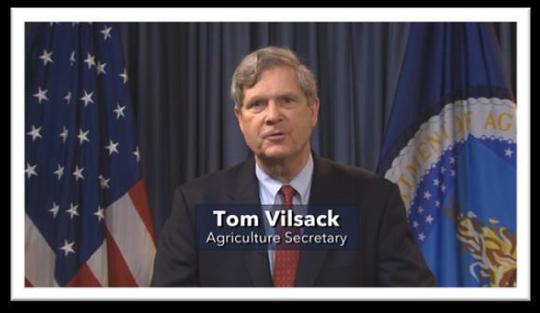
inspiration, check out this message
from U.S. Secretary of Agriculture Tom Vilsack on the importance of the 2015
Farm to School Census.
FY16 USDA Farm to School Grant Request for
Applications
We are currently accepting applications for the next round
of USDA Farm to School grants. The application deadline is May 20, 2015 for
planning, implementation and support service grant applications. Training grant
letters of inquiry are due April 30, 2015.

 Photo Courtesy USDA Flickr
The Local
Food Promotion Program (LFPP), with USDA’s Agriculture Marketing Service, has grant opportunities that may align with your farm to school goals! LFPP grants helped a community supported fishery in Monterey, CA source local seafood for school lunch programs throughout central California. In Chicago, IL, FarmLogix, is creating an online portal to help schools coordinate relationships with local producers and distributors. In North Carolina, Maine, Rhode Island and West Virgnia, LFPP funds have supported food hubs that plan to provide food to schools.
The grant program supports the development and expansion of local and regional food business enterprises to increase access to locally and regionally produced agricultural products, and to develop new market opportunities for farm and ranch operations serving local markets. Eligible entities may apply if they support business enterprises that process, distribute, aggregate, or store locally or regionally produced food products.
Applications will be accepted through May 14,
2015.

Planning Your Farm to School Program
Stay tuned to our
webinar series for farm to school tips and insights. Earn SNA Continuing
Education Units for each webinar attended. To receive this
credit, be sure to contact Bob Gorman at robert.gorman@fns.usda.gov.
April 2, 2:00 EDT
School Gardening: Hear
about the different ways to incorporate school gardens into your farm to school
program as well as hear how schools are successfully procuring school garden
produce for their meal programs.
April 16, 2:00 EDT
Curriculum Integration: Experiential education is an important
component of successful farm to school programs. This webinar will help you
plan for your farm to school educational efforts and brainstorm food,
agriculture, and nutrition-related educational activities with which you can
engage students.

Bits from Blogs
Posted by Heather
Emmons, Natural Resources Conservation Service, Nevada
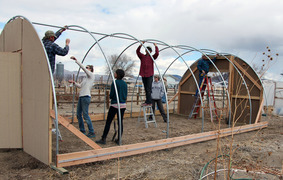
Above the sounds of whirring
drills and nails being hammered into wood planks, squeals of excitement and oohs and ahhs emanated from Yerington Elementary School students as they filed past the
hoop house being built on their way to the lunchroom.
March is National Nutrition Month, so it only seems fitting that
three rural elementary schools in Nevada had hoop houses installed in late
February and early March as part of a partnership among USDA’s Natural
Resources Conservation Service, University of Nevada Cooperative
Extension and Urban Roots
Americorps.
The hoop houses will enhance the
Extension’s Veggies for Kids program, an elementary
school-based pilot nutrition education program targeting second-graders at
schools eligible for Food Stamp Nutrition Education program funding (those
having more than 50 percent of the student body eligible for free or
reduced-priced meals) and having a significant population of American Indian
and Hispanic students.
“Children and senior citizens are
below the national average in consuming the daily recommended amounts of fruits
and vegetables,” said Staci Emm, Extension educator. “Diets high in
fruits and vegetables that are naturally high in nutrients reduce the risk for
obesity and related chronic diseases. Efforts to increase fruit and
vegetable consumption in the U.S. population have generally been unsuccessful,
and one identified reason for this may be limited access to, and affordability
of, fruits and vegetables.”
|

|