|
|
Volume 12, Issue 4, Spring 2026
If You Can't Beat 'Em, Eat 'Em: Turning an Invasive Species into a School Meal Solution
|
|
Table of Contents
This is the story of how a response to an environmental challenge became a school meal smash hit.
Some challenges can feel so overwhelming that we may not even know where to begin. In these moments, we can glean from the advice of a Maryland school nutrition director: start small, tell our stories, and be persistent.
Big Problem, Small Bites
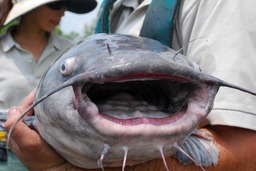
In recent decades, the Chesapeake Bay (Bay), home to much of Maryland's iconic seafood, has been disrupted by the invasive blue catfish. This apex predator is an eating machine and reproduces rapidly, threatening economically important native species, like blue crabs and striped bass, impacting fisheries and ecosystems alike. Since the early 2000s, task forces across the region have implemented many strategies to reduce the population, recognizing a multifaceted approach is necessary.
One of Maryland's most palatable solutions has been encouraging harvesting and consumption of the blue catfish. Rich in omega-3 fatty acids, vitamin D, potassium, and protein, the fish is nutrient dense and delicious. Unlike other species of catfish, blue catfish are not bottom dwellers; their flavor reflects what they eat. Those living in the Bay take on the taste of blue crab and rockfish, making them a favorite among chefs. With a naturally sweet, mild flavor and a firm, flaky texture, blue catfish are easy to use in a wide range of recipes.
However, low market demand and limited consumer awareness have prevented this strategy from reducing the Bay’s blue catfish population. Another strategy was needed. To make a real dent in reducing the blue catfish population, they needed consumers that were going to buy catfish meat at a large scale. Maryland’s schools, with their commitment to serving nutritious local products, emerged as a promising lead.
|
State Agencies Take the Bait
Maryland’s work to build an institutional market for blue catfish has been strengthened by both state leadership and federal funding, targeting challenges around invasive species and expanding local food systems.
In 2018, Maryland's Departments of General Services, Agriculture, and Natural Resources partnered to develop a supply chain for delivering the wild caught fish to state institutions. As Matthew Scales, Seafood Marketing Director at the Maryland Department of Agriculture (MDA)explained in regards to the necessity of creating an institutional market, "If you want to push out a large volume of the fish, you need to get into schools and institutions. That's how we're gonna make a true dent in the population of blue catfish."
While Maryland explored opportunities in state-run institutional markets, the team at MDA also looked to an innovative school nutrition director working in a rural district 25 miles from the Bay on Maryland's Eastern Shore.
You Only Fail When You Stop Trying
Beth Brewster has served as Caroline County Public Schools’ (CCPS) Supervisor for Food Services for 15 years. Over that time, Brewster has worked diligently to build a robust farm to school program. Her food service department prioritizes nutritious, minimally processed meals. CCPS kitchens operate a mix of scratch cooking and heat-and-serve foods, supported by a centralized production kitchen that produces soups, sauces, and salads. Each summer, central kitchen staff process and freeze 8,000-15,000 pounds of local produce for use throughout the school year. "Comfort zone is not where we sit," says Brewster. "We're always asking, what's next for our kids?”
That’s why when Karen Fedor, Administrator, of the Farm and Food Program at MDA, reached out to Brewster to ask if she could experiment with blue catfish during Maryland Home Grown School Lunch Week, a week dedicated to celebrating local foods, her answer was “yes!” As Brewster became increasingly aware of the role she could play in saving the Bay, she knew this needed to be more than a one-time promotional offer. "We realized this wasn't just about school meals, it was about sustainability and supporting our watermen," she explains.
Brewster soon learned that putting the fish onto the menu wasn't going to be simple. It required developing an easy-to-serve product, establishing a processing and distribution chain, navigating Federal child nutrition (CN) labeling, and creatively marketing it to schoolchildren.
|
Reeling It in Slow and Steady
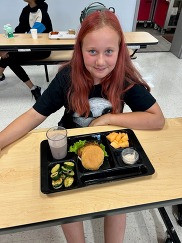
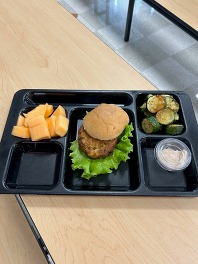
To introduce nutritious blue catfish on school menus in a fun and familiar way, CCPS chefs created a 'seafood cake' inspired by Maryland's iconic crab cake. Served with a remoulade sauce, the cakes were a hit during student tastings and won a spot on the menu. While a success with students, staff found the seafood cakes difficult to make consistently on a large scale. They needed help to ramp up production.
Brewster was on a mission and continued collaborating with MDA to identify and develop key partnerships with Tilghman Island Seafood to process and distribute blue catfish meat, and Wick’s Seafood in Pennsylvania to produce the seafood cakes at scale using a formulated recipe.
Brewster also worked with both Wick’s Seafood and the U.S. Department of Agriculture (USDA) to secure a CN label for the seafood cake. This process included thorough testing and refinement, requiring recipe adjustments and special equipment to form K-12 friendly serving sizes. The work was worth it: the approved label communicates how the seafood cake contributes to Federal school meal pattern requirements, making it an appealing choice for other school districts wanting to wade into seafood.
In 2024, CCPS celebrated the seafood cake rollout on social media, and the posts drew record engagement, highlighting family and public support for sustainable solutions. CCPS also sparked community engagement in blue catfish eradication through youth fishing tournaments and classroom lessons on invasive species.
Impact and Expansion
Progress on getting blue catfish onto school menus has been accelerating in the Mid-Atlantic region, thanks in part to like-minded partners and federal support. Real Good Fish, a West Coast-based organization, partnered with the Virginia Department of Education (VDOE) through a 2023 USDA Patrick Leahy Farm to School grant to bring its award-winning Bay2Tray® program, which increases school access to local seafood, to Virginia.
Inspired by the work at CCPS and eager to leverage their new partnership, VDOE invited Brewster and Real Good Fish to co-present a session on serving local seafood at the 2024 Virginia Farm to School Conference. This facilitated meeting evolved into a new Bay2Tray® project focused on blue catfish. Then, this past February, Real Good Fish announced a further expansion of Bay2Tray® through Project SCALES (Supporting Community Agriculture and Local Education Systems), funded through USDA’s Healthy Meals Incentives Initiative School Food System Transformation Challenge cooperative agreement and administered by Boise State University.
In partnership with Caroline County Public Schools, Alexandria City Public Schools, the Virginia and Maryland State Departments of Education, and MDA, Real Good Fish will work with Maryland blue catfish processors, such as Reliant Fish Co and J.J. McDonnell, to expand school’s access to blue catfish and create a replicable fish-to-school model for other coastal regions. To ensure these markets thrive, partners are developing kid-approved recipes, training food service teams, creating a best practices toolkit, and providing educational materials for classrooms.
USDA is also providing additional resources to the effort to reduce the blue catfish population. In August 2025, USDA announced $6 million in grant funding available for seafood processors through the USDA Meat and Poultry Processing Expansion Program (MPEPP) to expand operations, transform the food supply chain and create new and better markets for the processing of invasive, wild-caught catfish. USDA also partnered with MDA to launch a one-year pilot program to purchase up to $2 million through Section 32 of blue catfish. The effort will support regional processors in getting their products to communities through food banks and other distributor channels.
The blue catfish story demonstrates how collaboration between state agencies, schools, processors, and federal partners can transform an environmental challenge into nutrition and public health opportunities. By putting wild-caught Chesapeake blue catfish on school menus, Maryland is not only protecting its waterways but also nourishing its students with healthy, local protein.
Brewster has a final message for peers trying to turn challenges into opportunities: "If we can do this in Caroline County, anyone can. Dig in and make it happen."
Curious About Maryland Blue Catfish?
You have a chance to taste it yourself—the Real Good Fish booth, along with Beth Brewster, will be showcasing this delicious product at this summer’s School Nutrition Association (SNA) Annual National Conference (ANC), in Charlotte, North Carolina. If you plan to attend, we encourage you to stop by and try a bite!
|
|
|
 |
|
. |
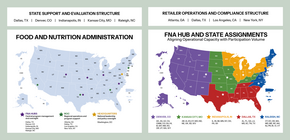
The Food and Nutrition Service is now the Food and Nutrition Administration (FNA) – new name, same vital mission! This name change is part of a phased reorganization to modernize, streamline, and strengthen our agency. This will equip FNA to best meet the needs of our participants and partners while delivering our programs with integrity. You can learn more about the reorganization by visiting the FNA website.
|

U.S. Secretary of Agriculture Brooke Rollins (Secretary Rollins) has announced the creation of the new USDA Office of Seafood. This establishes a first of its kind office prioritizing customer service for American seafood cultivators, producers, and processors, seeking to access USDA programs.
"With the launch of the USDA Office of Seafood, we are honoring decades of hard work on the water and opening the door to new opportunities, stronger support, and a brighter future for the seafood industry," said Rollins. The action comes on the heels of President Trump's Executive Order 14276, Restoring American Seafood Competitiveness. The new USDA Office of Seafood will coordinate with the U.S. Department of Commerce in developing the America First Seafood Strategy.
|
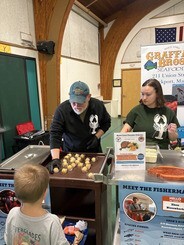
The Maine Coast Fisherman’s Association, an HMI subgrantee with Full Plates Full Potential, has been infusing Maine’s Sea to School efforts with fresh-caught local fish for top-notch culinary creations through collaborations with Maine-based producers. Staff and students from seven districts taste -tested and approved several new local seafood recipes for schools, including flounder fish cakes, monkfish stew, and sweet potato pollock soup.
The HMI School Food System Transformation Challenge will continue through 2028, with more innovative work underway. Stay tuned for more exciting updates on how schools and partners are reshaping the future of school meals nationwide!
|
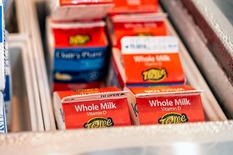
Operators of the National School Lunch Program, School Breakfast Program, Child and Adult Care Food Program, and the Special Milk Program for Children may now offer whole and reduced-fat milk to participants two years and older. USDA’s Food and Nutrition Administration published a final rule, Expanding Fluid Milk Options in Child Nutrition Programs (91 FR 25073), effective June 8, 2026, that expands fluid milk options in the Child Nutrition Programs. This deregulatory rule restores flexibility to program operators, allowing them to offer a greater variety of options to meet the nutrition needs and preferences of the children and adults they serve.
|
|
|
 |
|
. |
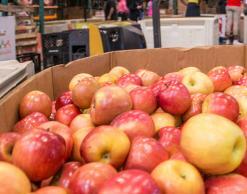
USDA Agricultural Marketing Service (AMS) will provide $14.3 million in grant funding through the Specialty Crop Multi-State Program (SCMP) to support collaborative multi-state partnerships and enhance the competitiveness of specialty crops. The focus is to address regional or national-level food safety, plant pests and disease, research, crop-specific common issues, and marketing and promotion for specialty crops projects including fruits and vegetables, tree nuts, dried fruits, and horticulture and nursery crops (including floriculture). SCMP awards competitive grants to participating state departments of agriculture as well as local governments, Indian tribes, institutions of higher education, or nonprofit organizations residing in nonparticipating states. Applications for Multi-State Partners to Participating States are due August 31, 2026, and for Participating States to USDA AMS on October 16, 2026.
|
The Meat and Poultry Processing Expansion Program (MPPEP) provides grants to eligible meat and poultry processors to expand their capacity. USDA Rural Development (RD) designed this program to encourage competition and sustainable growth in the U.S. meat processing sector, and to help improve supply chain resiliency. The primary purpose of MPPEP Phase 4 is to support the American Beef Industry by diversifying the meat and poultry supply chain and opening local market opportunities. The applicant’s facility must primarily process cattle in order to be eligible in Phase 4 of the program, however, funds or equipment may be used for processing meat and poultry at the facility.
USDA RD is accepting applications through August 7, 2026, for two types of projects:
Processing Expansion Projects: Awards will range from $50,000 to $2 million.
Simplified Equipment-Only Projects: Awards will range from $10,000 to $250,000.
The USDA National Institute of Food and Agriculture (NIFA) Community Food Projects Competitive Grants Program supports community-driven initiatives aimed at strengthening local food systems and reducing food insecurity. The program provides a one-time infusion of Federal funding to help communities develop self-reliance and long-term solutions to local food needs. The deadline to apply for this opportunity is July 16, 2026.
USDA NIFA also announced the Gus Schumacher Nutrition Incentive Program-Produce Prescription Program. This grant supports projects that aim to demonstrate and evaluate the impact of prescribing fresh fruits and vegetables on:
1. The improvement of dietary health through increased consumption of fruits and vegetables;
2. The reduction of individual and household food insecurity;
3. The reduction in healthcare use and associated costs.
The deadline to apply for this opportunity is July 16, 2026.
|
|
 |
|
. |
On June 30, at 3:30pm, ET, the Association of State Public Health Nutritionists, will highlight successes from FARMWISE, a project funded through a cooperative agreement with USDA FNS. The FARMWISE project has supported states in building Farm to ECE program capacity, awareness, supportive policies and systems, and cross-state collaboration. Over two years, thirteen states have expanded, strengthened, and sustained Farm to ECE programs. Join the closing ceremony to learn about and celebrate these achievements.
On Wednesday, July 8, at 1 pm ET, USDA Agricultural Marketing Service (AMS) will host an informational webinar to help small and mid-size meat and poultry processors access and use market information available on the agency’s website. The session will introduce participants to a range of free AMS Market News tools that support business planning, price discovery, and marketing strategies. The 30-minute webinar will guide processors through key datasets—including wholesale meat reports, direct to consumer pricing trends, and grocery store feature activity—highlighting how this information can be used to understand market dynamics and identify promotional opportunities.
On July 8, from 2 - 4 pm ET, USDA Risk Management Agency (RMA) invites crop insurance agents to participate in a virtual roundtable discussion about Whole-Farm Revenue Protection (WFRP) and Micro Farm on Wednesday, May 27, 2026. RMA is hosting this online discussion with the goal of receiving as much feedback as possible from crop insurance agents in the field to improve WFRP and Micro Farm. While this roundtable is for crop insurance agents, it impacts the insurance products available to small and medium-sized farms. It may be helpful to share within your community.
On August 3 from 2 - 3 pm ET, USDA FNA will host a webinar on local beef with guest speakers from the USDA Food Safety and Inspection Service and Maconaquah Community Schools in Indiana. The webinar will cover effective strategies for incorporating local beef into school meal programs, regulatory requirements for safely processing and serving local meat, and will showcase a successful student led meat program from the Maconaquah school. Guest speakers will participate in a live panel and QA session and will also share helpful resources, tools, and tips to support schools in implementing or enhancing local beef initiatives.
For registration information, please reach out to the Farm to School Team at SM.FN.FarmToSchool@usda.gov.
USDA Team Nutrition is excited to announce the release of “Serving Vegetables in the Child and Adult Care Food Program (CACFP)” on demand CACFP Halftime webinar.
This on-demand webinar focuses on creative and appealing ways to offer vegetables at meals and snacks in the CACFP. It also highlights current CACFP meal pattern requirements and demonstrates how these standards align with the 2025-2030 Dietary Guidelines for Americans and the Real Food Pyramid. The webinar discusses menu planning flexibilities, strategies for offering a variety of vegetables, and includes a Frequently Asked Questions section addressing common issues related to serving vegetables in the CACFP.
 |
|
. |
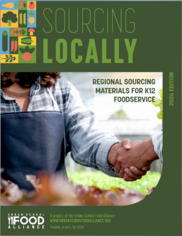
Sourcing Locally: Regional Sourcing Materials for K12 Foodservice is a practical resource developed by the Urban School Food Alliance (USFA), with funding from USDA, to support school districts in sourcing food from local producers and local food intermediaries, like food hubs, distributors, and USDA DoD Fresh vendors. It serves as a one-stop, actionable roadmap for school food authorities looking to start or expand local sourcing – combining strategic guidance, regional contacts and resources, and practical tools to help districts move from interest to implementation.
This guide:
1) Explains why local sourcing matters
2) Walks districts through getting started
3) Offers practical guidance for working with producers and local intermediaries
4) Includes an interactive Regional Locator
5) Provides curated regional and national resources
6) Supplies additional procurement tools
|
The Summer Meals Site Finder is a modern map-based resource that helps families locate nearby summer meal sites. The Site Finder reflects USDA’s commitment to improving customer service through technology. Families can search by address or visually explore sites using familiar map tools. The map displays sites that offer meals and snacks for on-site consumption as well as sites in rural areas that allow families to pick up meals for consumption at home.
USDA announced the creation of the USDA Guidance Portal. This interactive tool — a searchable, indexed database — contains guidance issued by the Department and its agencies. USDA is committed to maintaining this portal so that it reflects all current operations across the 29 relevant agencies.
|
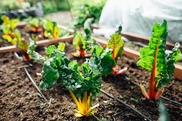
Are you looking for garden partners in your community? 2024 Patrick Leahy Farm to School Grantee, School Garden Support Organization Network and its partners synthesized school garden data, created an interactive map for public use, and analyzed the state of school gardens across the country. The map shows where school gardens are located and entities that support school gardens.
|
Nominations are now being accepted for farmers and ranchers to serve on local USDA Farm Service Agency (FSA) county committees. These committees make important decisions about how Federal farm programs are administered locally. All nomination forms for the 2026 election must be postmarked or received by the local FSA office by August 3, 2026.
|
|
|
|
|