Starting a farm to child nutrition program (CNP) is exciting, but how do you build one that lasts? It demands a structure that creates a culture that values farm to CNP, while strengthening relationships within CNP settings and the communities they serve.
The USDA Food and Nutrition Service's (FNS) cooperative agreement partners, Shelburne Farms and the Association of State Public Health Nutritionists (ASPHN), have demonstrated this approach works. Their projects equip State teams and coalitions with the skills to build a culture of farm to CNP grounded in collaboration and trust—ultimately, creating programs that can endure changes in funding, staffing, and priorities.
|
The Structure: The Farm to School Institute Model
At the heart of this work is the Farm to School Institute (Institute), a professional learning program pioneered and operated by Shelburne Farms since 2010. The Institute trains school-based teams to design and implement farm to school plans that connect the three C’s—classroom, cafeteria, and community. The Institute emphasizes five core elements: 1) cross-discipline teams, 2) peer networking and learning, 3) skill building, 4) action planning, and 5) coaching. These elements reinforce one another, equipping teams with the knowledge, relationships, and skills to build a program that has staying power.
The Model's Adaptation
Through their cooperative agreements, Shelburne Farms and ASPHN use the Institute model to train State-level teams. Shelburne Farm's to School Institute Adaption Program (Adaptation Program) helps States adapt, develop, and launch their own Institute programs, modifying elements to fit local context and goals. ASPHN’s FARMWISE: Farm to Child and Adult Care Food Program (CACFP) Institute and Learning Collaborative (FARMWISE), while similar, uses the Institute's core elements to strengthen and expand existing State coalitions focused on farm to early childcare and education. However, the FARMWISE coalitions focus on State-level policy, systems, and environmental change to advance farm to CACFP.
Relationships are central to each adaptation, and the model provides a clear structure that helps these partnerships grow and thrive through its five key elements.
|
1. Cross-discipline teams
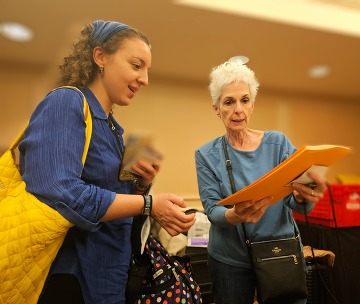
Like the original Institute model, the secret to a robust, lasting farm to CNP program starts with cross-discipline teams. The Adaptation Program and FARMWISE require State-level teams to involve multiple agencies in education, agriculture, and health. Each agency brings unique expertise and resources to the table and shares responsibilities. While varied perspectives may sometimes slow decision making up front, careful listening and sharing among partners pays dividends long term—reducing program vulnerability when priorities shift and leaders move on.
2. Peer networking and learning
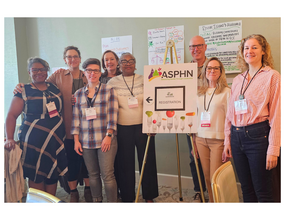
Resilient teams reflect on both wins and losses, and that requires trust. The Adaptation Program and FARMWISE recognize this link and prioritize it. Early on, they support each State cohort with a five-day in-person retreat, where individual teams and the greater cohort engage in shared learning.
“We saw a significant increase in trust after the in-person institute,” reported Rey Cooley with FARMWISE. “Once participants formed more personal relationships, they were willing to ask more challenging questions.” "There is comfort that comes from hearing from your peers in similar roles, especially when it comes to addressing problems and challenges," added Betsy Rosenbluth, farm to school director at Shelburne Farms.
These connections accelerate learning and momentum. FARMWISE sustains this through regular structured networking conversations between teams, and the Adaptation Program hosts a Community of Practice for current and past cohorts to maintain communication, shared learning, and trust.
3. Skill building
Skill building deepens connections and confidence, and both programs invest accordingly, including training participants on the elements of coalition building. “Strong coalitions are built on relationships and trust," said ASPHN consultant Emia Oppenheim. "This gets baked into the coalition with clear and consistent communications, shared goals, and transparent decision making. But a part of that, is doing decisions in a way where all the voices in the room get heard.”
To ensure coalitions sustain relationships and advance farm to CACFP, FARMWISE offers monthly webinars on topics like group decision-making. Similarly, the Adaptation Program trains state teams extensively on the Institute elements and effective professional learning, sharing tools, templates, and lessons learned.
|
4. Action planning
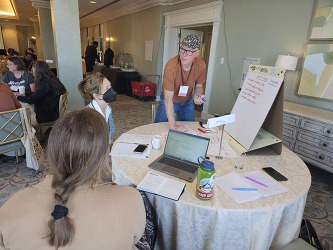
Strong teams need a clear goal and a plan, and both the Adaptation Program and FARMWISE work with teams to define these early. Through structured planning sessions, they help participants work through critical details of their State-level work; clarify roles; and revisit, revise, and reaffirm goals and clarify roles at their in-person retreats.
“Grounding the work in shared goals - that's what really builds resilience," states Cooley.
5. Coaching
While trust and collaboration elevate team performance, a good coach supports them to get there. In the Institute model, coaches help teams navigate action planning, troubleshoot, connect with resources, and maintain accountability to stay on target. The Adaptation Program and FARMWISE pair teams and coalitions with experienced coaches, who help them learn from their own experiences and others’. The Adaption Program aligns with the original Institute model. In FARMWISE, ASPHN takes on the coaching role and integrates probing questions into individual interactions, webinars, peer networking, and learning opportunities - helping teams maintain open lines of communication and see points of connection.
Driving Change
The relationships and trust built through these programs are driving real change. In 2025, Adaptation Program graduates hosted 14 State-level Institutes reaching 16 States since three States decided to engage in a multi-State institute. Convinced there was value in collaborating on a multi-State Institute, Nebraska, Kansas, and Missouri formed the Heartlands Farm to School Institute, sharing knowledge, resources, and learning experiences across State boundaries.
FARMWISE deepened efforts in 13 States. In one example, five States decided to adapt North Carolina’s Farm to ECE Connections map, which links educators to local food producers, for use in their own States. While many of these teams and coalitions are just beginning their journey, their foundations are strong. The Institute’s core elements and the relationships built will ensure their programs—and the farm to CNP programs in their State—are here to stay.
“Investing in a proven model of team-building, action planning, and coaching is an investment in the capacity for long term change and outcomes,” Rosenbluth shares, “Our model also fosters an ongoing commitment to farm to school by enabling teams to make connections among themselves and other teams that encourage a shared sense of responsibility to the work.”
|
Learn More
Inspired to learn more? Check out both programs at:
• The Farm to School Institute Adaptation Program
• FARMWISE: Farm to CACFP Institute and Learning Collaborative
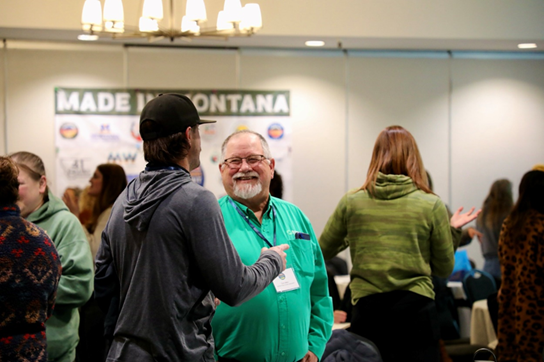
When attendees say, “This [was] hands down the best conference I have attended in my 10 years in this position,” you know you’ve hit the mark! The Mountain Plains Farm to Child Nutrition Programs Summit, hosted by the Montana Office of Public Instruction and Montana State University, was held October 15-16, 2025, in Missoula, MT, and it certainly delivered.
The summit connected farm to school leaders with their peers, shared innovative ways States are working to connect schools and producers, and brainstormed new ways to increase local foods on students’ trays. A total of 82 representatives from State agencies, University Extensions, school districts, farms, and other organizations came together for the event.
The summit began with an immersive field trip to learn about Montana Marinara, a value-added product that combines USDA Foods and local ingredients for Montana schools. Attendees walked through the product’s lifecycle—from the farm to the processing center, through the State’s distribution channels, and finally to a school, where the product was eaten.
The second day featured a keynote address by Cassandra Bull from the National Farm to School Network, focusing on scaled-up local food procurement innovations from across the nation. Each State shared local procurement highlights, followed by a robust panel discussion on supply chain strategies.
Finally, attendees participated in a workshop where State teams had the chance to pull together their newfound knowledge of local procurement innovations to brainstorm unique three-year projects. Bull called the team’s ideas “…inspirational, grounded in the rich context of each State...." "I left with deep enthusiasm and hope for the farm to school movement." For example, North Dakota hopes to build a cannery to process local beans, and Kansas plans to create a sorghum-based muffin mix for schools – yum!
|
One common thread found across many long-running farm to school programs is the deep level of buy-in from administrators, teachers, students, and community partners. This level of buy-in isn’t luck - high-functioning teams plan for it from the very beginning of their planning process. Columbus City Schools in Franklin County, Ohio, is a prime example of a well-working, mission-driven team that reflects this level of foresight.
Katie Young, Tim McDermott, and Jason Jurey are the three driving collaborators on the Columbus City Schools farm to table initiative. Their work represents a close partnership between the school district, Ohio State University Extension, and CropKing, an industry partner supporting the project. Together, these partners empower teachers to integrate hydroponic grow systems into classroom learning, positively impacting over 46,000 students across the school system.
Due to the sheer number of students, teachers don’t just educate them on hydroponics— they train them to be agricultural leaders inside and outside the classroom. The goal is to have students manage the day-to-day operations of the hydroponic grow kits and produce fruits and vegetables in their classrooms.
“And the coolest part,” says Young, “is that we are getting kids to try things they don’t usually eat,” sharing how she has seen students get excited about bok choi and swiss chard.
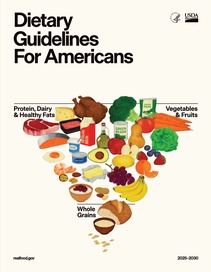
The U.S. Department of Health and Human Services and Department of Agriculture recently released the Dietary Guidelines for Americans, 2025-2030 and accompanying visual, the New Pyramid. The Dietary Guidelines provides advice about healthy eating and serves as the cornerstone of federal nutrition programs and policies, including school meal programs. The message for this edition is simple: Eat Real Food. Real foods are whole, healthy, nutrient-dense foods, including protein foods, dairy, vegetables, fruits, healthy fats, and whole grains. Shifts are also needed to limit consumption of highly processed foods, added sugars, and refined carbohydrates.
FNS has issued a memo, Dietary Guidelines for Americans, 2025-2030 - Eat Real Food (SP 02-2026, CACFP 01-2026, SFSP 01-2026), to provide information and guidance on the updated Dietary Guidelines.
|

As of January 14, 2026, schools that participate in the National School Lunch Program can now serve whole milk with lunch. This change comes from a new law called the Whole Milk for Healthy Kids Act of 2025. This law updates the Richard B. Russell National School Lunch Act, so schools have expanded fluid milk options. The change applies only to school lunch. FNS has published a memo, "Whole Milk for Healthy Kids Act of 2025 – Implementation Requirements for the National School Lunch Program (SP 01-2026)", to provide schools with guidance on implementing the updated fluid milk requirements for school lunch.
|
On December 1, 2025, FNS released the Study of Nutrition and Activity in Child Care Settings II. This report builds on the original SNACS report published in 2021. The study reviewed early child care and before and afterschool meals provided by CACFP operators to determine how closely CACFP meals align with the Dietary Guidelines for Americans. USDA found that child care providers participating in CACFP serve healthy meals to children in their care. Furthermore, children who attend these programs have better overall diets on the days they are in care than on days they are not.

From April 10-15, 2026, USDA’s National Institute of Food and Agriculture (NIFA) will host the National 4-H Conference at the Hyatt Regency Crystal City Hotel in Arlington, Virginia. The Conference is USDA’s flagship youth development opportunity for young leaders, ages 15 to 19, to share their voices with the Federal government and to experience unparalleled discovery, learning, professional development, and networking with 4-H’ers from around the world.
|
|