|
August 18, 2015 | Volume 4, Issue 20
Feature
Does your back to school list include local food?
 Just in time for the new
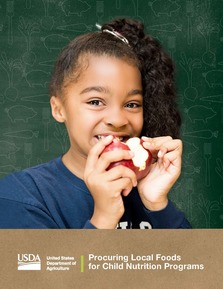
school year, our revised guide, Procuring Local Foods for Child Nutrition Programs,
is now available and can help you decide how to buy local for your program.
The guide covers procurement basics, defining local, where
to find local products, and the variety of ways schools can purchase locally in
accordance with regulations. This revision incorporates information about
micro-purchases, buying local foods for child care and summer meal programs and
more real-world examples. Check out the new guide for sample solicitation
language, detailed geographic preference examples and helpful resources.
|

Notes from the Field
Spotlight on Summer: local food meets SNAP-Ed in Calistoga, CA
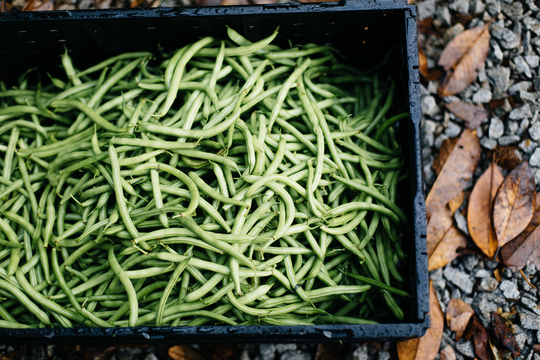 Garden fresh green beans
With support from Napa County’s Healthy
Cooking with Kids, Inc. program, Calistoga Joint Unified School
District (CJUSD) serves local fresh vegetables straight from the school garden in summer
meals as part of the Seamless Summer Option. Healthy Cooking with Kids, Inc.
is funded by the USDA
SNAP-Ed Program and implemented statewide by the California Department of Public Health’s Nutrition Education
and Obesity Prevention (NEOP) Branch. Through nutrition education,
social marketing, and public health strategies in community settings, SNAP-Ed
aims to increase the likelihood that that people eligible for SNAP will make healthy food
choices within a limited budget and lead physically active lives. Gardens
provide opportunities for both!
With SNAP-Ed funding, Healthy Cooking with Kids, Inc.
provides health educators and garden specialists to assist with the CJUSD’s
school garden-to-cafeteria program. CJUSD’s school gardens are successful
year-round due to engagement from students, community partners, families,
faculty, and staff. Throughout the summer, it is clear that sharing the story
of how the vegetables get to their trays has increased youths’ acceptance of
fruits and vegetables.
Ed Burke, Director of Food Services at CJUSD and his food
services team have found practical and creative ways to integrate the garden
fresh produce into daily production of summer meals using feedback from their
young customers. In his own words, Mr. Burke shares valuable tips:
-
Basil: Just one day after harvesting fresh basil from the
garden, we incorporated it into our marinara sauce. Awesome!
-
Carrots:
In addition to carrot coins and
sticks for snacks and salads, we cook and puree carrots deemed too bitter
for addition to our marinara sauce.
-
Green
beans: We dice and sauté in olive oil
with a dash of salt.
-
Kale:
Local kale is a hit in summer
salads, and kale chips are a tasty snack. For our “Dino Kale Chips,” we
spray oil onto large diced kale leaves, season with kosher salt and a bit
of lemon juice, and bake until crunchy. The kids love the loud crunch!
-
Squash
and Zucchini: We sauté with olive oil and
add a dash of salt and a little mozzarella cheese.
-
Squash
flowers: A treasured harvest in our
community! We used them in a two-cheese quesadilla. There were tears when
we did not have enough for the 150 daily summer lunch participants!
-
Onions: We incorporate everywhere onions can be. We love to
use fresh onions!
As summer comes to a close, CJUSD students look forward to
many more crops coming soon including: beets, corn, melons, tomatillos and
several varieties of squash, pumpkins, tomatoes and potatoes, beans and micro
greens, lettuces, mushrooms and edible flowers. Yum!

Fact
sheet refresh
Have you been wondering how cooperative extension professionals can
support farm to school programs? Or how in the world to include geographic
preference in procurement? We have a host of fact sheets to meet your needs,
and they were all recently updated. Visit our website and check ‘em out!

Bits from Blogs
Posted
by Kacie O’Brien, Farm to School Regional Lead, USDA Food and Nutrition
Service, Western Region
“May
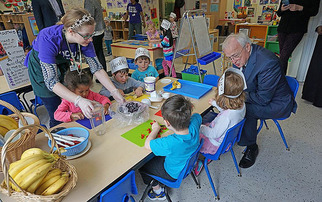
I have more kale chips, please?” asked a four-year old preschooler
during one of my first site visits as farm to school lead for the Food
and Nutrition Service’s Western Region. The preschoolers I was visiting
grew and harvested the kale themselves a few feet beyond their classroom
door and were enjoying the crisp treat as a snack. At the time, the USDA Farm to School Program was
just beginning to expand their support to K-12 schools. Since then, I
have worked with school districts in bringing the farm to their
cafeterias and classrooms.
Our reasons for supporting farm to preschool are numerous. While the Healthy Hunger Free Kids Act of 2010 authorized the USDA Food and Nutrition Service to establish the Farm to School Program, the legislation also expanded the Child and Adult Care Food Program (CACFP)
to not only aid child care institutions in serving nutritious foods,
but to contribute to their wellness, healthy growth and development.
Farm to preschool meets that requirement, and is recognized by the
Centers for Disease Control and Prevention as a strategy to increase
access to healthy environments. As evidenced by the eager kale chip
request, farm to preschool efforts can set the stage for a lifetime of
healthy eating.
|

|