|
July 7, 2015 | Volume 4, Issue 17
Feature
Farm
to preschool resources
 The
Food and Nutrition Service (FNS) has a cornucopia of resources to support the
burgeoning movement to introduce more local foods and food education into early
childhood education and care settings.
Fact
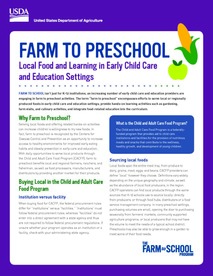
sheet (pdf): Hot off the (digital) presses, the USDA Farm to School team published a
new fact sheet focused on preschool settings. This resource presents basic
information about farm to preschool efforts, including tips and resources.
Policy
memo (pdf): Want
to dig deep into finding out how to integrate local
food into your Child and Adult Care Food Program (CACFP)? Look back at this
March 2015 memo for guidance on incorporating local foods
and agriculture-based curriculum in early childhood education and care
settings. It gets right to the point with a Q&A section on procuring,
growing, and accepting donated local food for CACFP programs.
Farm
to Preschool Webpage: You can find even more resources on FNS’s Farm to Preschool webpage. Curriculum and menu ideas and procurement guidance will inspire you to
get started or take your program a step further.
|

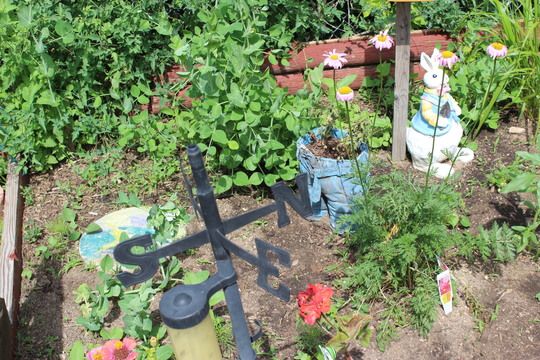 Chilren's garden at Colorado Springs Family Development Center
Farm to preschool in action
The Colorado Springs Family Development
Center is a daycare located on the University of Colorado campus. The center
operates CACFP and implements a number
of farm to preschool initiatives, including a garden and nutrition education
activities. The children handle all aspects of the garden, including planting, weeding, harvesting, and of course, eating the “fruits” of
their labor. The center director, Ida Bauer, said that the children love working in the garden and are more willing to try new foods as a result of
their connection to the soil. Bauer also noted that getting kids into the garden
helps children foster emotional and social development through play, and
connects them to the earth and to the food they eat. See more of the garden here (pdf).
Notes from the Field
Spotlight
on Summer: Madison, WI
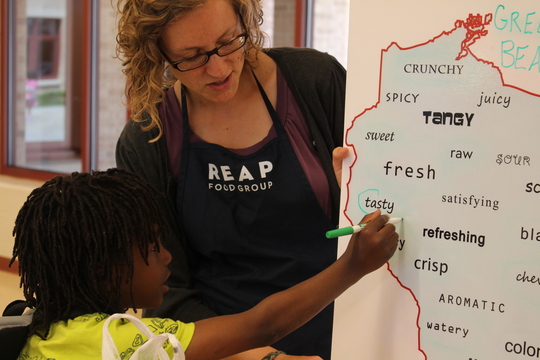 Describing local green beans
In Madison, WI, a large urban school district and a
strong nonprofit partner are working to not only source fresh, local foods for summer meals, but also to educate and engage kids at summer
sites. For the second summer in a row, Madison
Metropolitan School District’s Summer Food Service Program and REAP Food Group’s Farm to School Program
are serving up local produce to kids and teens across the city at 43 summer meal sites. This summer,
locally-grown veggies sourced and processed through the WI Innovation Kitchens
are in abundance. Kids are enjoying local cucumbers, green beans, snap peas,
radishes, summer squash, and kohlrabi. What’s more, REAP staff and volunteers
visit the summer meal sites to ensure that kids know about their food and where
it comes from. Kids have the opportunity to share thoughts through this
descriptive tasting board, which captures students’ feedback to encourage
thoughtfulness and make sure that the items and recipes are approved. We love
how this variety of fresh, local foods are served alongside educational
conversations and engagement!
Tell
us how you bring the farm to your summer meals program! Send us your
anecdote and we’ll select model programs to feature in our
communications throughout the summer.

Local Food, Local Places initiative applications
"Local food is not only a business opportunity for agriculture, it can also be a development tool that allows communities to maximize the impact of what is grown and made locally. Local food projects can help grow local food economies and drive downtown and neighborhood revitalization..." wrote Tom Vilsack, USDA’s Secretary of Agriculture, in a recent blog.
Local Foods, Local Places is a federal initiative that helps communities integrate local food systems into their economic development plans, including farm to school activities. Communities participating in the program are implementing projects such as: creating year-round, downtown markets featuring foods from local farmers; building centrally located community kitchens or food hubs to aggregate and market local foods; assisting schoolchildren to grow their own food and making healthy local food accessible to families; and developing community gardens in walkable, bike-able, transit-accessible places.
Local Foods, Local Places is preparing for a second year of projects. Applications are due by September 15, 2015.

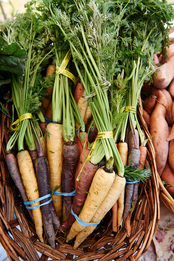
Produce Webinar
Become a Vendor for the Pilot Project for Procurement of
Unprocessed Fruits & Vegetables
Thursday, August 13, 2015 at 2:00 pm EDT: Join USDA’s Agriculture Marketing Service (AMS) to learn more
about becoming a vendor for the pilot. FNS and AMS are conducting the pilot project in eight states (California,
Connecticut, Michigan, New York, Oregon, Virginia, Washington, and Wisconsin).
Several of the states involved are interested in the pilot as a means to
promote local purchases and farm to school initiatives. AMS is seeking
additional vendors for this project, and this webinar will detail how to become
one. Registration is required and space is limited, so sign up today!
|

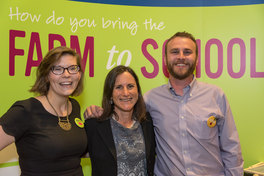
Posted by Elanor Starmer, Senior Advisor to the Secretary on
Local and Regional Food Systems
“The term ‘farm to school’ involves thinking of the whole plate,
so to speak. It’s about increasing the amount of local and regional foods
served in school cafeterias while also increasing education and community
outreach for kids, and creating market opportunities for producers.”
So says Matt Russell, Grant Program Manager for the Farm to School Program
at USDA’s Food and Nutrition Service (FNS).
Matt works to support school districts, non-profits, and other stakeholders in
bringing more local and regional food into the school meal program.
|

|