|
BANKING ISSUES IN FOCUS | OCTOBER 1, 2026 |
|
|
The agricultural sector has continued to post strong aggregate income in the years following the pandemic. But this headline strength masks stress in the row crop segment. Since 2023, sharply lower crop prices and persistently high production costs have challenged the segment, similar to conditions during the last row crop downturn from 2014 to 2019. Although the current downturn shares many characteristics with that earlier period, there are notable differences, including strong cattle-sector profitability and increased government support. In addition, today’s higher interest rates have added cost pressures across the segment.
FDIC-insured farm banks have thus far managed the row crop sector downturn supported by strong capital and favorable earnings. Agricultural credit quality has declined modestly, but high farmland values have provided important collateral strength and flexibility for loan restructurings. If weak row crop returns persist, we can expect growing financial stress among producers and continued deterioration in agricultural credit quality, but conditions should remain manageable for most farm banks.
|
|
More Farm Banks Are Reporting Elevated Agricultural Loan PDNA Rates
Share of Banks Grouped by Past-Due and Nonaccrual (PDNA) Loan Rate Buckets
|
|
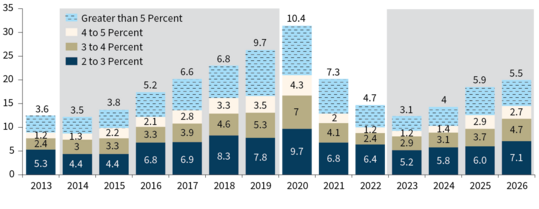 Source: FDIC. Note: Data are second-quarter figures and include only farm banks. Shading represents row crop downturns. A downturn is a period marked by sharply lower crop prices and persistently high production rates.
|
|
|
The FDIC does not send unsolicited email. If this publication has reached you in error, or if you no longer wish to receive this service, please unsubscribe.
|
|
|
|