|
Enhancing Surface Awareness
New runway safety tool to deploy at AUS, BNA, DAL, IND
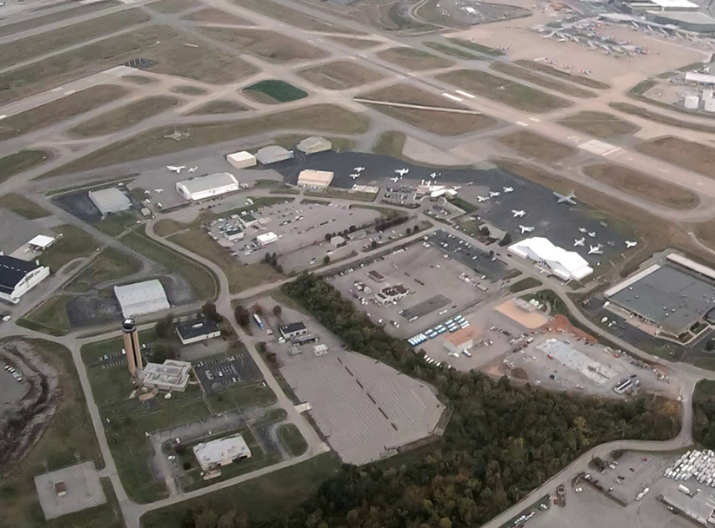
Austin-Bergstrom, Indianapolis, Nashville and Dallas Love Field will be the first airports in the nation to receive new airfield surveillance systems that will reduce the risk of runway incursions by improving air traffic controllers’ situational awareness.
The FAA plans to implement the Surface Awareness Initiative (SAI) system at the first four airports by July 2024. Scores of other airports will receive it by the end of 2025.
This is important because: “We’re committed to doing everything possible to make our runways even safer,” said administrator Mike Whitaker. “This cost-effective technology provides controllers with timely and accurate depictions of aircraft and vehicles on the entire airfield in all weather conditions.”
SAI uses Automatic Dependent Surveillance – Broadcast (ADS-B) data to display surface traffic to controllers at airports that do not have a surface surveillance tool. Aircraft and ADS-B-equipped vehicles appear as icons on an airport map that depicts runways, taxiways, hold ramps and other areas.
SAI is one of the three initiatives that make up the FAA’s fast-tracked surface safety portfolio. The other tools are Approach Runway Verification (ARV) and the Runway Incursion Device (RID). Quickly developing and deploying these technologies is one of many actions the FAA is taking to enhance safety and eliminate serious close calls following the Safety Call to Action and release of the Independent National Airspace System Safety Review Team report last year.
Read more about the Surface Awareness Initiative (SAI) system on FAA.gov.
 Registration is now open! The 4th Annual Diversity, Equity, Inclusion and Accessibility Symposium will be held virtually June 25-27.
|
|
|
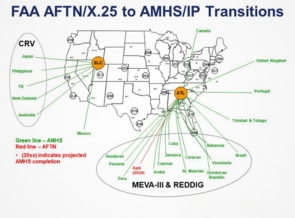
The final upgrade of the FAA’s new international ground-to-ground telecommunications system is underway. The Aeronautical Message Handling System (AMHS) replaces the Aeronautical Fixed Telecommunications Network (AFTN), which has been operational since the 1970s. AMHS handles data through an internet protocol instead of the older protocol suite used by AFTN, which only allows for shorter, text-based messages. The FAA processes 10 million messages every year via AMHS. Information provided includes weather, flight plans, Notices to Air Missions and pilot reports. “This milestone sets the stage for a global network that greatly improves efficiency, reduces telecommunications costs and enables emerging services the opportunity to use this infrastructure to exchange data, no matter the format,” said Andy Isaksen, manager of NAS Integration and Infrastructure Solutions.
|
As part of the FAA’s ongoing commitment to employees with young children, starting in 1990, the agency established childcare programs across the country. Currently, the FAA has 15 sponsored childcare centers serving more than 1,100 children. For our employees with young children, on- or near-site childcare centers are often a significant factor in meeting both work and home responsibilities. Celebrating the Month of the Aviation and Aerospace Child (MOTAAC) is also a great time to recognize the tremendous efforts that allow these facilities to thrive and operate safely for the children of the FAA every day. This year we have seen several renovation projects across the agency's 15 centers. At each location, large and small projects were completed by the dedicated team of engineers, facility specialists, contract managers and finance employees alongside the center staff, directors, board members and families.
|
|
Step into a Healthier You: Participate in the Step Up DOT health challenge, featuring movement and mindfulness activities to nourish the mind and body.
|
|
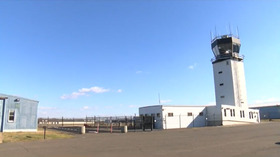
April 16, 1992: At Manassas, Va., FAA dedicated its first "recycled" tower. The 60-foot structure had been moved from Englewood, Colo., where it was no longer being used. "The FAA said if someone provided a tower, they would staff it," said Bruce Lawson, a former airport manager. "So, Manassas called their bluff." In 1992, Manassas paid about $1 million for a control tower at the Arapahoe County Airport in Colorado, hauled it across the country in pieces and rebuilt it at Manassas. The feat is a first and only (so far) — Manassas's claim in aviation trivia. |
|
|
|
|