|
Grants to Boost Aviation Careers
Developing the next generation of aviation professionals
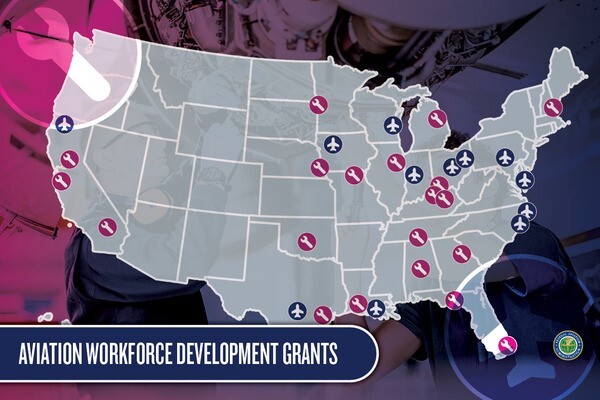
Thirty-two schools will receive $13.5 million in grants from the FAA to help attract and train students for careers as pilots and aviation maintenance technicians.
Twelve of the schools will receive $4.5 million from the FAA’s Aircraft Pilots Aviation Workforce Development Grants program. The schools can use the funding to create and deliver curriculums designed to prepare high school students to become pilots, aerospace engineers or drone operators. Grants may also be used to support the professional development of teachers.
The other $9 million will go to 20 schools as part of the FAA’s Aviation Maintenance Technical Workers Workforce Development program. These grants will help build back the pipeline of maintenance professionals; approximately 20,000 fewer people are working in the aircraft maintenance sector than before the pandemic.
Grant recipients include schools in North Carolina, Wisconsin, Pennsylvania, Texas, Iowa, Louisiana, Ohio, Oregon, Indiana, Maryland, Oklahoma, Florida, Alabama, South Carolina, New Hampshire, California, North Dakota, Illinois, Tennessee, Georgia and Kentucky.
Recipients can use the funding to establish new educational programs; provide scholarships or apprenticeships; conduct outreach about careers in the aviation maintenance industry; and support educational opportunities related to aviation maintenance in economically disadvantaged areas.
WorkLife Wednesday: Webinars – Women & money; Tips for managing change in the workplace; and Balancing your financial and emotional wellbeing. Articles – What to expect when contacting your EAP program; Don’t overlook your mental health; and Dealing with anger and frustration.
|
|
|
Empowerment and embracing transformation are vital parts of Karen Long’s mission. As the ATO Lead Employee Engagement Captain, she helps the FAA cultivate tangible initiatives that foster a culture of engagement where managers and employees can effortlessly collaborate and thrive. As she reflects on her career, Long points back to her peers as a driving force. “My biggest inspiration throughout my career has been the ATO Employee Engagement Captains—the inspiring and dedicated leaders who ensure their fellow employees have the tools and support to shine in their roles,” she said. “Their unwavering passion and commitment continue to drive me forward.... our leadership has worked tirelessly to create an inclusive workplace that welcomes all employees, regardless of their background.”
|
George Simoni first arrived at the FAA in January 2023 and left shortly after for a National Guard deployment. Since November of last year, he’s been back full-time and is swiftly making a mark on the Tech Center. At first, Simoni experienced a bit of a culture shock but getting involved in the community made a noticeable difference. “Joining the [Employee Engagement Team] and having such an amazing support structure in my section and branch leadership has really made the transition seamless,” he said. Now, as a facility support specialist, Simoni ensures strict compliance with Executive Orders, Presidential Decision Directives, Code of Federal Regulations and FAA Program Orders to safeguard critical infrastructure and keep the people of FAA safe.
|
|
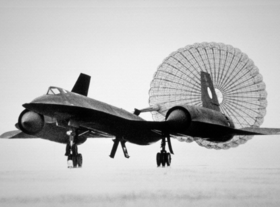
March 6, 1990: The service career of one Lockheed SR-71A Blackbird ended with a record-setting flight from Los Angeles to Washington D.C. in 1 hour, 4 minutes, and 20 seconds, with an average speed of 2,124 mph that triggered a 6:01 a.m. sonic boom for California residents. Upon arrival at Dulles International Airport, Lt. Col. Ed Yeilding and Lt. Col. Joseph Vida, taxied the Blackbird into the custody of the Smithsonian's National Air and Space Museum. This specific aircraft spent twenty-four years in active Air Force service and accrued a total of 2,801.1 hours of flight time. The remaining aircraft in the U.S. SR-71 fleet were retired or transferred to NASA earlier that year. |
|
|
|
|