|
Thank you for signing up for this e-newsletter on the EDC-7 initiative Rethinking DBE for Design-Build. If you missed the EDC Virtual Summit last February, you can now access the recordings and resources on-demand. In our breakout sessions, we provided an overview of the Rethinking DBE for Design-Build initiative and several topical sessions that provided a more in-depth discussion of Open Ended Performance Plans (OEPP) and best practices across the country.
DBE Open Ended Performance Plan for Design-Build projects – part 1
John Burns, from FHWA’s Major Projects Program, Lismary Gavillan, Construction Program Manager from FHWA CA Division and Sara Lee, HNTB Ohio Office (previous DBE), discussed the importance of equitable opportunities for DBEs on design-build projects
DBE Open Ended Performance Plan for Design-Build projects – part 2
(Same as part 1 but different questions from attendees)
Best Practices on Developing and Monitoring a DBE OEPP – part 1
James DeSanto from FHWA’s Office of Infrastructure discussed details of design-build while Joe Hernandez, President Modern Times (a DBE consultant) and staff from MassDOT discussed the importance of an OEPP.
Best Practices on developing and monitoring a DBE OEPP – part 2
(Same as Part 1 but different questions from attendees)
Field practices on integrating the DBE OEPP – part 1
Anna Marriotti and Kelly Whaley from Colorado DOT and Michael Bryant from Texas DOT shared best practices on how their State has successfully integrated OEPPs in their design-build procedures.
Field practices on integrating the DBE OEPP – part 2
(Same as part 1 but different questions from attendees)
Click here to register for the EDC-7 Virtual Summit and access the on-demand recordings.
DBE for Design Build
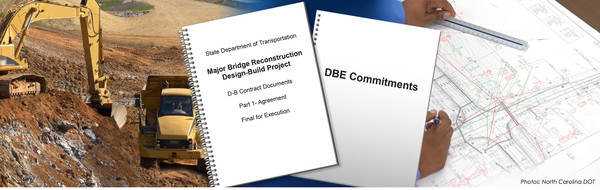
Design-build is a popular alternative contracting method where the project sponsor contracts with the most qualified team to both design and build a project. Design-build contracting is used frequently on larger, complex, federal aid highway and bridge projects that typically have significant subcontracting opportunities for Disadvantaged Business Enterprise (DBEs). In traditional contracting, prime contractors must submit a commitment plan with named DBE subcontractors to meet the contract goal prior to award. In design- build contracting, however, when prime contractors submit their responses to proposals, the projects are not fully designed, and the details of available subcontracting opportunities are not yet known. This makes it challenging for prime contractors to name DBEs in their commitment plan. Those DBEs that the prime contractors identify may be unable to perform the work at the quoted price when the subcontract details are known, and the work is scheduled—at times 3-5 years in the future. And even more concerning, in some instances because of the lack of details, prime contractors may submit documented good faith efforts instead of meeting the goal with sufficient DBE subcontracting.
One solution States have begun using is an open-ended performance plan (OEPP). An OEPP is a modified DBE commitment plan that, instead of naming DBEs to perform specific work at a specific price, allows the proposer to list anticipated work types for planned DBE participation throughout the life of the project. This type of plan, submitted with a schedule of when actual subcontracts will come to fruition, serves as a roadmap detailing how the DBE goal can be achieved. Another advantage of OEPPs is that they can be flexible to add or change anticipated opportunities for DBE participation.
Stay Connected |
|
 |
If you are not already a subscriber, the Center for Accelerating Innovation invites you to subscribe to EDC News and Innovator. These newsletters showcase successful deployments of EDC initiatives and other innovative topics in the highway industry.

|