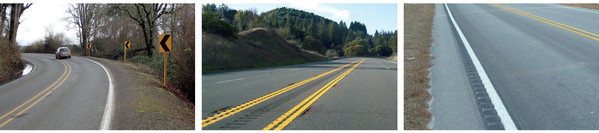
Tools for the Systemic Analysis of Roadway Departures
|
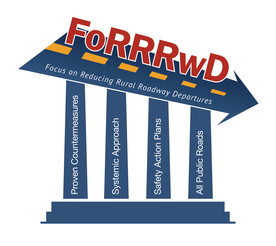
Nearly 12,000 people die each year as a result of a roadway departure on a rural road. That's 30 people every day! That is why FHWA introduced the Focus on Reducing Rural Roadway Departures (FoRRRwD) initiative.
 |
|
The FoRRRwD initiative is supported by 4 pillars:
- All Public Roads
- Proven Countermeasures
- Systemic Approach
- Safety Action Plans
|
The Systemic Approach
A fundamental challenge of FoRRRwD is that roadway departure crash locations on rural roads are random and change from year to year. This is because humans make mistakes, and that can happen anywhere. Agencies that rely solely on crash history are unlikely to find locations were there is more than one crash which makes it difficult to prioritize locations for improvement.
The Systemic Approach to Safety identifies locations based on high risk roadway features that are correlated to particular crash types, rather than crash frequency. Using this approach an agency might find that curves with higher traffic volumes, tighter radius, and narrow shoulders have a higher potential for crashes and could select locations that have these features for improvement even though there has not been a recent crash.
Rather than waiting for a tragedy to happen, the Systemic Approach tries to proactively improve locations based on risk.
FHWA has developed a number of tools and resources that can help with the Systemic Approach.

A video has been developed that explains the Systemic Approach, relating it to an annual medical visit. This approach helps you identify locations on your roadway at a higher risk for future severe crashes.
Another video is being developed that compares the Systemic approach to the Site Specific and Systematic approaches. This video should be posted to our website soon.
|
 |
|
The Systemic Safety Project Selection Tool presents a process for incorporating systemic safety planning into traditional safety management processes. The Systemic Tool provides a step-by-step process for conducting systemic safety analysis; considerations for determining a reasonable distribution between the implementation of spot safety improvements and systemic safety improvements; and a mechanism for quantifying the benefits of safety improvements implemented through a systemic approach. |
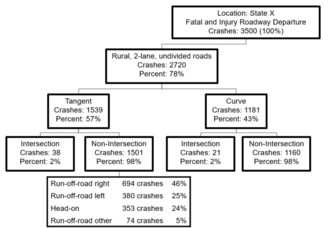
Crash Trees can be used as part of the systemic analysis to identify focus crash types and facilities.
There are different ways of developing the crash tree depending on the data available and the nature of crashes the agency experiences. FHWA has developed a Crash Tree Maker that automates the process and makes it easier to try different combinations.
There is also a tutorial video for the Crash Tree Maker.
|
 |
|
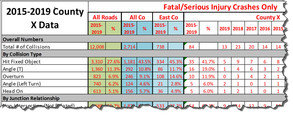
The Crash Data Summary Template is a spreadsheet that State, Tribal, local, and other agencies can use to summarize crash data and detect over-representation to inform their highway safety programs. |
30 people will die today as the result of a roadway departure on a rural road. Using these tools, agencies can implement countermeasures that can save the people behind these numbers. |
|
 |
Stay Connected |
|
 |
If you are not already a subscriber, the Center for Accelerating Innovation invites you to subscribe to EDC News and Innovator. These newsletters showcase successful deployments of EDC initiatives and other innovative topics in the highway industry.
|