|
Follow us @USGS_Climate on Instagram |
|
|
A New Framework for Making Actionable Science More Actionable
 |
|
In a recent article, a team of USGS scientists, including from the Climate Adaptation Science Centers, argue that a lack of specificity about who management partners are can make it difficult to design research that addresses real-world needs, evaluate whether scientific products are ultimately useful, and foster adoption and implementation of findings. The authors propose a simple but powerful framework to help scientists better align science with management needs. Learn more>> |
Fires of Unusual Size: Future of Extreme and Emerging Wildfire in a Warming U.S.
 |
|
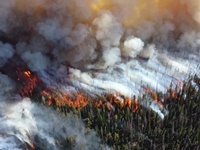
A new study supported by the North Central CASC examines the rise of “fires of unusual size” and highlights how shifts in fire behavior, landscape conditions, and societal exposure are reshaping wildfire risk and challenging traditional approaches to preparedness and management. Understanding these emerging fire patterns can help inform planning, strengthen resilience, and support adaptation strategies for communities and ecosystems. Learn more>> |
Empowering Recreational Anglers to Better Protect Walleye
 |
|
The Midwest is defined by its deep-rooted walleye fishing traditions and a shared love for natural waterways. Many walleye populations are declining at a concerning rate due to environmental pressures and human impacts. Midwest CASC Fish Biologist Holly Embke and partners contributed to “Walleye in Our Hands,” a coordinated effort to empower recreational anglers to better protect walleye. Learn more>> |
New Tool Helps Northeast Managers Identify and Locate Native Plants
Rock Glaciers, Ice Worms, and Wolverines, Oh My!
 |
|
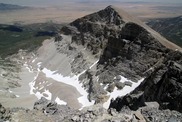
In July’s episode of the “Come Rain or Shine” podcast, a product of the Southwest CASC and partners, Dr. Scott Hotaling, an Assistant Professor at Utah State University, discusses how mountain ecosystems in the western U.S. and elsewhere are impacted by climate. The discussion travels through topics including shrinking mountains, snow algae, ice worms, and more. Learn more>> |
Second Chapter of USGS Grasslands Report Published
 |
|
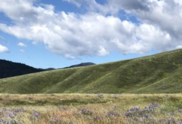
Grasslands in the North Central region are managed by a diverse group of federal, state, and Tribal agencies; NGOs; partnerships; and private landowners. North Central CASC researchers contributed to the second chapter of the USGS Grasslands Report which highlights grassland management entities, provides background information on their mission and organizational structure, and describes key grassland management activities. Learn more>> |
|
|
|
Apply Now! USGS Fire-Climate Adaptation Fellow
The Southeast CASC is recruiting for a postdoctoral or post-master's fellow to assist with a project on the future of fire in the Southeast. This project will involve the development, implementation, and analysis of a major regional workshop focused on adaptive fire management under rapidly shifting fire regimes in the southeastern U.S. and U.S. Caribbean. The fellow will be a part of technical and analytical research to gain knowledge on intentional fire use—prescribed fire, cultural burning, and managed wildfire—within increasingly constrained ecological and social conditions in the Southeast.
Structured Decision Making and RAD Webinar
Join this webinar on the linkages between structured decision making and the Resist-Accept-Direct (RAD) framework. USGS Research Ecologist Mike Runge will discuss how structured approaches to decisions can provide a process for both facilitating RAD and accessing decision support tools for challenging decisions, and how the tenets of decision analysis can be modified to accommodate non-stationary system dynamics and other climate-related challenges.
Connect with the CASCs at the Ecological Society of America Meeting
Attending the 2026 Ecological Society of America (ESA) meeting later this month? Connect with scientists from across the CASC network.
Learn more>>
Midwest CASC Summer Science Seminars
The Midwest CASC is hosting a summer science seminar series, with three webinars from May to August. The July webinar will be focused on Nature-Based Solutions for Flood Risk Reduction and Community Resilience.
2026 Tribal Community Resilience Webinar Series
The 2026 Tribal Community Resilience Webinar Series, co-hosted by the American Indian Higher Education Consortium (AIHEC) and the Climate Adaptation Science Centers, launched in February. This monthly series explores how Tribal Nations are responding to resilience challenges across the U.S. Join the seventh webinar in the series, focused on emergency preparedness.
Southeast Regional Invasive Species and Climate Change (SERISCC) Webinar
Join the Southeast RISCC for a webinar on “Invading Meadows: Tropical Seagrass Across the Caribbean”. Dr. Kelcie Chiquillo is an Assistant Professor in the Department of Biology at the University of Puerto Rico Río Piedras, and a marine biologist whose research focuses on seagrass ecology, species invasions, and biodiversity in tropical marine ecosystems.
|
|
|
Southeast CASC Science Seminar Recording
Catch the replay of the latest science seminar from the Southeast CASC on assessing patterns of subterranean biodiversity and microclimates to inform cave management and conservation. Watch the seminar>>
|
|
|
USDA Unveils New Framework for Migratory Big Game Conservation
The U.S. Department of Agriculture (USDA) unveiled a new framework for migratory big game conservation, bringing together federal, state and Tribal partners across 17 states to address threats to big game like elk, pronghorn and mule deer. "The Migratory Big Game: A Framework for Conservation Action" is the most unified, landscape-scale approach undertaken by the USDA’s Farm Service Agency and Natural Resources Conservation Service to support big game conservation while keeping working lands working. Learn more>>
Save the Date! National Tribal Infrastructure Coordination Conference (NTICC)
The National Tribal Infrastructure Coordination Conference will be held in Reno, Nevada, October 5-8, 2026. The conference will strengthen the resilience of communities, nature, and built environments to evolving hazards through coordination, collaboration, partnerships and honoring reciprocity with one another and the natural world. Learn More>>
NOAA Predicts Below-Normal 2026 Atlantic Hurricane Season
Forecasters with NOAA’s National Weather Service are predicting a below-normal hurricane season for the Atlantic Basin this year. The outlook for the 2026 Atlantic hurricane season, which runs June 1 to November 30, predicts a 35% chance of a near-normal season, a 10% chance of an above-normal season, and a 55% chance of a below-normal season. Learn more>>
|
|
|
Who We Are
The National and Regional Climate Adaptation Science Centers partner with natural and cultural resource managers to provide science that helps fish, wildlife, ecosystems, and the communities they support adapt to a changing climate. This newsletter spotlights CASC science and relevant content from the CASC community of partners. Explore previous issues>>
Learn more about our work at www.usgs.gov/casc. Have questions? Contact us at casc@usgs.gov
|
|
|
|
|