|
Follow us @USGS_Climate on Instagram |
|
|
Study Reveals that Inland Recreational Fishery Harvest is Quite the Catch
 |
|
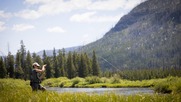
New research shows that inland recreational fisheries likely harvest far more fish than previously reported. A recent article in The Conversation summarizes this research and highlights the significant and underestimated role recreational fisheries play in food security, ecosystems, and economies. Learn more>> |
Understanding the Climate Conditions Behind the 2025 Los Angeles Urban Firestorm
 |
|
Southwest CASC-supported researchers examined the atmospheric conditions that gave way to the extreme surface winds fueling the unprecedented 2025 Los Angeles firestorm. As communities continue to expand into fire-prone landscapes, this research emphasizes the importance of aligning improved forecasting with proactive planning and operational preparedness. Learn more>> |
StoryMap Explores Wildlife Range Shifts and Impacts to Tribes
 |
|
Tribal Nations often hold spiritual, cultural, economic, and subsistence relationships with wildlife and other beings, and shifts in wildlife ranges are presenting a number of challenges. To support regional Tribal management concerns, the Midwest CASC Tribal Resilience Liaison developed an ArcGIS StoryMap, “Breaking Bonds: Wildlife Range Shifts in a Changing World,” that explores the science behind range shifts, the impacts Tribes are experiencing, and actions that can be taken in response. Learn more>> |
Collaboration and Cooperation are at the Center of Pygmy Rabbit Conservation in the Northwest
 |
|
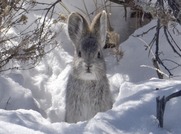
Until recent decades, little was known about the pygmy rabbit, a small rabbit facing big threats, such as wildfire and invasive species, in the Great Basin and the neighboring intermountain areas it inhabits. The Northwest CASC is supporting work to understand how changing snowpack, soil temperature, and moisture conditions will affect burrow habitats and how pygmy rabbits respond to these changes. Learn more>> |
Species on the Move: Northeast CASC Researchers Discuss Species Range Shift in Recent Podcast Episode
 |
|
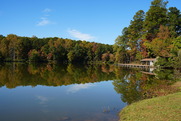
In a recent episode of Ask MIT Climate, a climate-focused podcast of the Massachusetts Institute of Technology, Northeast CASC Research Ecologist Toni Lyn Morelli and former Northeast CASC Fellow Alexej Sirén discuss how species are responding to a warming climate. Learn more>> |
USGS Participates in 2026 Native American Fish and Wildlife Society National Conference
 |
|
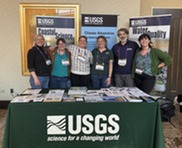
In May, USGS staff from multiple centers, including the North Central, Northeast, and Southeast CASCs participated in the Native American Fish and Wildlife Society’s (NAFWS) national annual conference, hosted by the Oneida Indian Nation in Verona, NY. The theme of the meeting was “From Ancestral Knowledge to Emerging Technology: Sustaining Native Fish & Wildlife.” Learn more>> |
Identifying Gaps in Coastal Marsh Models for Decision-Making
 |
|
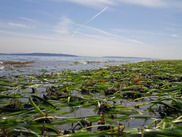
Scientists partly funded by the Southeast CASC have identified key opportunities for better translating coastal marsh model findings into actionable results for restoration and conservation decision-making. The study highlights that while current models are powerful, practitioners still face “scale mismatches” between model outputs and decision-making needs. Learn more>> |
|
|
USGS Sagebrush Ecosystem and Fire Science 2026 Webinar Series
The USGS Land Management Research Program and the Great Basin Fire Science Exchange are hosting a webinar series over the next week to provide updates in sagebrush, fire, invasives, wildlife, and monitoring related research. Each 90-minute webinar will be comprised of multiple manager-focused presentations.
2026 Tribal Community Resilience Webinar Series
The 2026 Tribal Community Resilience Webinar Series, co-hosted by the American Indian Higher Education Consortium (AIHEC) and the Climate Adaptation Science Centers, launched in February. This monthly series explores how Tribal Nations are responding to resilience challenges across the U.S. Join the sixth webinar in the series, focused on fish and wildlife.
Midwest CASC Summer Science Seminars
The Midwest CASC is hosting a summer science seminar series, with three webinars from May to August. The July webinar will be focused on Nature-Based Solutions for Flood Risk Reduction and Community Resilience.
Save the Date For the 3rd International Invasive Species and Climate Change Conference
The 3rd International Invasive Species and Climate Change Conference (IISCCC) will be held virtually on December 1-2, 2026 (1–5pm ET). Organizers are currently seeking talk abstracts from early career professionals (students or anyone within 8 years of final degree) and managers on the following topics: Marine ecosystems, food security, extreme events, lessons from management, and disease/One Health.
|
|
Pacific Islands CASC Webinar Recording
The Pacific Regional Invasive Species and Climate Change (Pacific RISCC) May webinar explored the growing threat of the introduced fungal pathogen Ceratocystis manginecans in Palau and its role in the widespread dieback of the ecologically and culturally significant udeuid tree (Manilkara udoido). The webinar covers what is known about the pathogen in Palau, strengthening biosecurity between islands, and how to best respond in a resource-limited setting.
|
|
|
American Fisheries Society Annual Meeting in Columbus, Ohio
The 156th annual meeting of the American Fisheries Society will take place August 30-September 3 in Columbus, Ohio on the banks of the Scioto River. This year’s theme is The Heart of Sustainability: Habitat as the Foundation of Productive Fisheries. The meeting offers participants an opportunity to network, engage in skills-building workshops, and learn about the latest fisheries science and technology. Learn more>>
Save the Date for the Association of Fish & Wildlife Agencies Annual Meeting
Mark your calendar for the 2026 Annual Meeting of the Association of Fish & Wildlife Agencies (AFWA) on September 14-18, 2026, in Lancaster, Pennsylvania. This annual event provides a forum for conservation leadership and brings together more than 700 leaders from fish and wildlife agencies and conservation groups from all 50 states, U.S. Territories, Canada, and Mexico in order to discuss conservation management issues and accomplishments. Learn more>>
|
|
|
Who We Are
The National and Regional Climate Adaptation Science Centers partner with natural and cultural resource managers to provide science that helps fish, wildlife, ecosystems, and the communities they support adapt to a changing climate. This newsletter spotlights CASC science and relevant content from the CASC community of partners.
Learn more about our work at www.usgs.gov/casc. Have questions? Contact us at casc@usgs.gov
|
|
|
|
|