|
Follow us @USGS_Climate on Instagram |
|
|
Adapting to Changing Snowpack: Implications for Water in the Western U.S.
 |
|
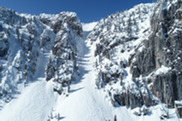
In the western U.S., warmer winter temperatures are increasingly pushing precipitation to fall as rain instead of snow. Even when snow does accumulate, it often melts earlier in the spring, shifting the timing of runoff, meaning less water is stored for the dry summer months. North Central CASC climate scientist Imtiaz Rangwala discusses these issues in a recent article and underscores a broader trend across the West that is reflected in this year’s unusually low snowpack. Learn more>> |
Genetic Diversity is a Key Factor in Climate-Driven Range Shifts
 |
|
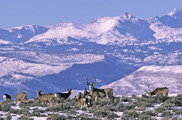
A new global study of nearly 1,900 species, co-authored by National CASC scientists, shows that species with higher genetic diversity are better able to persist in changing conditions and expand their ranges as temperatures warm. Learn more>> |
Restoring Saltmarshes and a Living Identity on the Frontlines of Rising Seas
 |
|
Researchers and Tribal stewards unite on the frontlines of climate change in coastal Maine, where science and Indigenous knowledge converge to study, protect, and restore salt marshes that are not only vital ecosystems, but living pillars of Passamaquoddy identity in the face of rising seas. In this video, Passamaquoddy Tribal members describe how they are working to safeguard their community’s identity through the support of a unique research partnership with the Northeast CASC. Learn more>> |
The Expanding Impact of Southwest Climate Adaptation Science
 |
|
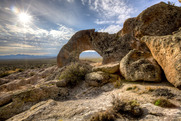
Conserving Southwest ecosystems calls for actionable science that is useful and accessible for resource managers, conservation practitioners, Tribal communities, policy makers, and the general public. Through a synthesis of Southwest CASC-funded projects and manuscripts published from 2018 to 2023, a recent publication highlights the center’s co-produced science contributions and outlines some specific impacts of Southwest CASC research in the region. Learn more>> |
Making Sense of Alaska's Shifting Snow and Ice with 'Knowing Our Changing Home'
 |
|
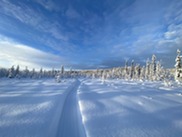
The Alaska CASC published a new report featuring stories that bring Alaska’s changing climate to life. These stories share what the science says and how individuals are adapting to a rapidly changing landscape. They highlight not only the science explaining the changes but also the voices of those who know this place best. Learn more>>
|
Pacific Islands CASC Participates in Biosecurity Forum
 |
|
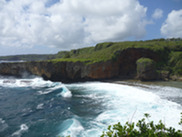
In April, the Commonwealth of the Northern Mariana Islands hosted its first on-island biosecurity forum, bringing together local agencies, federal partners, and international experts to address invasive species and emerging marine threats. The Pacific Islands CASC Assistant Regional Administrator, Heather Kerkering, and two CASC-supported researchers presented at the meeting. Kerkering highlighted early detection and rapid response efforts for storm-dispersed invasive species and outlined post-storm actions to strengthen regional biosecurity. Learn more>> |
Experts Gather at Lake Tahoe to Reimagine the Future of Recreational Fishing
 |
|
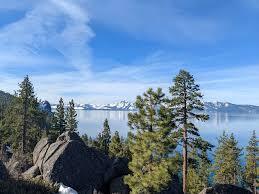
National and Midwest CASC scientists recently participated in a workshop focused on the future of recreational fisheries in North America. The workshop brought together experts in fisheries science, management, and conservation from across the U.S. and Canada, and highlighted science-backed adaptive management strategies and collaboration as key to sustaining fishing opportunities. Learn more>> |
|
|
|
2026 Tribal Community Resilience Webinar Series
The 2026 Tribal Community Resilience Webinar Series, co-hosted by the American Indian Higher Education Consortium (AIHEC) and the Climate Adaptation Science Centers, launched in February. This monthly series explores how Tribal Nations are responding to resilience challenges across the U.S. Join the fifth webinar in the series, focused on forestry.
June 4 at 3pm ET. Learn more>>
Save-the-Date for the 2026 Southwest Adaptation Forum
The Southwest Adaptation Forum (SWAF) is a gathering of climate adaptation leaders, researchers, and practitioners across the Southwest U.S. The goal is to exchange best practices around efforts to advance climate adaptation and resilience in the region. SWAF 2026 will be the fifth regional meeting and will focus on themes related to heat stress, wildfire adaptation and management, resilient agriculture and restoration, and wildlife in a changing climate. Registration and agenda details coming soon.
November 4-6. Learn more>>
|
|
|
CASC Webinar Recordings Feature Adaptation Planning and Innovation
-
In a North Central CASC webinar, “Practical Guidance for Using Climate Projections in Adaptation Planning,” Nels Bjarke of the Western Water Assessment discussed how to effectively utilize the large amount of climate model projection data and tools available for land management and resource planning. Watch here>>
-
Sharing results and lessons-learned from the Black Ridge Canyons Wilderness of southwest Colorado, researchers with the North Central CASC presented on a case study aiming to provide BLM staff and partners with knowledge and tools to support decision-making for ephemeral riparian communities. Watch here>>
-
In this Midwest CASC webinar, a panel of experts discussed managed relocation as an example of innovation in adaptation strategy and explored key considerations for operationalizing managed relocation from both theoretical and on-the-ground perspectives. Watch here>>
|
|
|
Ecological Drought Webinar: Drought Dashboards to Improve Drought Monitoring, Inform Tribal Resilience, and Preserve Ecological and Cultural Resources
Hosted by NOAA’s National Integrated Drought Information System program, this webinar will focus on recently developed drought dashboards and tools to improve drought monitoring, inform tribal drought resilience, and preserve ecological and cultural resources. Researchers will share findings from the Fiscal Year 2022 Coping with Drought competitions on Building Tribal Drought Resilience. Join the webinar on May 26 at 2pm ET. Register>>
New Research Shows How La Niña and El Niño Influence U.S. Wildfires
New research by NOAA’s Physical Sciences Laboratory analyzed how the state of the El Niño Southern Oscillation (ENSO) in autumn, either the warm El Niño or cool La Niña phase, influences where wildfire activity will occur across specific regions of the U.S. during the following year. Researchers found that autumn La Niña events were associated with a greater than two-fold increase in the relative risk of extensive burns in the Southern, Southwest, and Rocky Mountain regions in the following spring. Learn more>>
|
|
|
Who We Are
The National and Regional Climate Adaptation Science Centers partner with natural and cultural resource managers to provide science that helps fish, wildlife, ecosystems, and the communities they support adapt to a changing climate. This newsletter spotlights CASC science and relevant content from the CASC community of partners.
Learn more about our work at www.usgs.gov/casc. Have questions? Contact us at casc@usgs.gov
|
|
|
|
|