|
Follow us @USGS_Climate on Instagram |
|
|
Deep Dive: CASC Science in Action
 |
|
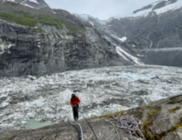
Across the country, CASC-supported scientists are working with natural resource managers to turn science into action. This deep dive explores stories from across the CASC network where co-produced and decision-focused science is informing real management choices that support ecosystems, infrastructure, and communities in a changing climate. Learn more>> |
Climate Action Tool Relaunches with Regional Focus
 |
|
The Northeast CASC and the University of Massachusetts Amherst recently launched an expansion of the Climate Action Tool, a web platform that provides credible, useful information to support natural resource management in a changing climate. Originally developed to help Massachusetts-based decision makers and communities, the tool was expanded to synthesize the latest adaptation research from across the broader northeastern region. Learn more>> |
Managed Relocation: Addressing the Nexus of Climate Change, Invasive Species, and Fish and Wildlife Health
 |
|
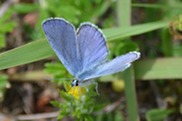
Managed relocation describes the intentional translocation of a species outside its natural range for conservation purposes, often in response to long-term landscape changes that reduce suitability of historical habitats. In August 2024, the USGS Biological Threats and Invasive Species Research Program, Climate Adaptation Science Centers, and Species Management Research Program held a workshop with conservation scientists and managers to advance research addressing the intersecting stressors of climate change, invasive species, and fish and wildlife health relative to managed relocation. Learn more>> |
As Lakes Warm and Ice Seasons Shorten, Anglers Are Catching Different Fish Across the Midwest
 |
|
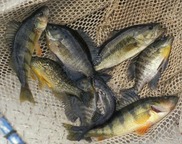
To understand how warming lake temperatures are changing fisheries in the Midwest, USGS scientists with the National CASC, Midwest CASC, and Missouri Cooperative Fish and Wildlife Research Unit, together with partners, analyzed recreational fishing data in midwestern lakes. They found that warmwater fish already make up a larger share of anglers’ catch than in the past, especially in lakes with higher surface temperatures and less ice cover, but larger, deeper lakes may sustain cool and coldwater fishing opportunities. Learn more>> |
CASC Researchers Contribute to Special Issue Celebrating 25 Years of BLM’s National Conservation Lands
 |
|
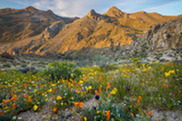
Twenty-five years ago, the Bureau of Land Management (BLM) established the National Landscape Conservation System to conserve, protect, and restore America’s nationally significant landscapes under BLM jurisdiction. To celebrate the 25th anniversary of this unique network of over 900 landscapes, the BLM and the USGS, including two CASC researchers, collaborated on a piece to highlight key science opportunities on National Conservation Lands in a special issue of Park Stewardship Forum. Learn more>> |
|
|
|
North Central CASC Webinar: Practical Guidance for Using Climate Projections in Adaptation Planning
 |
|
The next webinar in the North Central CASC webinar series is focused on “Practical Guidance for Using Climate Projections in Adaptation Planning.” Nels Bjarke of the Western Water Assessment will discuss how to effectively utilize the large amount of climate model projection data and tools available. Join the webinar on March 12 at 1pm ET. Learn more>> |
Midwest CASC Science Seminar: Habitat Restoration to Enhance Connectivity
 |
|
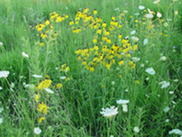
The Midwest CASC is hosting a webinar on habitat restoration to enhance connectivity led by speaker Marissa Ahlering, Science Director for North Dakota, South Dakota, and Minnesota at The Nature Conservancy. This is the third webinar in a three-part series and will be held on March 23 at 1pm ET. Learn more>> |
Northeast RISCC Symposium
 |
|
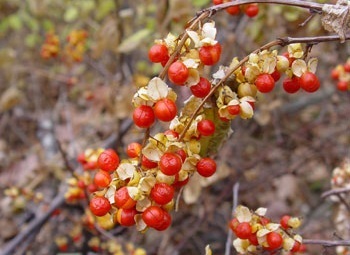
The annual Northeast RISCC Symposium brings together invasive species and climate change practitioners and researchers in the northeastern U.S. and Central and Eastern Canada to share knowledge and build relationships. The 2026 symposium will be held virtually on March 24-25, 2026, from 10:00 am - 3:00 pm ET. Learn more>> |
2026 Tribal Community Resilience Webinar Series
 |
|
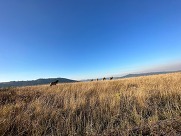
The 2026 Tribal Community Resilience Webinar Series, co-hosted by the American Indian Higher Education Consortium (AIHEC) and the Climate Adaptation Science Centers, launched in February. This monthly series explores how Tribal Nations are responding to resilience challenges across the U.S. Join the third webinar,
focused on resilient infrastructure, on April 2 at 3pm ET. Learn more>> |
Save-the-Date: 2026 Midwest CASC Summer Science Symposium
 |
|
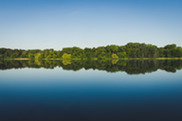
The 2026 Midwest CASC Summer Science Symposium will take place August 3-6 at the University of Minnesota-Twin Cities. The Symposium welcomes the entire Midwest CASC community, including researchers, adaptation practitioners, students, partners, and faculty at Consortium member institutions. Learn more>> |
|
|
|
 |
|
Season 2 of Alaska Voices, a podcast supported by the Alaska CASC, concluded last month. Alaska Voices builds bridges of knowledge by sharing conversations among Alaska’s community members, friends, and policy makers, and by sharing stories about the environment from community members and scientists. Episode topics included supercomputing, tracking bear dens using dogs and drones, and teaching the cultural traditions of Alaska Native Communities. Learn more>>
|
North Central CASC Webinar Recording: Organizing the Climate Adaptation Toolkit
 |
|
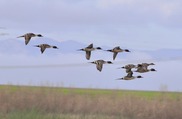
Many climate adaptation planning processes and tools exist, but their relationships to one another are often unclear. This webinar highlighted commonalities among major adaptation frameworks and tools and presented a generalized, climate-informed approach to resource stewardship that supports clearer communication, coordination, and cross-jurisdictional collaboration. The recording is now available. Learn more>> |
Southeast CASC Seminar Recordings
 |
|
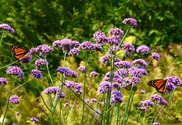
Two recent Southeast CASC Seminar recordings are now available to watch. “Accounting for Future Change in Wildlife Action Plans” highlighted work supporting State Wildlife Action Plans in the Southeast. A second seminar focused on Southeast CASC work evaluating the vulnerability of insect pollinators to climate change in the Southeast and U.S. Caribbean. Both recordings are available on the Southeast CASC YouTube channel. Learn more>> |
|
|
|
Webinar: Invasive Grasses and Wildfire Risk in California
 |
|
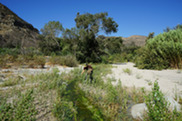
Invasive annual grasses are reshaping fire behavior across California, increasing ignition frequency and altering recovery pathways in fire prone landscapes. The North American Invasive Species Management Association (NAISMA) is hosting a webinar to bring together leading researchers to explore how invasive plants contribute to wildfire risk and what land managers can do in response. Join the webinar on March 18 at 2pm ET. Learn more>> |
|
|
|
Who We Are
The National and Regional Climate Adaptation Science Centers partner with natural and cultural resource managers to provide science that helps fish, wildlife, ecosystems, and the communities they support adapt to a changing climate. This newsletter spotlights CASC science and relevant content from the CASC community of partners.
Learn more about our work at www.usgs.gov/casc. Have questions? Contact us at casc@usgs.gov
|
|
|
|
|