|
Follow us @USGS_Climate on Instagram |
|
|
Managing Climate Change in Wilderness: Scenario-Based Approaches for an Uncertain Future
 |
|
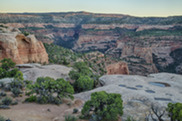
Researchers from the North Central CASC are applying the Resist-Accept-Direct (RAD) framework in one of the most climate-vulnerable wilderness areas in the Colorado Plateau. Using scenario-based approaches, this case study offers land managers a practical, transparent framework for decision-making under uncertainty for the Black Ridge Canyons Wilderness. Learn more>> |
What Remains After Wildfire on the Wet Westside of the Cascades?
 |
|
Northwest CASC-supported researchers were recently interviewed about their new study focusing on the live and dead vegetation that’s present after a fire, and how the makeup of this vegetation can influence the occurrence and behavior of future fires. The researchers, led by a former Northwest CASC research fellow, have been collecting field data following recent fires in the northwest Cascades to understand how typically wet, westside forests are shaped by infrequent and high-severity fires. Learn more>>
|
2025 Hawai’i Annual Climate Report Published
 |
|
The inaugural Hawaiʻi Annual Climate Report 2025, published by the University of Hawaiʻi Sea Grant College Program and partially funded by the Pacific Islands CASC, provides a clear, accessible summary of statewide rainfall, temperature, and drought conditions over the past year. Using plain language, maps, and easy-to-interpret figures, the report reflects decades of climate monitoring and research in Hawaiʻi. Learn more>> |
Guam Land Managers Gather to Identify Challenges and Potential Solutions for Forest Restoration
 |
|
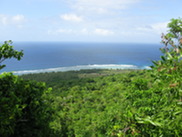
More than 40 land management professionals gathered at the University of Guam (UOG) for a forest restoration workshop hosted by UOG Land Grant through a grant from the Pacific Islands CASC. The workshop used a science-based functional trait approach to address challenges such as wildfires, invasive species, and climate change. The effort will guide species selection and inform a long-term restoration demonstration project. Learn more>> |
Southeast CASC Research Fellows Contribute to Regional Invasives Workshop and Communications Products
 |
|
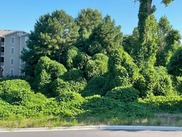
As a part of their team science synthesis project, the 2024-25 Southeast CASC Global Change Research Fellows assisted in the organization and facilitation of the Southeast Regional Invasive Species & Climate Change (RISCC) workshop. Fellows also authored a summary on the workshop’s central aim and produced two science communications pieces. Learn more>> |
Webinar Recording: Tongue River 2100
 |
|
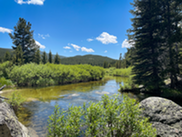
The recording of the North Central CASC webinar “Tongue River 2100” is now available to view online. The webinar, which aired in January, discusses a North Central CASC project that involves working closely with the Northern Cheyenne Tribe and other partners to co-produce knowledge to enable data-driven water management and planning on the Tongue River. Learn more>> |
|
|
|
Apply Now: Northwest CASC Research Fellowship Program
 |
|
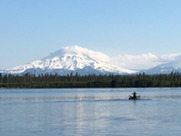
The Northwest CASC is now accepting applications for their 2026-2027 Research Fellowship Program, which supports climate adaptation research for Northwest natural and cultural resource management and provides training in developing decision-relevant science. Each fellow is funded to conduct a one-year research project that aligns with Northwest CASC science priorities and involves resource management partners. The deadline to submit applications is March 9, 2026. Learn more>> |
Midwest CASC Science Seminar Winter Series
 |
|
The Midwest CASC is hosting a three-part winter seminar series, with forthcoming webinars on supporting state wildlife action planning (February 23) and habitat restoration to enhance connectivity (March 23). The webinars will be held at 1pm ET. Learn more>> |
Northeast CASC Webinar: Coastal and Marine Climate Impacts and Adaptation Priorities
 |
|
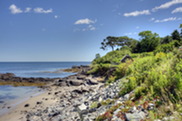
Building on a regional listening session hosted by the Northeast CASC, this virtual event will share key insights from a follow-up survey on coastal and marine climate impacts and adaptation priorities in the Northeast and Mid-Atlantic. Join the discussion on February 26 at 1:00pm ET to discover how these findings can inform future research, collaboration, and management efforts. Learn more>> |
2026 Tribal Community Resilience Webinar Series
 |
|
The 2026 Tribal Community Resilience Webinar Series, co-hosted by the American Indian Higher Education Consortium (AIHEC) and the Climate Adaptation Science Centers, launched in February. This monthly series explores how Tribal Nations are responding to resilience challenges across the U.S. The webinars will explore topics ranging from data protection, food security, and fire to emergency preparedness and resilient infrastructure. Join the second webinar, focused on fire, on March 5 at 3pm ET. Learn more>> |
Southeast CASC Seminar: Understanding the Proliferation of Vines Throughout the Southeast and Caribbean Requires a Multi-Perspective, Multi-Scale Integrative Approach
|
|
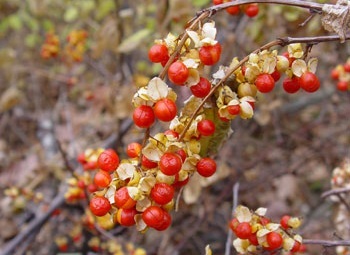
The Southeast CASC is hosting a seminar that will highlight ongoing work on invasive vines as part of the project "Predicting Invasive Vine Spread in the Southeast Using Remote Sensing and Species Distribution Models." Join the seminar on March 18 at 1pm ET. Learn more>> |
Northeast RISCC Symposium
 |
|
The annual Northeast RISCC Symposium brings together invasive species and climate change practitioners and researchers in the Northeastern U.S. and Central and Eastern Canada to share knowledge and build relationships. The 2026 symposium will be held virtually on March 24-25, 2026, from 10:00 am - 3:00 pm EST each day. Learn more>> |
National CASC Webinar: Adaptive Management & RAD
 |
|
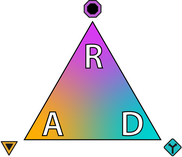
The RAD (Resist-Accept-Direct) framework helps managers navigate transforming ecosystems by defining a broad decision space that includes not only resisting ecological trajectories, but also consciously accepting such change and/or directing trajectories towards preferred new conditions. This webinar will feature a panel of experts who will discuss how combining RAD with Adaptive Management can support conservation and natural resource management. The webinar will focus on real-world examples of operationalizing RAD Adaptive Management and future opportunities for implementing. Join the webinar on April 22 at 3pm ET. Learn more>> |
|
|
|
North American Wildlife and Natural Resources Conference
 |
|
The 91st North American Wildlife and Natural Resources Conference, administered by the Wildlife Management Institute, will be held March 29-April 3, 2026, in Columbus, Ohio. Conference attendees will gain a better understanding of the origins, complexities, and likely solutions to current conservation issues, and also a better sense of the need for and the methods to achieve coordinated, cooperative management of the continent’s wildlife. Learn more>> |
Native American Fish and Wildlife Society Annual National Conference
 |
|
The 2026 Native American Fish and Wildlife Society Annual National Conference, hosted by the Oneida Indian Nation of New York, will be held May 4-7, 2026, in Verona, New York. This year’s conference theme is “From Ancestral Knowledge to Emerging Technology: Sustaining Native Fish & Wildlife.” The deadline to submit abstracts is March 6. Learn more>> |
Western Association of Fish & Wildlife Agencies Summer Annual Meeting
 |
|
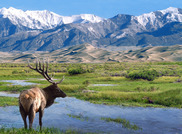
The Western Association of Fish & Wildlife Agencies 2026 Summer Meeting will be held June 1-5, 2026, in Boise, Idaho. The meeting will bring over 400 U.S. and Canadian fish and wildlife professionals to discuss shared biological, management, and land use issues. Learn more>> |
|
|
|
Who We Are
The National and Regional Climate Adaptation Science Centers partner with natural and cultural resource managers to provide science that helps fish, wildlife, ecosystems, and the communities they support adapt to a changing climate. This newsletter spotlights CASC science and relevant content from the CASC community of partners.
Learn more about our work at www.usgs.gov/casc. Have questions? Contact us at casc@usgs.gov
|
|
|
|
|