|
Follow us @USGS_Climate on Instagram |
|
|
Trees Act Their Size, Not Their Age
 |
|
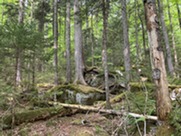
Red spruce forests, once widespread across the central and southern Appalachians, now persist only in scattered fragments on mountaintops. USGS researchers with the Northeast CASC and Virginia Cooperative Fish and Wildlife Research Unit, and graduate students at Virginia Tech, are partnering with local community groups to restore the spruce forest’s structure, creating resilient habitat for wildlife, while also protecting clean water, carbon storage, and outdoor recreation. Learn More>> |
Northeast CASC Research Ecologist Toni Lyn Morelli Spearheads Special Issue on Climate Refugia
 |
|
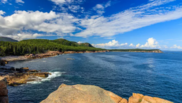
From Maine’s Acadia National Park to the wilds of Australia, geological conditions exist that slow the effects of climate change on the local ecology and inhabitants. These “climate refugia” are the focus of a recent special issue in Conservation Science and Practice, spearheaded by Northeast CASC Research Ecologist Toni Lyn Morelli. Learn More>> |
Mountain Living Shapes Reproductive Demography
 |
|
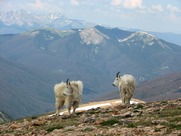
A recent Alaska CASC study explored how life-history trade-offs and environmental variability influence the demography of mountain goats in coastal Alaska. The research suggests that mountain goats employ a ‘risk-sensitive’ conservative reproductive strategy that prioritizes survival over reproduction. Learn more>> |
Understanding Drought Impacts to Support Healthy, Productive Forests
 |
|
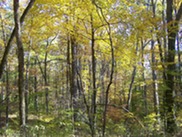
Midwest CASC Graduate Fellow Michael Bensghbon led a study to explore the drought sensitivity of 20 different tree species and the impacts on carbon sequestration. Findings highlight the importance of conserving oak-hickory forests, which may be better able to maintain carbon storage during drought. Learn more>> |
Native America Calling: The Looming Wildfire Crisis in the Arctic
 |
|
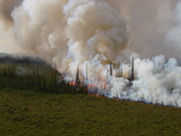
Alaska CASC Tribal Resilience Liaison Malinda Chase was a guest on Native America Calling, a live call-in podcast focused on conversations about issues specific to Native communities. Chase and other guests discuss the looming wildfire crisis in the Arctic and offer insight into how Alaska Native Tribes and Indigenous communities are preparing. Learn more>> |
The Everglades Restoration is Shaping Better Tools for All Managers
 |
|
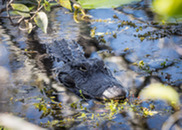
Managers need tools that are flexible, user-friendly, and co-developed with their input. Working with partners in the Florida Everglades, one of the world’s most unique wetland ecosystems, Southeast CASC researchers developed a roadmap for how science and co-production can help restoration partners navigate changing futures with data-informed decision-support tools. Learn more>> |
|
|
|
Apply Now! Southeast CASC Accepting 2026-27 Global Change Research Fellow Applications
 |
|
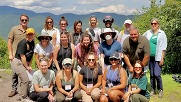
The Southeast CASC is seeking applications from eligible graduate students pursuing interdisciplinary research on global change and adaptation for the next cohort of Global Change Research Fellows. Fellows receive financial and professional support during the year-long program while also building a network of collaborators and advisors across the Southeast. Applications and letters of recommendation are due January 12, 2026. Learn more>> |
Midwest CASC Community of Practice Session
 |
|
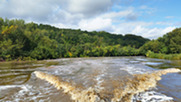
Join the Midwest CASC Community of Practice (CoP) as they continue to build a shared understanding of maladaptation and explore how real-world experiences can deepen our collective learning. After grounding in key definitions and concepts, participants will hear short, story-based examples from colleagues that illustrate how well-intended adaptation efforts can produce unexpected outcomes and how those moments can become opportunities for growth. Registration required. January 12 at 2pm ET. Learn more>> |
National CASC Webinar: Social Science Perspectives on RAD
 |
|
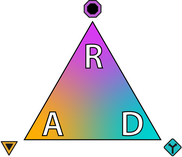
The RAD (Resist-Accept-Direct) framework helps managers navigate transforming ecosystems by defining a broad decision space that includes not only resisting ecological trajectories, but also consciously accepting such change and/or directing trajectories towards preferred new conditions. Recent interdisciplinary and cross-agency research has integrated the social sciences to explore how and why managers are making RAD decisions. This webinar will highlight findings and implications from panelists at the forefront of RAD research. Join the webinar on January 22 at 3pm ET. Learn more>> |
Midwest CASC Science Seminar Winter Series
 |
|
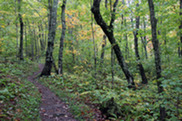
The Midwest CASC is hosting a winter seminar series, with three seminars focused on state forest action plans and climate-smart management (January 26), supporting state wildlife action planning (February 23), and habitat restoration to enhance connectivity (March 23). All seminars will be held at 1:00pm ET. Learn more>> |
Northwest RISCC Webinar: Northwest Weed Biocontrol in Changing Environments
 |
|
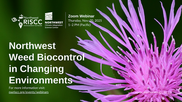
The Northwest Regional Invasive Species & Climate Change Management Network will host a webinar on the impacts of different climate variables on weed biocontrol agents and their success in the Northwest. The event will also serve as the launching point for a working group to address knowledge gaps around Northwest biocontrol in a changing climate. Join the webinar on January 27 at 3:30pm ET. Learn more>> |
2026 Tribal Community Resilience Webinar Series
 |
|
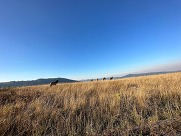
The 2026 Tribal Community Resilience Webinar Series, co-hosted by the American Indian Higher Education Consortium (AIHEC) and the Climate Adaptation Science Centers, will launch in February. This monthly series explores how Tribal Nations are responding to resilience challenges across the U.S. The webinars will explore topics ranging from data protection, food security and fire, to emergency preparedness and resilient infrastructure. Join the first webinar on February 5 at 3:00pm ET. Learn more>> |
|
|
|
Video: Inside the Decades-Long Partnership Keeping Iconic Glacier National Park Road Safe
 |
|
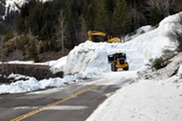
As the most popular attraction in Glacier National Park, the Going-to-the-Sun Road traverses scenic alpine zones and crosses the Continental Divide. The park closes a section of the road each winter due to inclement weather, heavy snowfall, and avalanche hazards. Since 2003, efforts to open the road each spring rely on a USGS-National Park Service partnership based on the expertise of USGS avalanche scientists, who provide on-site avalanche forecasting. A new video explores this partnership. Learn more>> |
USGS Avian Research: Collaborative Science for Bird Management and Conservation
 |
|
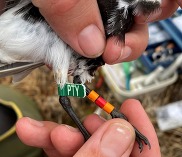
USGS scientists lead activities that are central to bird conservation and support both wildlife and communities. Through close collaboration with conservation partners, USGS science on migratory birds is focused on delivering science relevant to the decisions that natural resource managers and policy makers face regarding wildlife conservation and societal needs that impact birds. Learn more>> |
|
|
|
Who We Are
The National and Regional Climate Adaptation Science Centers partner with natural and cultural resource managers to provide science that helps fish, wildlife, ecosystems, and the communities they support adapt to a changing climate. This newsletter spotlights CASC science and relevant content from the CASC community of partners.
Learn more about our work at www.usgs.gov/casc. Have questions? Contact us at casc@usgs.gov
|
|
|
|