|
 21 February 2023
|
|
Sinking permafrost: A major area of uncertainty in climate change research is if the land surface sinking in the Arctic will trigger permafrost to thaw much faster than it would otherwise. This thawing would cause a major increase in greenhouse gas emissions, further intensifying climate change. Researchers at DOE’s Oak Ridge National Laboratory used computer simulations and observations from field experiments to determine that the sinking is unlikely to cause rampant thawing. |
Producing ammonia: Ammonia is a key ingredient in synthetic fertilizer, but the main process for making ammonia produces about 1% of global carbon dioxide emissions. Chemists at the University of California, Berkeley have taken a big step toward making ammonia production more sustainable. While the usual reaction requires extremely hot and cold temperatures as well as high pressures, the new one requires much more moderate changes in temperature and pressure. As a result, the process requires far less energy. |
|
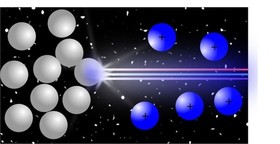
Proton electric charge radius: For the first time, particle physicists have used neutrinos to precisely measure the proton’s size and structure. Researchers used MINERvA, a particle physics experiment at DOE’s Fermi National Accelerator Laboratory, to make the measurements. It provides a new way for scientists to investigate protons. The measurement is also important for interpreting data from future neutrino experiments. |
Quantum simulators: To gain more insights into quantum effects, researchers are using quantum analog simulators. These are laboratory experiments that involve super-cooling atoms and probing them with finely tuned lasers and magnets. Physicists from MIT and Caltech found that certain random quantum fluctuations follow predictable patterns. They can use these to judge the accuracy of quantum analog simulators. |
|
Perovskite excitement: Perovskites are a class of materials that has a lot of promise for more efficient solar cells. Scientists from Rice University used the Linac Coherent Light Source user facility at DOE’s SLAC National Accelerator Laboratory to better understand these materials. They were able to visualize how atoms in perovskites move when they are excited by light. |
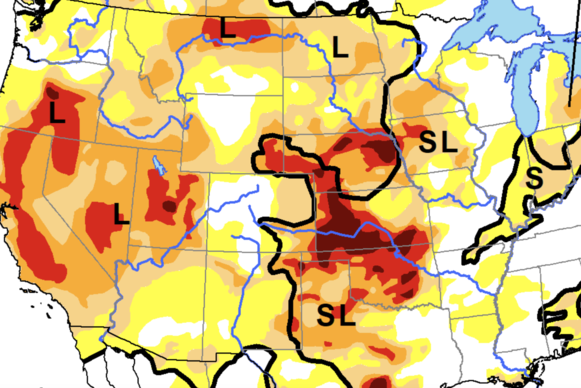
Effects of nitrogen on soil: Vehicles and manufacturing processes that burn fossil fuels release nitrogen into the air. Scientists from UC Riverside found that under certain conditions, this nitrogen causes dry soil to let go of carbon. The soil releases the carbon back into the atmosphere, where it can contribute to climate change. |
|
The Office of Science posted five new highlights between 2/7/23 and 2/21/23.
|
|
Detecting plutonium: Plutonium can be incredibly dangerous to people and the environment as well as useful for physics research. Being able to detect the tiniest amounts of plutonium is useful for environmental science, reactor safety, and astrophysics. Researchers at DOE’s Oak Ridge National Laboratory and the University of Tennessee, Knoxville developed a way to use lasers to study the fingerprints of a process involving plutonium. It allows them to identify incredibly small amounts more efficiently than ever. |
|
Using Supercomputers to Improve Earthquake Simulations
|
|
|
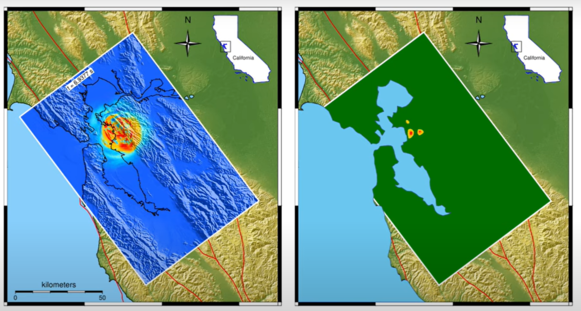
Accurately modeling the effects of an earthquake requires intricate physics-based models that can only be run on advanced supercomputers. The data from such models are invaluable for the earthquake research community and engineers, but time on the supercomputers is in high demand.
A team of scientists from DOE’s Lawrence Berkeley National Laboratory and Lawrence Livermore National Laboratory has collaborated with the Pacific Earthquake Engineering Research Center. They adapted sophisticated, full-scale ground-motion simulations into datasets that can be stored and readily distributed on everyday computers. They recently shared the most accurate and detailed simulations to date.
The original simulation software was built and tested on supercomputers at the Oak Ridge Leadership Computing Facility and the National Energy Research Scientific Computing Center user facilities. The Energy Sciences Network user facility made it possible to share the massive amounts of data between systems. The scientists plan to improve their simulations using the Frontier exascale computer at the Oak Ridge Leadership Computing Facility.
|
|
National Laboratory Scientists Inducted into AAAS
|
|
|
CommUnique provides a review of recent Office of Science Communications and Public Affairs stories and features. This is only a sample of our recent work promoting research done at universities, national labs, and user facilities throughout the country.
|
|
|
|
|