|
 9 January 2023
|
|
|
At the Office of Science, we spend a lot of time thinking about the future, particularly future unknowns. It’s a strategy that is especially important as we focus on making the best possible climate change predictions we can to anticipate and mitigate the effects of global warming.
Considered broadly, climate change is made up of a range of interconnected parts, everything from changing weather to what is happening in oceans, rivers, and soil systems. It’s a complex array, with contributing social and cultural factors that we need to understand well enough to make accurate predictions. We develop and support climate models that tell us how fast things will change – at scales ranging from local to global levels.
Learn more about how DOE’s Office of Science is supporting work in machine learning and artificial intelligence to improve Earth systems simulations.
|
|
Syngas: A team of researchers led by scientists from DOE’s Brookhaven National Laboratory has discovered the mechanisms behind a very effective catalyst for methane dry reforming. Methane dry reforming converts two greenhouse gases (methane and carbon dioxide) into syngas. Syngas is used for the preparation of high-value chemicals and fuels. The research used both the National Synchrotron Light Source II and Advanced Photon Source DOE Office of Science user facilities. |
|
Hybrid perovskites: With the help of the Advanced Photon Source user facility, researchers from the University of Missouri, the University of Western Cape in South Africa, and DOE’s Argonne National Laboratory developed a new way to make hybrid perovskites. These are a combination of semiconducting materials that could form the basis of new solar cells or other electronic devices. |
Recycling PVC plastic: PVC, or polyvinyl chloride, is one of the most produced plastics in the United States and the third highest by volume in the world. However, none of it in the U.S. is recycled. University of Michigan researchers have discovered a way to chemically recycle PVC into usable material. |
|
Permafrost emissions: Northern permafrost soils contain about twice as much organic carbon as the atmosphere. Researchers from DOE’s Oak Ridge National Laboratory found that how elemental iron interacts with the stores of carbon in Arctic soils is key to how greenhouse gases are emitted during thawing. They recommend it being included in models used to predict Earth’s climate. |
Chiral nanostructures: Researchers from Iowa State University / Ames National Laboratory, University of Illinois Urbana-Champaign, the University of Michigan, and DOE’s Argonne National Laboratory created a stable, pinwheel-shaped two-layered structure. The structure was unique in that it is chiral (not identical to its mirror image) – something that researchers have been working towards for more than a decade. |
|
The Office of Science posted three new highlights between 12/20/22 and 1/9/23.
|
|
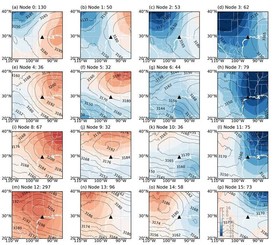
Sea breezes: Understanding how the flow of air from the Gulf of Mexico and Galveston Bay drives storms and clouds in the region is important for improving models used in weather forecasts and climate predictions. Researchers from DOE’s Brookhaven National Laboratory and their collaborators used artificial intelligence techniques to reveal these relationships. It is helping them narrow down how air circulation from the sea and bay breezes specifically affects how storms form and the role of tiny particles called aerosols. This work is guiding research on the life cycles and interactions of aerosols and clouds. |
|
|
Science Magazine: A surprisingly massive microbe
As part of its round-up of the biggest stories in science of 2022, Science included the discovery of a giant bacteria by researchers at DOE’s Lawrence Berkeley National Laboratory, Joint Genome Institute Office of Science user facility, and the L'Université des Antilles.
|
|
Aurora and the Upgraded Advanced Photon Source to Power Discovery at Argonne
|
|
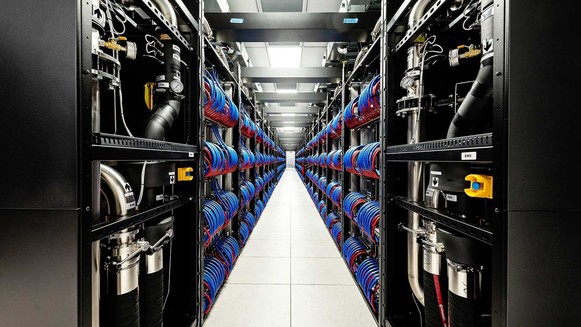
Scientific user facilities are the most effective when they work in concert. DOE’s Argonne National Laboratory hosts a number of DOE Office of Science user facilities. The team is working to launch two new tools as part of its user facilities: the Aurora supercomputer at the Argonne Leadership Computing Facility and an upgrade of the Advanced Photon Source (APS) light source. The APS acts like a powerful microscope that allows researchers to study complex materials and systems. Aurora’s new capabilities will allow scientists to analyze and interpret this data in new and faster ways. These tools’ combined data collection and computing power will advance discoveries and unlock new science. Find out more about their capabilities in this feature article on Argonne’s website. |
|
How Climate Change is Intensifying the Winter Storms Slamming California
|
|
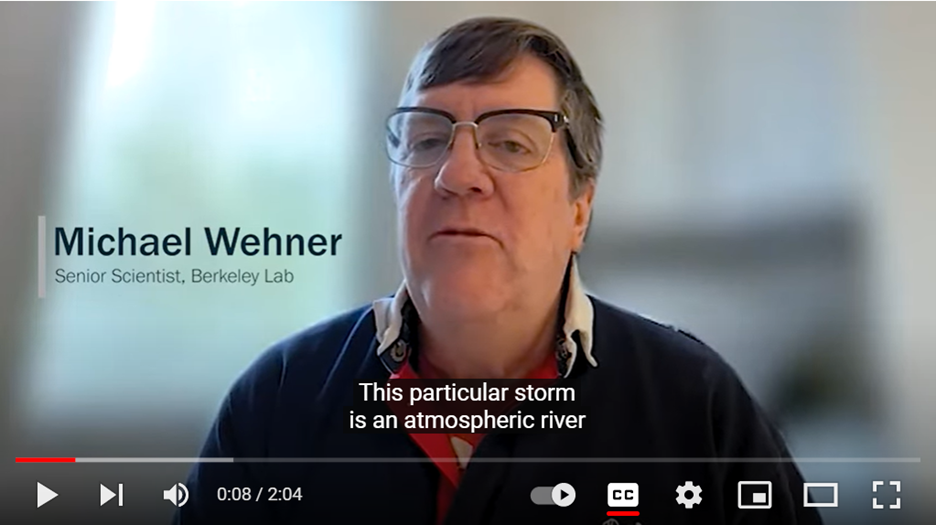
How is climate change increasing the rainfall from drenching storms caused by atmospheric rivers? In this video, hear Michael Wehner at DOE’s Lawrence Berkeley National Laboratory discuss this topic and how people can better prepare for these storms. Wehner uses observational data and advanced computer modeling to understand the behavior of extreme weather events in a changing climate. Learn more about atmospheric rivers in general in our DOE Explains… article on the topic. |
|
|
CommUnique provides a review of recent Office of Science Communications and Public Affairs stories and features. This is only a sample of our recent work promoting research done at universities, national labs, and user facilities throughout the country.
|
|
|
|
|