|
 1 November 2022
|
|
The Office of Science posted 79 news pieces between 10/18/22 and 11/1/22.
|
|
Wildfire Impacts: A study from DOE’s Pacific Northwest National Laboratory shows that wildfires burning in West Coast states can strengthen storms in downwind states. Heat and tiny airborne particles produced by western wildfires distantly intensify severe storms. |
‘Smart’ Plastic: Researchers at The University of Texas at Austin created a new material that’s 10 times as tough as natural rubber and could lead to more flexible electronics and robotics. Scientists can use just light and a catalyst to change the hardness and elasticity of the molecules of the same type in this material. |
|
Proton Structure: Scientists from Temple University have made a new measurement of the proton’s electric polarizability at the DOE’s Thomas Jefferson National Accelerator Facility. The polarizability shows how susceptible the proton is to stretching in an electric field. This precise measurement confirmed a bump in the data that had been seen before but had been thought to be a fluke. It raises questions about the “bump’s” origin. |
Asymmetry for Qubits: Qubits are a fundamental aspect of quantum computers, but they are very sensitive to being disturbed. Researchers from the University of Chicago, the University of Glasgow, and the Massachusetts Institute of Technology have found that qubits based on molecules are much more stable in asymmetric environments. This discovery expands the possible applications of such qubits. |
|
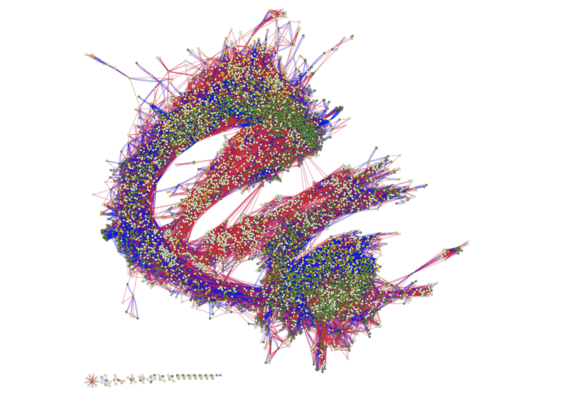
Supercharged Microbes: Researchers from DOE’s Lawrence Berkeley National Laboratory previously discovered DNA structures within a methane-consuming microbe called Methanoperedens. The structures had genes from many different organisms and appeared to supercharge the organism’s metabolic rate. In a new study, they describe the collection of genes and investigate the role they play in environmental processes, such as carbon cycling. |
Breaking Down Plastics: A new process developed at the University of California, Berkeley, and DOE’s Lawrence Berkeley National Laboratory can turn the common plastic polyethylene into a feedstock that could be used to make high-value plastics. Compared to previous processes, it works at lower temperatures and produces more feedstock. If it is scaled up, this process could make it so a major waste product can replace a feedstock normally made from fossil fuels. |
|
The Office of Science posted four new highlights between 10/18/22 and 11/1/22.
|
|
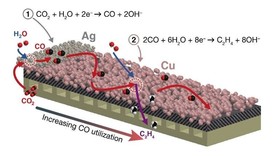
Converting Carbon Dioxide into Valuable Products: Converting carbon dioxide into products could help us produce fuel while also reducing greenhouse gases. Researchers at DOE’s Lawrence Berkeley National Laboratory and the University of Cincinnati looked at a new way to carry out this conversion process. They created a new approach that uses a tandem catalyst (a material with two catalytic areas) and is more effective than previous processes. |
|
Preparing for and Leveraging Our Next Supercomputer
|
|
|
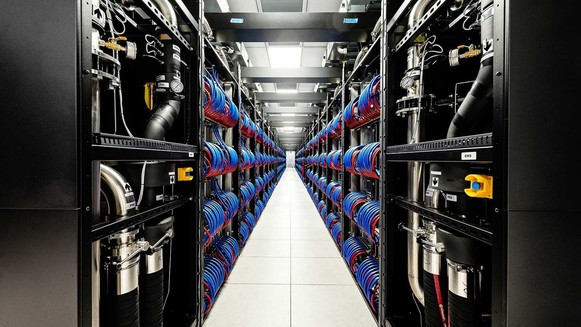
The scientists and engineers at the Argonne Leadership Computing Facility, a DOE Office of Science user facility, are working hard to launch our next exascale supercomputer, Aurora. The result of years of work and preparation, it’s scheduled to launch next year. When Aurora launches, it should be able to do more than 2 billion billion calculations per second, making it one of the fastest supercomputers in the world.
There are already scientists lined up to take advantage of its incredible speed and power. Researchers are preparing codes for a huge variety of research areas, including mapping the human brain’s connections, visualizing how cancer cells spread, modeling the process of fusion to produce energy, and investigating the possibility of yet-unseen fundamental particles.
|
|
National Science Bowl Registration Now Open
|
|
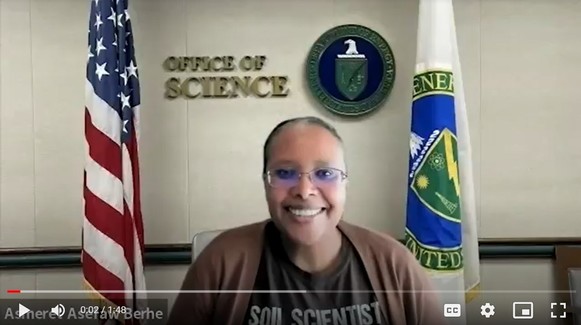
Registration for the DOE’s National Science Bowl is now open! One of the biggest academic math and science competitions in the country, it annually attracts thousands of student competitors. During the competitions, students participate in a fast-paced verbal forum to solve technical problems and answer questions in all branches of science and math. For some encouragement to potential competitors, check out this video from DOE Office of Science Director Asmeret Asefaw Berhe. To register for the middle or high school competition, see the National Science Bowl website. |
|
|
CommUnique provides a review of recent Office of Science Communications and Public Affairs stories and features. This is only a sample of our recent work promoting research done at universities, national labs, and user facilities throughout the country.
|
|
|
|
|