|
 17 October 2022
|
|
|
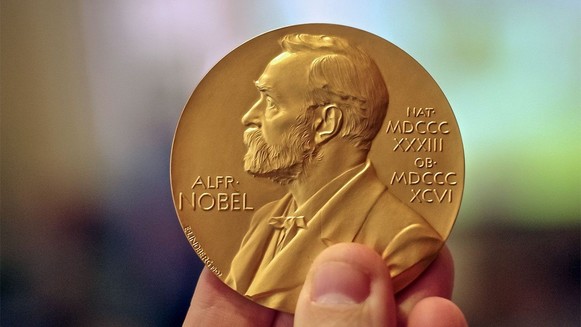
Each year, the awarding of the Nobel Prizes gives us as a scientific community and a society the opportunity to celebrate the achievements of outstanding scientists and researchers. Our heartiest congratulations go out to the 2022 Laureates, whose significant advances will benefit us all.
I am especially pleased that support from the U.S. Department of Energy (DOE) played a direct role in the accomplishments of two of the Laureates, Dr. John F. Clauser of J.F. Clauser and Associates for his pioneering work on quantum entanglement, and Dr. Carolyn R. Bertozzi of Stanford University for founding the field of biorthogonal chemistry, to study molecules in biological systems without interfering with the functioning of living things.
Learn more about the Nobel Prize winners supported by DOE and how we celebrate scientists every day in this blog from Office of Science Director Asmeret Asefaw Berhe.
|
|
New Moss Species: A team of researchers from DOE’s Oak Ridge National Laboratory, Duke University and other institutions has identified two new species of Sphagnum moss in North America. Sphagnum plays a major role in peatlands. Researchers are examining how evolution may affect the species’ role in carbon storage. |
Pairing Protons and Neutrons: The protons and neutrons that build the nucleus of the atom frequently pair up. Researchers from William & Mary participated in an experiment at the DOE’s Thomas Jefferson National Accelerator Facility that found that these particles may pick different partners depending on how packed the nucleus is. |
|
Batteries Without Cobalt: Lithium-ion batteries that don’t rely on cobalt could be cheaper and more sustainable than ones available today. Researchers at the University of California, Irvine, DOE’s Brookhaven National Laboratory, Argonne National Laboratory, Pacific Northwest National Laboratory, and SLAC National Accelerator Laboratory have developed a way to produce cobalt-free lithium-ion batteries. |
|
Nuclear Physics Data Processing: Nuclear physics experiments are producing huge amounts of data. Researchers at DOE’s Thomas Jefferson National Accelerator Laboratory have found that two systems using artificial intelligence can process raw data in real time. These methods could allow scientists to keep more data and streamline analysis to be faster and more efficient. |
|
The Office of Science posted five new highlights between 10/3/22 and 10/17/22.
|
|
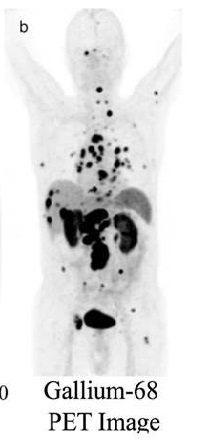
Understanding the Impacts of High-Energy Protons on Earth and in Space: Scientists on Earth use high-energy protons to create isotopes to detect and treat cancer. In space, these same high-energy protons can pose a risk to spacecraft and the astronauts traveling in them. Scientists have a great deal of uncertainty concerning the risks posed by these high-energy protons. To learn more about the risks and use of these protons to produce isotopes, scientists from DOE’s Brookhaven National Laboratory, Los Alamos National Laboratory, and Lawrence Berkeley National Laboratory made new measurements of high-energy proton reactions used to produce important new radiopharmaceuticals. |
|
|
Science Magazine: Clash of the titans
This feature describes physicists’ search to understand neutrinos and how two different experiments – LBNF/DUNE supported by DOE in the U.S. and Hyper-K in Japan – will investigate different aspects.
|
|
Everyone Has a Role to Play in Making Science More Equitable and Inclusive
|
|
|
As the largest federal sponsor of basic research in the physical sciences and a steward of public funding, the DOE’s Office of Science has a responsibility to ensure that we are serving the broader public. We are deeply committed to supporting diverse, equitable, inclusive, and accessible work, research, and funding environments that value mutual respect and personal integrity, which reflects the principles of the Biden Administration. The Office of Science is committed to promoting people of all backgrounds, including individuals from groups and communities historically minoritized in STEM fields and careers.
Starting in FY 2023, the Office of Science is adding a new requirement to our solicitation processes: applicants must now submit a plan for Promoting Inclusive and Equitable Research, or PIER Plan, along with their research proposals. Also, in FY23, we will require proposals that request funding to support a conference describe how the host organization has an established code of conduct or policy in place that addresses discrimination, harassment, bullying, and other exclusionary practices.
|
|
|
Exascale Day celebrates the scientists and science using incredibly powerful exascale supercomputers. It’s on October 18 (10/18) because exascale computers can perform a quintillion calculations per second and a quintillion is 1018. While the first exascale computer in the world was Frontier at DOE’s Oak Ridge Leadership Computing Facility user facility, others will be coming online in the next few years.
To celebrate, we’ve asked a number of our scientists to share with us what excites them about exascale. You can watch their videos on our Twitter feed and YouTube channel. Several scientists from DOE’s Oak Ridge National Laboratory, Argonne National Laboratory, and Lawrence Livermore National Laboratory are also participating in a Twitter Spaces chat on October 20 at 2 PM. Be sure to check out the Exascale Computing Project as well, as its page is posting videos, podcast episodes, and articles all week.
|
|
|
CommUnique provides a review of recent Office of Science Communications and Public Affairs stories and features. This is only a sample of our recent work promoting research done at universities, national labs, and user facilities throughout the country.
|
|
|
|
|