|
 20 September 2022
|
|
|
There are major gaps in our scientific understanding of urban environments. They limit how much we know about their role in the climate system, and how to best develop effective and equitable ways to adapt to climate change. To address these gaps in a socially responsible way, the Department of Energy’s (DOE) Office of Science has launched the Urban Integrated Field Laboratories (Urban IFL) initiative. Recently, we announced $66 million in awards to establish three new Urban IFLs that will focus on improving our understanding of urban systems. They will also expand our knowledge of how those systems and the climate interact with each other. One field laboratory is in Chicago, one is in Baltimore, and one is on the Texas Gulf Coast.
Learn more about how the Urban IFLs will help further scientific research and make it more inclusive.
|
|
|
|
|
The Office of Science posted 59 news pieces between 9/7/2022 and 9/20/2022.
|
|
|
AI for Solar: Solar absorbers convert energy from the sun into heat or electricity. Researchers from DOE’s Argonne National Laboratory developed a machine learning method to search for materials that could potentially be absorbers. They used two DOE supercomputing user facilities to sort through thousands of potential compounds, which could help us develop cheaper, more efficient solar cells.
|
|
|
|
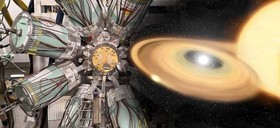
Pairing Protons and Neutrons: Protons and neutrons build the nuclei of atoms and frequently pair up. A new experiment conducted at DOE’s Thomas Jefferson National Accelerator Facility by researchers from Berkeley Lab found that these particles may pick different partners depending on how packed the nucleus is. This result provides new insight into the interactions between protons and neutrons. |
Antennae for Photosynthesis: Michigan State University researchers and colleagues at the University of California Berkeley, the University of South Bohemia, and DOE’s Berkeley Lab have revealed the most detailed picture to date of important biological “antennae” for photosynthesis. The researchers studied these structures in cyanobacteria, which could be helpful for using them as tiny solar-powered factories. |
|
Diamond Rain: A new study has found that “diamond rain,” a long-hypothesized exotic type of precipitation on giant ice planets, could be more common than previously thought. Researchers at DOE’s SLAC National Accelerator Laboratory and their colleagues discovered these diamonds could form and grow at a wider range of conditions and throughout more planets than hypothesized. |
|
The Office of Science posted five new highlights between 9/7/22 and 9/19/22.
|
|
Pinning Down How Stellar Novae Form Elements: To simulate the explosions of stars on computers, researchers need to know certain rates of nuclear reactions. The unknown rates of some nuclear reactions dramatically influence these simulations. Physicists from Michigan State University, DOE’s Oak Ridge National Laboratory, and partners determined an important reaction rate. The scientists conducted laboratory measurements that they fed into a new simulation. This research allows physicists to compare the simulation results to observations of actual nova. |
|
|
Nature: What particle physics can do to improve diversity
In this Q&A, Kétévi Assamagan from DOE’s Brookhaven National Laboratory provides his perspective on the diversity, equity, and inclusion issues discussed at the Snowmass particle physics meeting.
|
|
SARS-CoV-2 Protein Caught Severing Critical Immunity Pathway
|
|
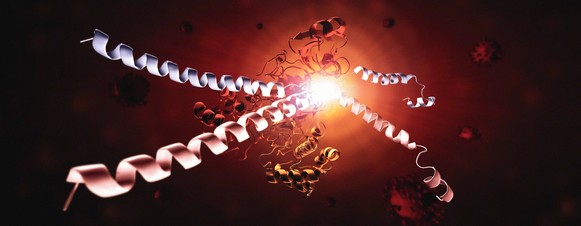
DOE’s national laboratories have played key roles in the efforts to fight the COVID-19 pandemic. Recently, scientists at DOE’s SLAC National Accelerator Laboratory have made another important discovery. They have seen one of the virus’s most critical interactions, which could help researchers develop more precise treatments. The team caught the moment when a virus protein, called Mpro, cuts a protective protein, known as NEMO, in an infected person. Without NEMO, a person’s immune system is slower to respond to increasing viral loads or new infections. |
|
The DOE Office of Science’s Graduate Student Research Program is Now Accepting Applications
|
|
|
The Office of Science Graduate Student Research (SCGSR) program is now accepting applications for our 2022 Solicitation 2 cycle. The SCGSR program supports awards to outstanding U.S. graduate students to conduct part of their graduate thesis research at a DOE national laboratory or host site in collaboration with a DOE laboratory scientist. It has the goal of preparing graduate students for scientific and technical careers critically important to the DOE Office of Science mission.
Applications are due 5:00 p.m. Eastern Standard Time on Wednesday, November 9, 2022. We will hold an application assistance workshop on October 20, 2022 that guides attendees through the application process.
|
|
|
CommUnique provides a review of recent Office of Science Communications and Public Affairs stories and features. This is only a sample of our recent work promoting research done at universities, national labs, and user facilities throughout the country.
|
|
|
|
Please see the CommUnique archive on Energy.gov for past issues.
No. 87: 20 September 2022
|
|
|
|