|
 6 September 2022
|
|
|
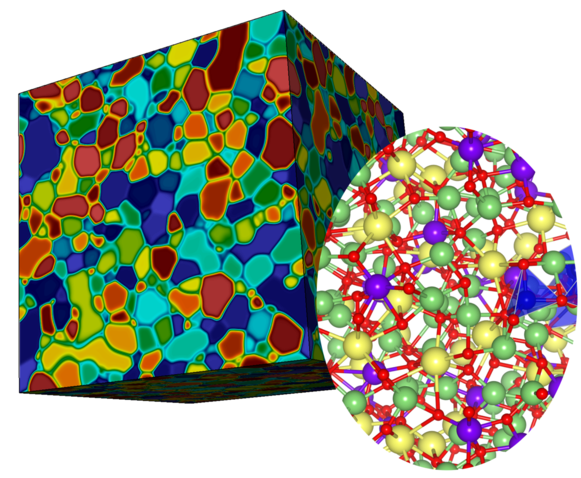
Perfection is a problem when it comes to how computers model materials for energy applications. Although a typical model assumes materials are perfect, in reality they have flaws at their interfaces and boundaries.
These imperfections, says Lawrence Livermore National Laboratory (LLNL) researcher Brandon Wood, “are often where the action is, particularly for ion transport,” a key process in the performance of batteries, hydrogen production and storage systems, and of electrocatalysts, all of which are vital to decarbonizing the atmosphere. “We want to understand these boundary regions, so we threw lots of high-performance computing power at it,” says Wood, hydrogen and computational energy materials associate program lead and deputy director of the LLNL’s Laboratory for Energy Applications for the Future.
Learn more about how scientists are using the Department of Energy (DOE)’s supercomputers to simulate these interfaces.
|
|
|
Antimicrobial Nanowires: Drawing on DOE Ames Lab’s expertise in material science, a team from Ames National Laboratory, Iowa State University, and University at Buffalo developed an antimicrobial spray that uses a layer of copper nanowires. Even though the technology was supported through the National Virtual Biotechnology Laboratory to apply to the COVID-19 pandemic, the spray could be used in a variety of situations.
|
|
|
|
Plastics Upcycling: Researchers at DOE’s Pacific Northwest National Laboratory have developed a new method to convert plastics into valuable, useful chemicals. It’s less expensive and produces less methane than existing methods of plastic upcycling. The method builds on past research supported by DOE that focused on trapping atoms.
|
|
|
New Qubit Platform: A team of researchers recently developed a new platform for qubits, the heart of quantum computers. They froze neon gas onto a solid at very low temperatures and then trapped a single electron on it. The team included scientists from Florida State University, DOE’s Argonne National Laboratory, University of Chicago, MIT, and DOE’s Berkeley Lab.
|
|
|
The Office of Science posted 10 new highlights between 7/29/22 and 9/6/22.
|
|
|
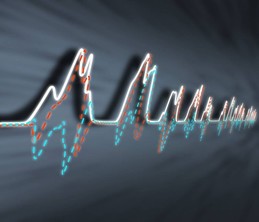
Machine Learning to Analyze X-Ray Pulses: Ultrafast pulses from X-ray lasers can reveal how atoms move at timescales of a femtosecond. However, measuring the pulses’ properties is challenging. A study from DOE’s SLAC National Accelerator Laboratory trained neural networks to reveal hidden sub-components of the pulse. The new method of analysis is up to three times more accurate and millions of times faster than existing methods. Knowing the components of each X-ray pulse leads to better, crisper data. These findings can also expand the science possible using ultrafast X-ray lasers.
|
|
|
Materials Matter: 75 Years of R&D at DOE’s Ames National Laboratory
|
|
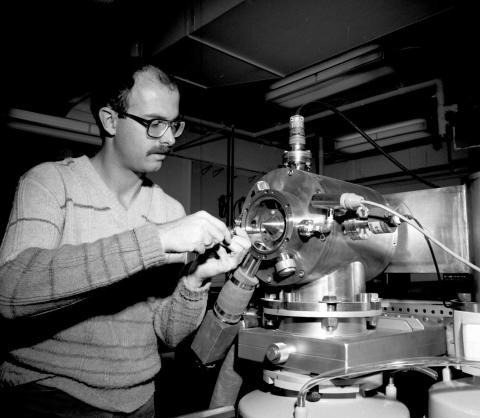
In 2022, DOE’s Ames National Laboratory celebrates a milestone – 75 years as a national laboratory dedicated to the pursuit of research in materials science. While the laboratory’s reputation in this field is widely recognized today, it is less well understood just how revolutionary Ames Lab’s beginnings were. Materials research was not a research discipline in 1942, when the lab started. Since its beginnings during WWII, the lab has developed expertise in understanding and developing materials for renewable energy, energy efficiency, manufacturing, and more. Learn more in the first of six articles on Ames’ history on the lab’s website. |
|
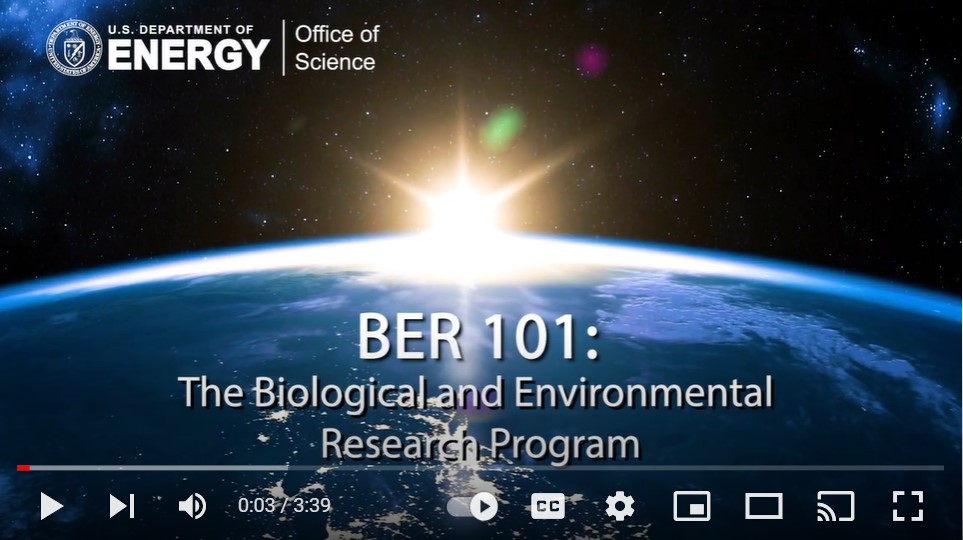
The DOE Office of Science’s Biological and Environmental Research Program enables discovery. It supports scientific research and facilities to achieve a predictive understanding of complex biological, earth, and environmental systems. It also brings together teams of researchers and resources to solve environmental problems for the nation and the world. Check out our new BER 101 video, which provides an overview of the program’s mission, people, and resources. |
|
|
CommUnique provides a review of recent Office of Science Communications and Public Affairs stories and features. This is only a sample of our recent work promoting research done at universities, national labs, and user facilities throughout the country.
|
|
|
|
|
|