Office Updates
U.S. Department of Energy Reaffirms Commitment to Buy Tribal Energy
On Dec. 4, U.S. Department of Energy (DOE) Secretary Jennifer M. Granholm signed a memorandum reaffirming DOE’s commitment to purchase clean power from Tribes while working to meet the federal government’s clean energy goals.
“As Tribes continue to lead in addressing the climate crisis, they can think of DOE as not just a partner, but a potential customer. Secretary Granholm’s commitment can help Tribes reach the economies-of-scale needed to break ground on new community energy projects and better sustain their clean energy workforce,” said Wahleah Johns, the director of DOE’s Office of Indian Energy and a citizen of the Navajo Nation.
Through the authority of the Indian Energy Purchase Preference, part of the Energy Policy Act of 2005, federal agencies can give preference to Tribal majority-owned businesses when purchasing electricity or other energy products and byproducts.
Read the full announcement to learn more.
News
DOE Seeks Tribal Leader and ANC Leader Input on Draft Consultation Policy Updates
 DOE is seeking Tribal Leader and Alaska Native Corporation (ANC) Leader input on proposed improvements to internal policies and procedures related to Tribal interactions and consultation. A virtual consultation was held on Dec. 11 and shared the following proposed changes:
Key Changes in the Draft Order and Policy
DOE intends that these revisions clarify roles, responsibilities, and requirements, and strengthens DOE’s support of Tribal consultations and interactions and capacity to better meet the agency’s Tribal trust obligations.
- Expands the requirements for Tribal training for DOE officials to understand the Department’s responsibilities to Tribal nations.
- Gives more guidance on what DOE needs to do to support government-to-government consultation and engagement with Tribes and Alaska Native Claims Settlement Act Corporations.
- Provides additional details on what needs to be included in annual reporting from DOE offices to DOE headquarters.
- Designates in writing one or more Tribal Liaison Officer positions in each program office and at least one Tribal liaison for each field office or site.
- Requires program offices to develop an implementation plan to implement this Order and Policy, including identifying staff, budget, and training.
Tribal Leader and ANC Leader input: Do you have questions, comments, or suggestions based on these proposed changes? Written comments are requested by Jan. 31, 2024, and should be sent to tribalconsultation@hq.doe.gov.
Slides from the consultation, policy discussion drafts, and the Dear Tribal Leader letter are available here.
Presidential Executive Order to Reform Federal Funding for Tribes and Underscore Respect for Tribal Nations’ Sovereignty and Autonomy
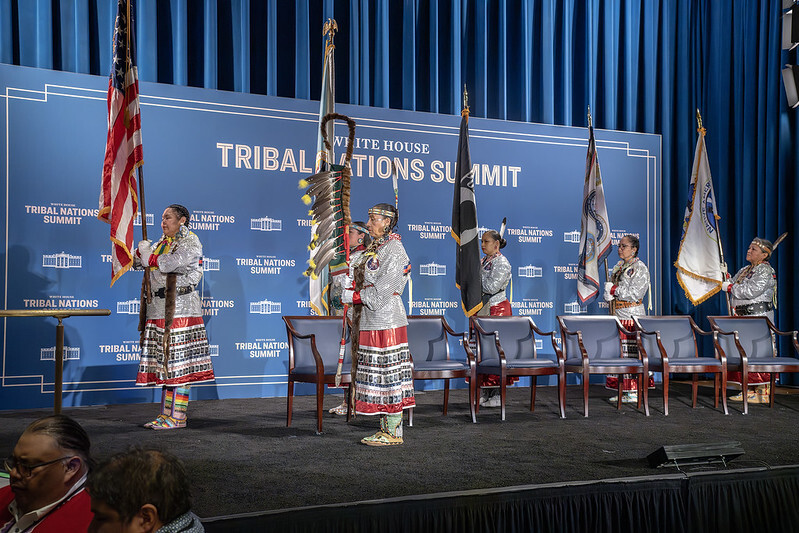 As part of the White House Tribal Nations Summit in early December, President Biden signed an Executive Order that demonstrates the Biden-Harris Administration’s respect for Tribal sovereignty and commitment to ushering in the next era of Tribal self-determination by ensuring that Tribal Nations have greater autonomy over how they invest federal funding.
To fulfill this promise, the Executive Order:
- Requires federal agencies to take action to ensure federal funding for Tribes is accessible, flexible, and equitable.
- Creates a one-stop shop for federal funding available to Tribes: The Tribal Access to Capital Clearinghouse.
- Better embraces trust responsibilities by assessing unmet federal obligations to support Tribal Nations.
View the White House fact sheet for more information or review the full Executive Order.
Tribal Leader Videos: The White House also shared testimonial videos from Tribal Leaders related to this Executive Order:
NEW: DOE Tribal Guide to Solar Energy
Guide Provides Answers to Common Questions About Solar Development on Tribal Lands
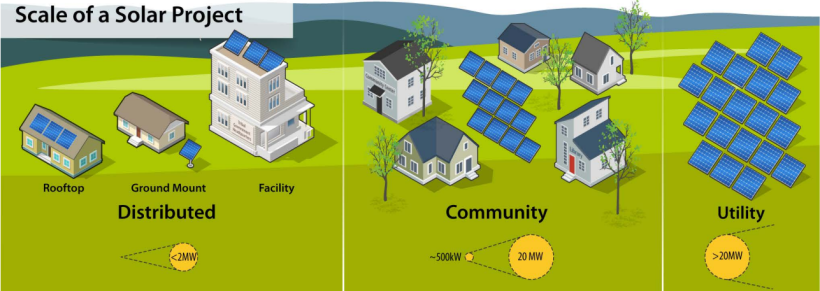 While rooftop solar can benefit individual households, a large-scale solar array can benefit from economies of scale. The type of solar project a Tribe chooses to pursue will depend on many factors.
- How can a Tribe determine whether distributed-scale, community solar, or utility-scale solar is the right project?
- How will a Tribe’s land ownership structure affect solar development?
- How much solar energy can be deployed on Tribal lands?
These are some of the questions answered by DOE’s new Tribal Guide to Solar Energy.
Earlier this year, DOE published the Addressing Regulatory Challenges to Tribal Solar Deployment Guidebook, developed in partnership with the Midwest Tribal Energy Resources Association, to identify key barriers and develop replicable solutions for Tribes seeking to install solar on Tribal land.
Now, in addition to the key findings report, this new webpage answers some of the most common questions about solar development on Tribal lands in an easy-to-read FAQ format, provides details on Tribal eligibility for federal solar tax credits, and shares links to key resources.
DOE Welcomes Three Tribal Organizations to Clean Energy to Communities Peer-Learning Cohorts
 Clean Energy to Communities is an innovative technical assistance program that connects local and regional governments, Tribes, community-based groups, and electric utilities with national laboratory experts to transform clean energy ambitions to real-world deployment.
DOE announced leaders from 46 entities will join the Clean Energy to Communities Peer-Learning Cohorts program. Participants—including county and local governments, Tribes, community-based organizations, and utilities—will convene regularly from January to July 2024 to exchange strategies and best practices.
Tribal entities joining the latest cohorts are:
Enhancing Resilience at Critical Municipal Facilities Through Solar, Storage, and Microgrids
- Penobscot Indian Nation
- Sipayik Resilience Committee, Maine.
Integrating Community Priorities into Electric Vehicle Plans and Projects
- Sovereign Energy, New Mexico.
Funding Opportunities
NEW—Printable Flyer: Tribal Clean Energy Funding Opportunities
- Enabling Native Researchers Summer 2024 Internships
- Career Skills Training Program
- Energy Transition Initiative Partnership Project.
Enabling Native Researchers and other Minorities through Graduate Engineering Summer 2024 Internship Program
Apply by Jan. 31.
This internship program at the National Renewable Energy Laboratory offers undergraduate and graduate students at minority-serving institutions enhanced hands-on experience in engineering disciplines of power, energy, and cybersecurity.
DOE Career Skills Training Program
$10 million
Deadline extended to Feb. 27.
This program will provide up to $10 million in competitive grants for nonprofit partnerships between public or private industry and labor organizations to deliver programs that provide energy efficiency classroom instruction and on-the-job training. The program seeks to encourage meaningful engagement and participation of workforce organizations, including labor unions, as well as underserved communities and underrepresented groups, including Tribes.
-
Tribes are encouraged to partner with potential applicants, such as through DOE's teaming partner list.
DOE Seeking Regional Partner Organizations for Energy Transition Initiative Partnership Project
Proposals due Jan. 10.
Does your organization have ties to remote or island communities, understand local energy challenges, and know how to bridge the gap between federal agencies and residents? DOE is seeking up to 12 partner organizations to join its regional partner network for the Energy Transition Initiative Partnership Project.
Events
- EECBG Program Tribal Applicant Office Hours
- Affiliated Tribes of Northwest Indians 2024 Winter Convention
- Alaska Forum on the Environment
- 2024 DOE Tribal Clean Energy Summit
-
View all upcoming events.
EECBG Program Tribal Applicant Office Hours
📅 Dec. 21 | 4 p.m. ET
The Energy Efficiency and Conservation Block Grant (EECBG) Program provides $8.8 million to 774 eligible Tribes, including Alaska Native Regional and Village Corporations. This session will provide Tribes the opportunity to ask questions about the formula award application process. View the EECBG page for Tribes for more information.
Affiliated Tribes of Northwest Indians 2024 Winter Convention
📅 Jan. 28–Feb. 1 | Portland, Oregon
Alaska Forum on the Environment 2024
📅 Feb. 5–9 | Anchorage, Alaska
6th Annual Seminole Tribe of Florida Renewable Energy & Sustainability Conference
📅 Feb. 6–8 | Hollywood, Florida
2024 DOE Tribal Clean Energy Summit
📅 Feb. 27–28 | Temecula, California
We invite Tribal Leaders and staff to come together to build networks, exchange ideas, and explore clean energy solutions that support Tribal energy sovereignty.
Here's what's catching attention on our social media pages. Follow us on Twitter and Facebook for the latest updates.
|




