Journal of Indo-Pacific Affairs, vol. 7, no. 3 (May-June 2024)
United States Air Force sent this bulletin at 05/08/2024 10:41 AM CDT |
Volume 7, no. 3 (May–June 2024)
Senior Leader Perspective Articles
|
|
Author(s): Air Marshal (Dr.) Diptendu Choudhury, Indian Air Force, Retired Abstract: This article examines China’s strategic ambitions in the Indo-Pacific region through the lens of its “Zhōngguó” or “Middle Kingdom” dream of regaining its perceived historical dominance. It traces the deep roots of this aspiration in Chinese nationalism and the Chinese Communist Party’s narrative of reclaiming lost territories. The article analyzes China’s coercive actions to expand its influence in the East and South China Seas, the Indian Ocean region, and along its land borders with India. It highlights China’s growing military capabilities, particularly its increasing use of land-based airpower to complement its maritime forces. The article argues that countering China’s aggressive strategies requires a collective, multi-domain approach integrating the strengths of regional powers like India, the United States, and others who believe in a rules-based international order. It calls for cooperation across land, maritime, air, space, and cyber domains to ensure a free, open, and prosperous Indo-Pacific. |
|
|
Author(s): COL Hsu Min-Cheng, Taiwan Army Abstract: As authoritarian regimes increasingly employ sophisticated information warfare tactics, democratic societies face urgent challenges in countering cognitive influence operations. This article examines how entities like the Chinese Communist Party strategically disseminate misleading narratives through social media platforms to sway public opinion, erode trust in democratic institutions, and advance the People’s Republic of China’s geopolitical agendas. Leveraging techniques such as coordinated inauthentic behavior, algorithmic manipulation, and emerging technologies like deepfakes, these operations exacerbate societal divisions and undermine national resilience. Drawing insights from Taiwan’s proactive countermeasures, the article explores whole-of-society approaches to enhancing media literacy, fostering societal resistance, and “vaccinating” the public against hostile influence campaigns. By strengthening cognitive defenses and fortifying the information environment, democratic nations can safeguard their values, uphold sovereignty, and maintain strategic advantages over revisionist authoritarian powers in an era of relentless information confrontation. |


Feature Articles
|
|
Author(s): Dr. David J. Lorenzo Abstract: Why do a majority of Taiwanese prefer alternatives, including the continuation of the status quo, to unification with mainland China for the foreseeable future? Understanding the sources of this preference is important because tensions over Taiwan’s refusal to unify with the mainland could spark a military conflict across the Taiwan Strait. This article offers an overview of the various explanations for this phenomenon. These explanations focus on Taiwanese identity, political aspirations for liberal democratic governance, and a “commitment problem” stemming from distrust of the People’s Republic of China (PRC). The article concludes by discussing the enduring nature of this reluctance to unify, reviewing recent polling data on Taiwanese willingness to resist a PRC invasion, and providing recommendations to deter the PRC from resolving the Taiwan question through military force. |
|
|
Title: A Free and Open Indo-Pacific in 2040?: Democracy, Autocracy, and What Is in Between Author(s): Dr. Benjamin Reilly Abstract: The Indo-Pacific’s future is often depicted as a battleground between democracy and autocracy, reflecting a geopolitical struggle between visions of free and repressive world orders. Initiatives like the Quadrilateral Security Dialogue envision a “free and open” Indo-Pacific, assuming a deepening of democratic governance. This article explores the feasibility of such deepening within and among Indo-Pacific democracies in the near future. It assesses the current and prospective prevalence of democratic and autocratic regimes in the Indo-Pacific today and in the likely future, and the growing prevalence of “illiberal”, semi-democratic regimes in the region. Additionally, it examines the implications of a region split three ways between a mostly-democratic maritime East Asia, a mostly autocratic East Asian mainland, and a South Asia hovering between the two. The article concludes with a re-evaluation of the democratic peace theory—a cornerstone principle in international relations, but one which may need to be re-evaluated in the light of the regional trend towards illiberal democracy. |
|
|
Author(s): Dr. Ethan Allen, Dr. Sebastian Kevany, and Dr. Srini Sitaraman Abstract: Amid escalating active kinetic conflicts and the ever-growing and ever-more-severe environmental impacts of climate disruption, along with related and unrelated public health threats, governments worldwide confront increasingly complex choices in addressing simultaneous and sequential crises. Never in human history have so many states juggled so many disasters within such a brief span, yet our governance mechanisms often prove woefully inadequate for this daunting challenge. Trends strongly indicate that the situation will deteriorate further in the years ahead. Successfully managing and ameliorating our deteriorating physical and geopolitical environments demands a significant shift in mindset among global leaders—a fundamental recognition of humanity’s unity. This necessitates a departure from short-term, self-centered, nationalistic thinking toward a longer-term, more inclusive perspective that embraces the common needs and interests of all individuals on this planet. |
|
|
Author(s): Dr. Hyunsoo Hur Abstract: Annually, the US Department of Defense (DOD) invests billions in cooperative activities with partner nation security forces, bolstering partnerships. The DOD’s Regional Defense Fellowship Program (RDFP) and Department of State’s International Military Education and Training (IMET) program provide education and training to foreign military and civilian personnel, fostering relationships, exchanging military information, promoting professionalism, and instilling democratic values. This study, based on interviews with security cooperation officers and civilians from Colombia, Ethiopia, Georgia, Mexico, and Thailand, reveals RDFP and IMET activities span technical training, language instruction, seminars, workshops, and professional military education. Returns on Investment (ROI) vary from short-term tangible outcomes to long-term intangible benefits. The study offers recommendations for program enhancement. |
|
|
Title: The Church of the Periphery and the Catholic Pivot to the Indo-Pacific Author(s): Dr. Enrico Beltramini Abstract: Amid an interminable crisis in the Western world, the Roman Catholic Church’s pivot to the Indo-Pacific represents an endeavor to uphold a central social role in a rapidly evolving global landscape. This time, however, the Roman Catholic Church does not harbor imperial ambitions to establish worldly peace. Instead, it aligns itself with the impoverished, marginalized, and those adversely affected by Western-driven globalization. The Church’s pivot toward the Indo-Pacific transpired during a post-globalization era. In this era, the Indo-Pacific ceases to be a mere remnant of affluent Western nations; it emerges as a space where a philosophical, legal, political, social, and cultural framework for constructing, codifying, comprehending, and experiencing a domain distinct from the West can potentially become predominant. This article will demonstrate how this characterization of the Indo-Pacific could influence the Church’s agenda. |
|
|
Title: Countering China’s Malign Influence in Southeast Asia: A Revised Strategy for the United States Author(s): Lt Col Jeffrey S. Lehmkuhl, USAFR Abstract: In reorienting its foreign policy to counter China, the United States must grasp China’s ambitions deeply. Understanding the historical roots and driving forces behind Chinese actions is vital. Previous research analyzed the global ambitions of the Chinese Communist Party (CCP) and its strategic means to realize them, with a focus on Southeast Asia. It highlighted the CCP’s pursuit of hegemony and its use of malign influence, avoiding actions that might provoke a US military response. This second installment of research proposes a revised US strategy, emphasizing partnerships in Southeast Asia to limit China’s ability to act against US interests. Relevant to foreign relations experts and military operations, this research advocates for shaping the regional environment to constrain China’s power. |
|
|
Title: Covert Connections: The LinkedIn Recruitment Ruse Targeting Defense Insiders Author(s): Lt Col Caleb S. Lisenbee II, USAF Abstract: Foreign adversaries, particularly China, are exploiting LinkedIn to conduct virtual espionage against current and former US Department of Defense (DOD) members. They create fake profiles and lucrative job solicitations to entice targets into divulging sensitive information or becoming recruited assets. This low-risk, low-cost tactic circumvents robust physical and cybersecurity defenses. Every DOD professional is a potential target, from senior leaders to junior personnel, as adversaries seek insights into future capabilities, vulnerabilities, research, operational concepts, and human intelligence networks. Successful recruitment can devastate national security by enabling technological replication, battlefield strategy countering, and compromising of critical personnel. Consequences for individuals include potential treason charges and ruined careers. To combat this threat, a focused US government counterespionage campaign is recommended, coupled with enhanced training, policies, and legal statutes explicitly addressing virtual espionage. Defensive measures must match the scale and sophistication of the virtual threat. |
|
|
Author(s): Maj Daniel A. McGinnis-Welsh, USAF Abstract: This article evaluates the theory of nuclear superiority-brinkmanship proposed by Matthew Kroenig, highlighting its fatal flaws through historical evidence and strategic analysis. It emphasizes the risks of reigniting an unsustainable arms race due to the US legacy of pursuing technological developments without a cohesive strategy, known as “bootstrapping.” Assessing the impracticality of limited nuclear war and the importance of secure second-strike capabilities, it advocates for a modern US nuclear deterrent based on a balanced force of advanced nuclear systems, complemented by robust conventional capabilities and infrastructure. Prioritizing credible deterrence over compellence aligns with national interests and reduces the risk of unintentional nuclear conflict. Pursuing Kroenig’s flawed theory, given its high costs and potential catastrophic consequences, is deemed unwise for guiding US nuclear strategy. |
|
|
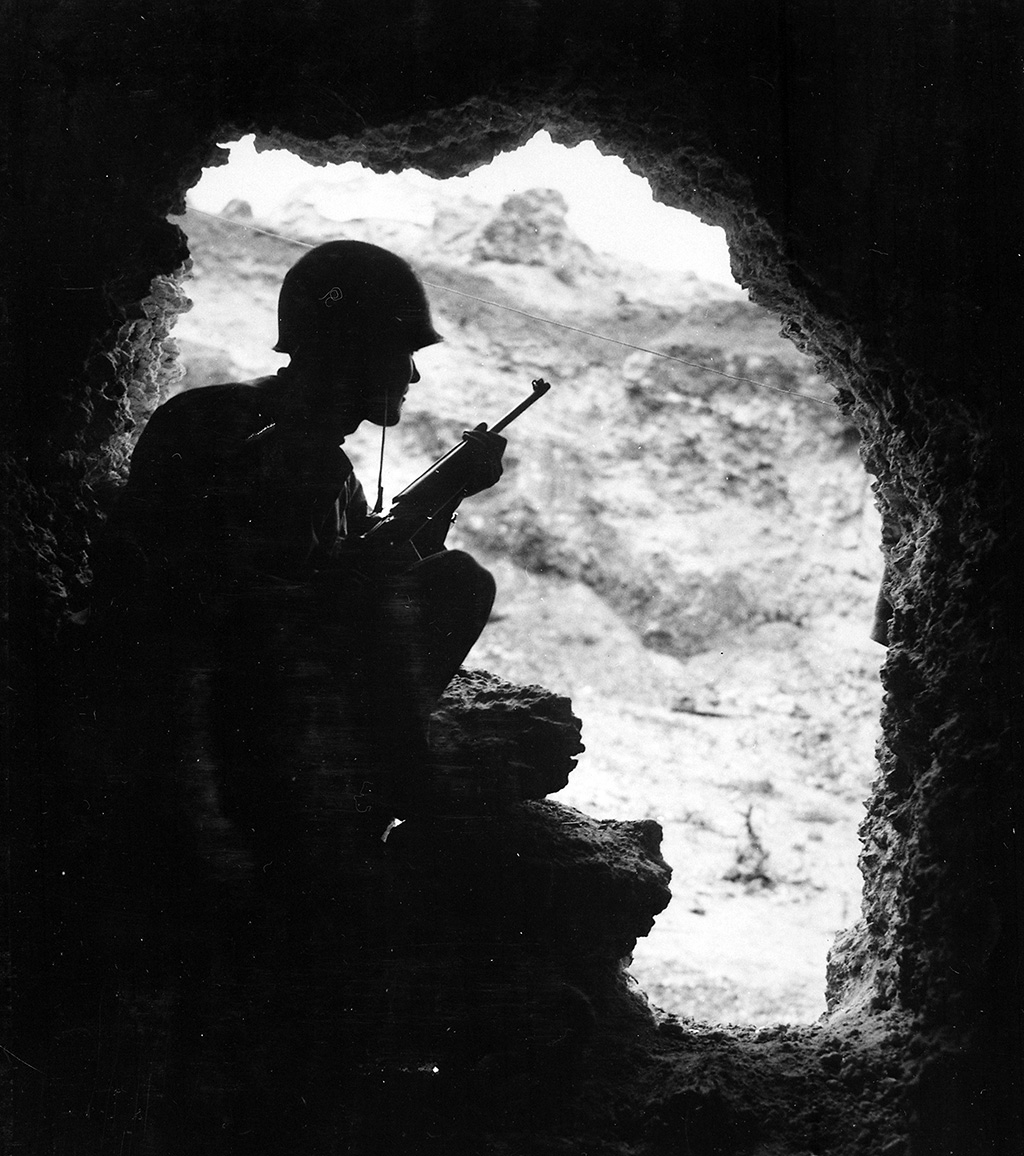
Title: Tip of the Iceberg: Okinawa 1945 and Lessons for Island Battles Author(s): Christopher L. Kolakowski Abstract: This article examines the Battle of Okinawa in 1945 and draws lessons relevant to a potential future invasion to capture Taiwan. An overview of Operation Iceberg outlines the massive assault by US forces to seize Okinawa from entrenched Japanese defenders over 91 days of combat. Three key lessons emerge: (1) ground forces are paramount, requiring full naval and air support until objectives are secured; (2) airpower dominance decides the offshore battle for surface supremacy; (3) nearby land bases are essential for staging, sustaining, and reinforcing the invasion. While not a replay of past battles, a hypothetical Taiwan campaign would likely feature similar operational challenges as Okinawa involving complex joint operations, need for air supremacy, undersea warfare, and disputes over vital offshore islands and bases. As a seminal Pacific battle, Okinawa’s harsh lessons merit thorough analysis by modern planners and strategists. |
|
|
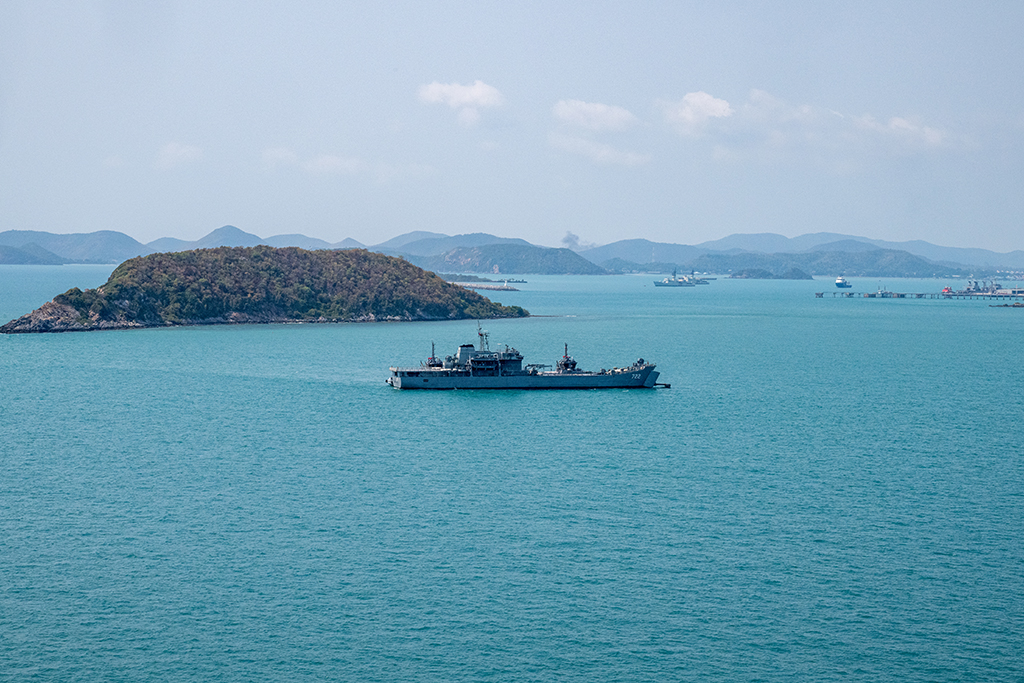
Author(s): Wanpiya Rodjanagoson Abstract: This article examines recommended strategies for Thailand’s small navy amid the Indo-Pacific’s great-power maritime rivalry. It argues that while Thailand has pursued these strategies, it has only achieved partial success. Synthesizing existing literature, limitations, and case studies, the article establishes a concrete definition of small navy strategies. Utilizing SWOT analysis and the TOWS matrix (strengths and weaknesses against external opportunities and threats) , it identifies recommended strategies for Thailand’s small navy and compares them with current policies and practices. These insights, previously absent in Thai maritime security literature, are complemented by exclusive information from related policy practitioners. By shedding light on Thailand’s case studies, the article offers valuable insights for policy practitioners involved in executing strategies, military operations, and diplomacy in the region. |







View Articles
|
|
Author(s): Prof. Rohan Gunaratna and Dr. Punsara Amarasinghe Abstract: This article examines how China draws upon the strategic theories of Alfred Thayer Mahan and Julian Corbett to shape its emerging naval doctrine and force posture in the Indian Ocean region (IOR). It traces Mahan’s emphasis on sea power and naval supremacy, as well as Corbett’s concepts of maritime communications and balancing maritime forces with terrestrial capabilities. The article analyzes China’s accelerated naval modernization, including its aircraft carrier program, and its increasing military presence across key maritime chokepoints and archipelagic chains stretching into the IOR through port access facilities and security partnerships. It argues that Beijing synthesizes a hybrid maritime strategy that combines Mahanian principles of decisive naval dominance with Corbettian advocacy for controlling sea lines of communication to protect economic interests. While facing limitations in achieving complete control, China appears poised to acquire significant deterrent capabilities countering US regional primacy. This analysis sheds light on China’s multifaceted theoretical framework motivating its drive for greater power projection into the Indian Ocean. |
|
|
Title: The Quadrilateral Security Dialogue’s Path to Institutionalization: A He and Feng Perspective Author(s): Dr. Rajesh Kumar and Aamir Khan Abstract: To maintain the power balance in the Indo-Pacific region, power dynamics are shifting, and small-scale alliances are expanding. This emerging arena of power struggles serves as the battleground for great-power competition, each vying to assert and uphold regional influence. As a counterweight to China’s ascendant hegemony, the Quadrilateral Security Dialogue (Quad) emerges as a prominent and viable option within the region. Nevertheless, the institutionalization of the Quad presents inherent challenges. Addressing these challenges, this article employs Kai He and Huiyun Feng’s leadership–institution model of institution building to conceptualize the Quad’s institutionalization. This model delineates two forms of leadership: executive and ideational, which in combination yield four distinct institutional types. Through this framework, it becomes evident that the Quad possesses the requisite elements to evolve into a deeply institutionalized alliance. |
|
|
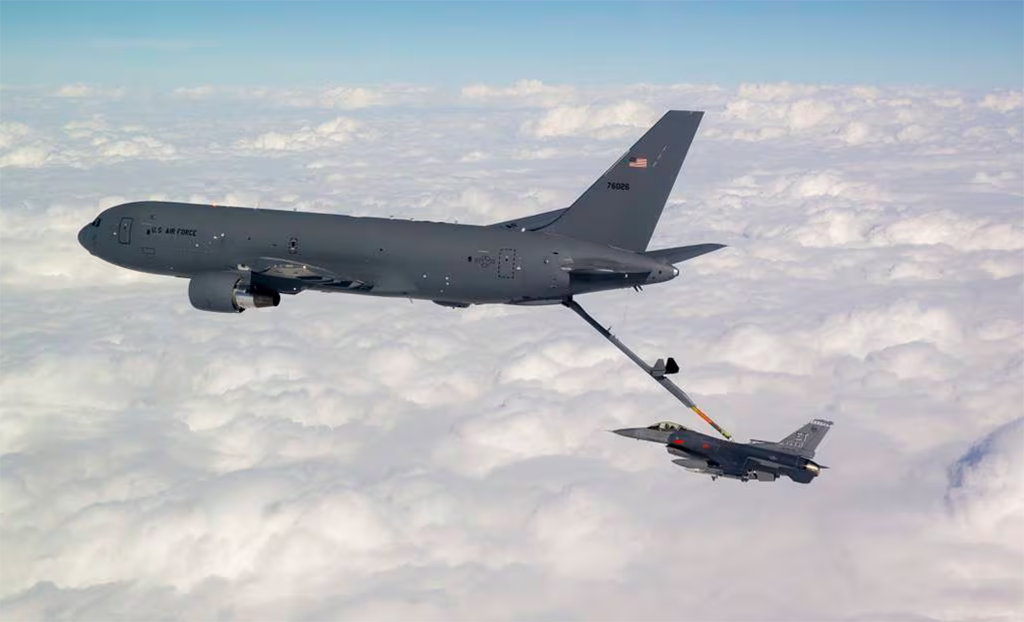
Title: Fueling a Superpower: Reprioritizing the US Air Refueling Fleet for Great-Power Conflict Author(s): Maj Caleb Egli, US Air Force Abstract: The US Air Force must retain the capacity to deploy bombers extensively into the Pacific to deter a potentially hostile People’s Republic of China, despite the increasing threat of antiaccess/area denial measures hindering naval and conventional basing operations. Tankers play a crucial role in facilitating the operations of long-range bombers. Therefore, the Air Force should prioritize enhancing its air refueling fleet capability and capacity by garnering congressional support to transition entirely from the KC-135, procuring additional KC-46s, and expediting the acquisition of the next-generation tanker. Through analysis of unclassified sources and the Fiscal Year 24 National Defense Authorization Act, this article asserts that revitalizing the development and funding for the Air Force’s aging air refueling fleet is imperative. Strengthening the US tanker fleet will guarantee a credible conventional strike deterrence capability over long distances, while also meeting the demands of joint force operation. |
|
|
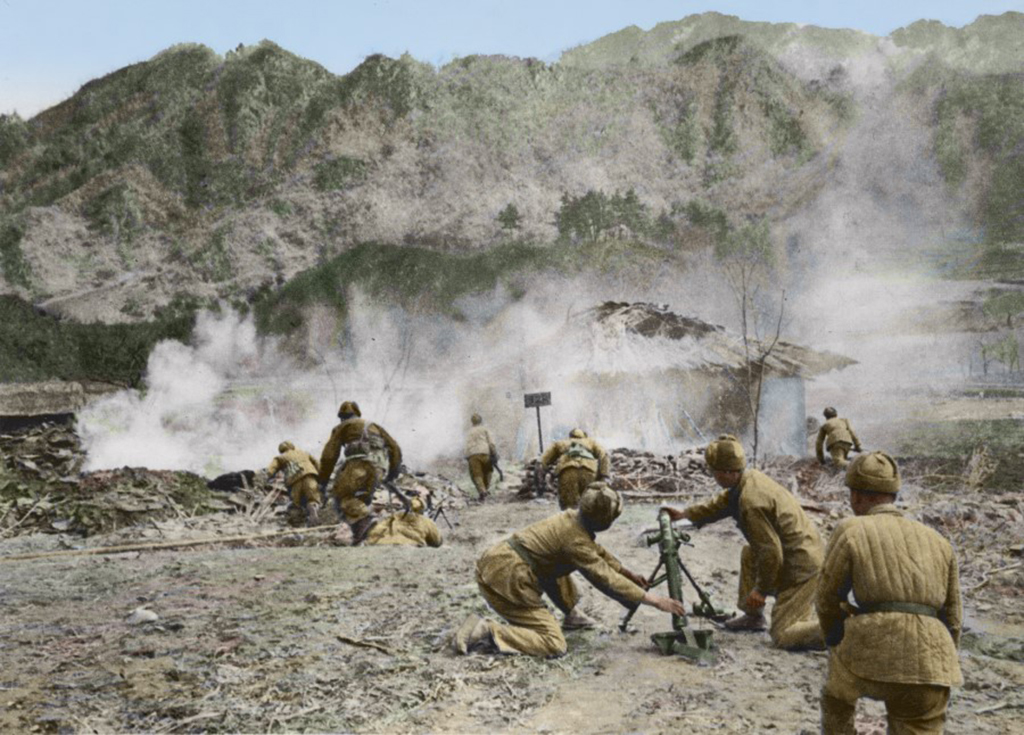
Title: Echoes of War: Deciphering Chinese Military Strategy through the Lens of US Intelligence History Author(s): TSgt Zachary Brouillard, USAF Abstract: This article delves into the impact of Chinese military strategy during the Korean War and its interplay with US intelligence at the time. It posits that intelligence analysts must grasp Chinese military strategy as a cornerstone of their training to enhance their effectiveness in estimative, current, and warning intelligence for operational gains. Drawing from an array of authoritative primary and secondary sources, it seeks to illuminate instructive insights through a juxtaposition of Chinese strategic maneuvers and US intelligence efficacy. By joining select multiservice and multiagency experiences, this article propels the performance of the US intelligence community today, offering a yardstick to gauge contemporary advancements. Intelligence analysts and operational planning teams markedly enhance their achievements by drawing from historical precedents to decipher Chinese intentions and capabilities. Embracing this paradigm equips military operations to adeptly tackle the realistic tactical, operational, and strategic challenges confronting US forces. |
|
|
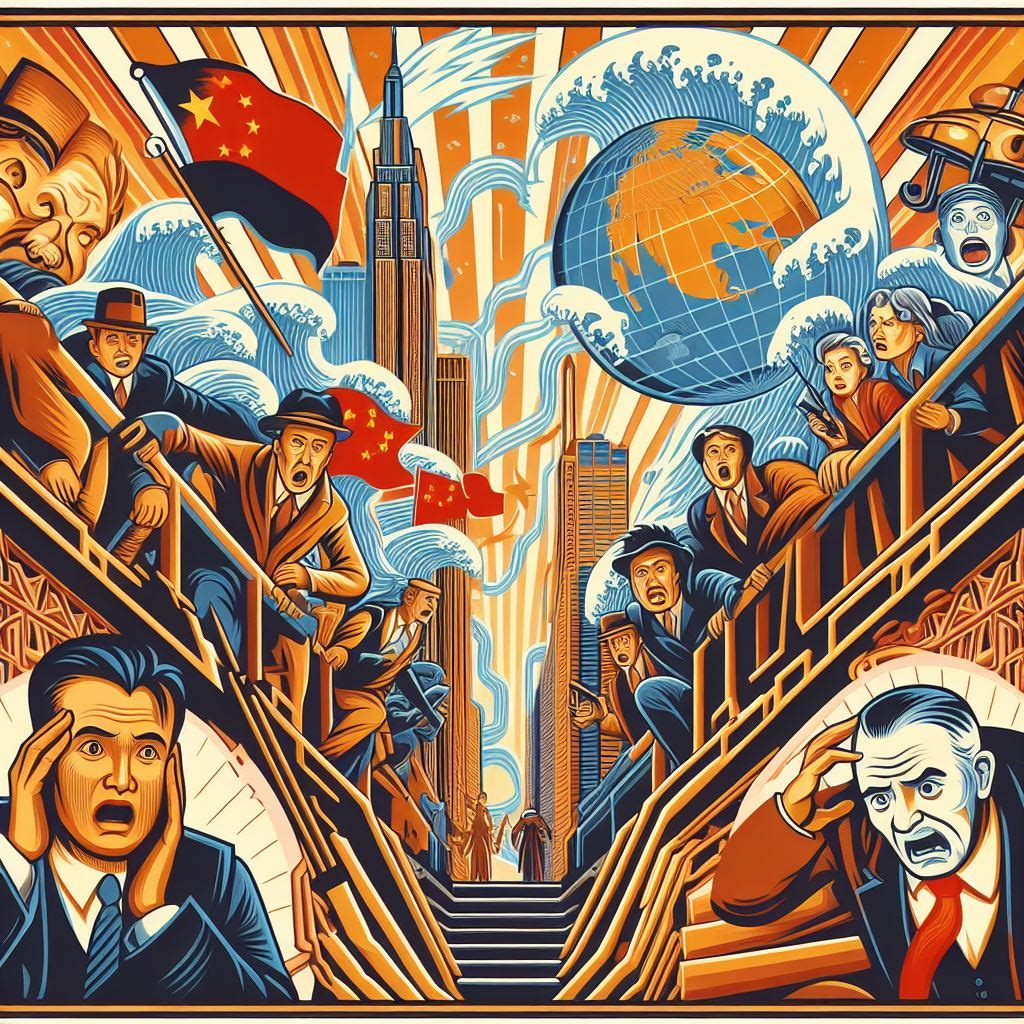
Title: Fear and Anxiety of China’s Rise: Understanding Response of the Indo-Pacific Author(s): Shahadat Hossain Abstract: The emotional turn in geopolitical decision is often overlooked in academia. However, emotions have had a significant impact on the major geopolitical events. In the current geopolitical landscape of the Indo-Pacific region, some democratic nations, including the United States, India, Japan, and Australia, harbor fear of China’s rise. China’s economic growth, military expansion, and offensive foreign policy instilled fear in the Indo-Pacific region. In the fear of China, Indo-Pacific geopolitics is reshaping. When the new dynamics of the Indo-Pacific are counter to China fear, it is important to explore why China’s rise is a matter of fear and anxiety to some nations in the Indo-Pacific. This article uniquely discusses how emotion can unify nations and contribute to establishing new a global order. Without knowing the emotional turn of the geopolitics in the Indo-Pacific, our comprehension of the new landscape remains incomplete. This article aims to explore and understand the impact of emotions on the geopolitics of the Indo-Pacific. |

Commentary Articles
|
|
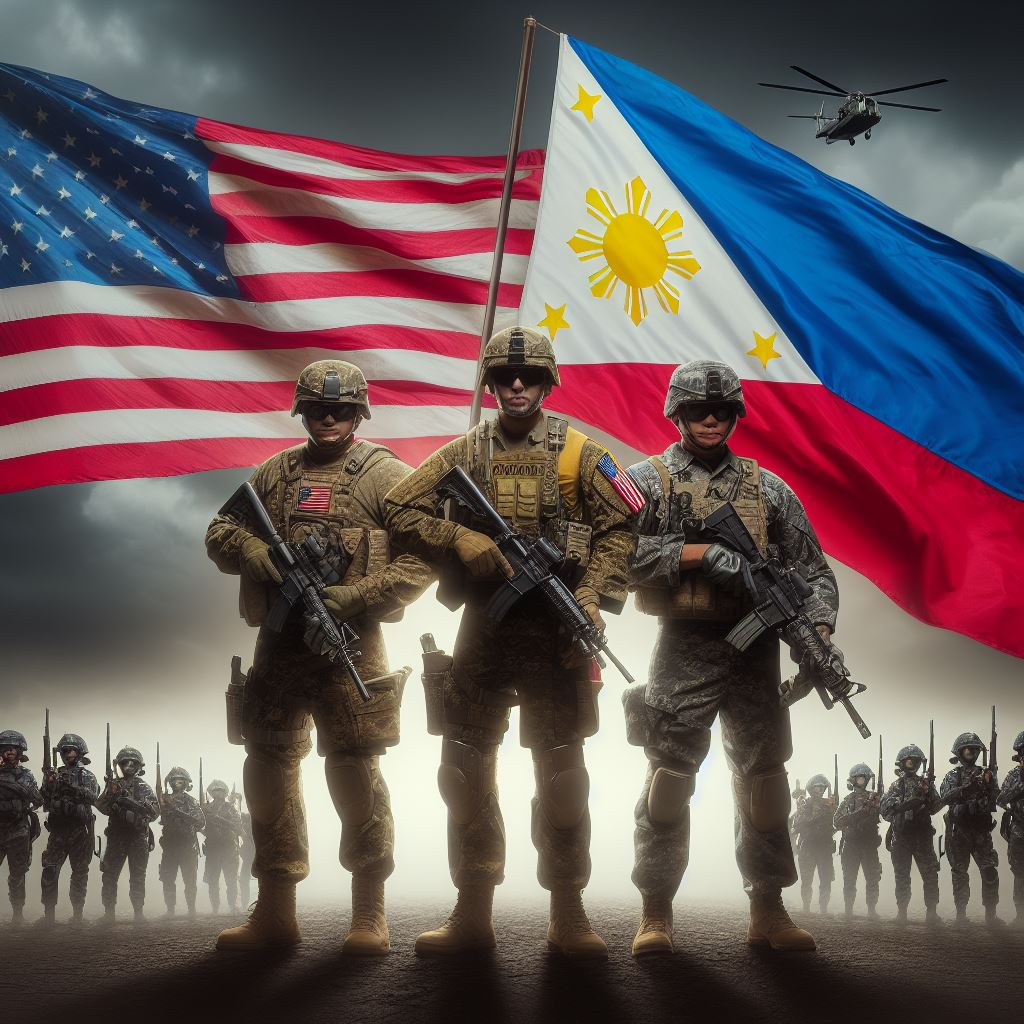
Title: Countering China Starts with the Philippines Author(s): Major David Geaney, USAF Abstract: As China escalates its assertive tactics in the South China Sea, the United States must take bolder action to support its regional allies and partners, starting with the Philippines. This article argues that the United States should begin directly escorting Philippine vessels within their exclusive economic zone, employing nonlethal measures like water cannons to counter Chinese harassment. This measured but resolute stance would send a clear deterrent signal to Beijing, build confidence with Manila and other Asian allies, and emulate the gray-zone tactics China itself uses. Additionally, the United States should encourage the Philippines’ “assertive transparency” strategy to rally broader international condemnation of China’s expansionist claims. While stopping short of overt military conflict, this multifaceted approach would demonstrate the United States’ reliability as a regional security partner and put pressure on China to adhere to international norms. Concrete action to defend the Philippines’ sovereignty is a critical first step in countering China’s ambitions across the Indo-Pacific. |
|
|
Author(s): Alan Cunningham Abstract: Mexico holds a crucial position as one of the foremost trading partners and economic powerhouses for the United States in Central and Southern America. Given its proximity to the United States and its unwavering alliance from a security standpoint, Mexico plays a pivotal role in US foreign policy endeavors. However, the escalating levels of Chinese investment in the region pose a growing economic threat, endangering the standing of the United States. Consequently, it is imperative for Washington to prioritize efforts aimed at countering any potential economic competition that could prove detrimental in the context of Mexico. |

Cadet Perspective Article
|
|
Title: Navigating the Power Tides: Singapore’s Diplomatic Dance with the United States and China Author(s): Cadet Eric Liu, USMA; and Cadet Brandon Tran, USMA Abstract: Recently, Indo-Pacific states have found themselves embroiled in a competition between the People’s Republic of China (PRC) and the United States for influence. Particularly concerning is the notable increase in military cooperation between long-standing US partner Singapore and the PRC. This article asserts, through a comprehensive analysis of Singaporean military cooperation with China and the United States, that Singapore’s overwhelmingly positive relationship with the United States remains secure. Key leader engagements, joint military exercises, memorandums of understanding, and professional military exchanges will be the focus of this article’s examination. Unlike other works on the subject, this article specifically employs a case study to scrutinize a US partner’s susceptibility to Chinese influence. By illuminating these developments, the article offers insights pertinent to the US military as they strategize and implement their operations in the region alongside US partner forces. |

Kenney Paper
|
|
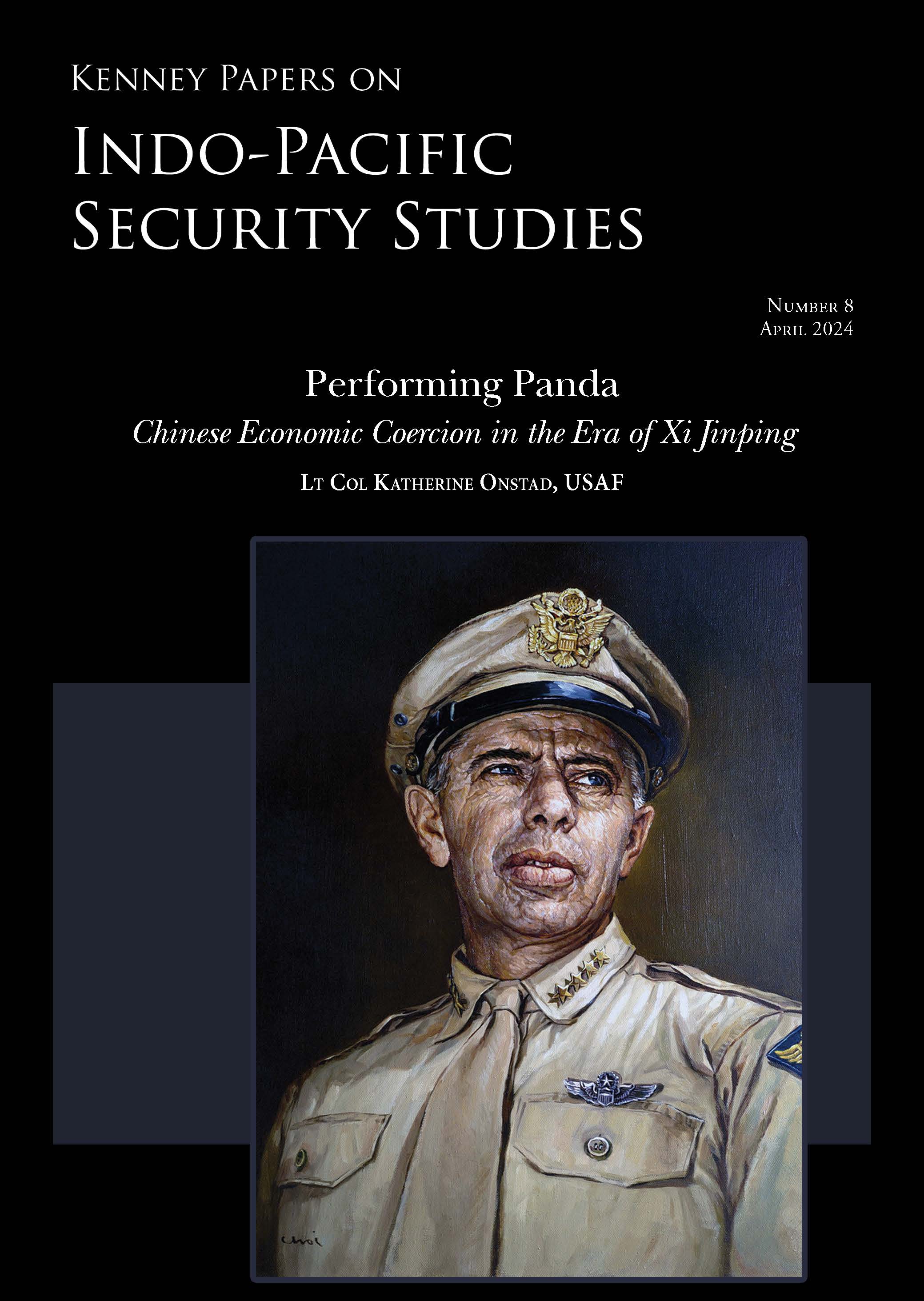
Title: Performing Panda: Chinese Economic Coercion in the Era of Xi Jinping Author: Lt Col Katherine Onstad, USAF Series and Number: Kenney Paper No. 8 Abstract: This paper provides an original contribution to the literature of economic coercion, based on empirical analysis of signaling from China to the United States from late 2012 to late 2022, President Xi Jinping’s first two terms. I argue that Xi has expressed more assertive economic coercion toward the United States because he wants to build China’s reputation as a powerful state to both foreign and domestic audiences; these coercive actions, however, have been largely performative because of interdependence. I present a theory of reputation-building and provide a 2x2 typology that helps us understand why China has changed how its economically coerces the United States over this period. One dimension is the means of coercion. Over this period, China changed its means from informal methods that gave the government plausible deniability to formal acknowledgment by the Chinese Communist Party with a corresponding legal framework. The other dimension is the target; China changed from targeting nonstate actors (US corporations) to states (US government entities and officials). State actors have a lower likelihood of bending to China’s will and represent stronger resolve from China by attempting to coerce them. These two dimensions combine to explain high, medium, or low reputation-seeking actions from China. Through comparative qualitative analysis of 52 events, I found that, early in Xi’s tenure, China displays low reputation-seeking actions based on coercing firms via informal means. By the end of the studied period, China displays high reputation-seeking behavior by constructing a legal framework of sanctions and signaling these sanctions to the United States. These moves are frequently in reaction to similar moves from the United States, however, and are without much bite because of possible blowback, leaving economic coercion as largely a performance to domestic and international audiences. |