Spacepower in the Indo-Pacific (JIPA, vol. 6, no. 4, May-June 2023)
United States Air Force sent this bulletin at 06/15/2023 07:00 AM CDT
Vol. 6, no. 4: Spacepower in the Indo-Pacific
Senior Leader Perspectives
 |
Title: Fortifying Stability in Space: Establishing the US Space Force
Author(s): Lt Gen Nina Armagno, US Space Force Abstract: The establishment of the US Space Force (USSF) in 2019 marked a significant development in space capabilities for national security and beyond. Space systems have become increasingly essential for modern military operations, impacting weather monitoring, surveillance, intelligence, communications, and more. The USSF plays a crucial role in integrated deterrence, collaborating with allies and partners to fortify stability in space. The USSF has faced challenges in conveying the vulnerabilities of space systems and securing funding and resources. However, efforts are underway to modernize space capabilities by transitioning from outdated systems to resilient and cost-effective architectures. Strategic partnerships, such as the Combined Space Operations Vision 2031, aim to promote responsible space utilization and shape a cooperative framework. Additionally, the USSF has established dedicated components for specific regions, further integrating space capabilities into overall strategies. The USSF's mission highlights the significance of space and the need for its protection and responsible utilization in today's multi-domain warfare landscape. |
 |
Title: Space Force Service Components Join the Fight
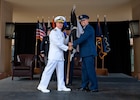
Author(s): Brig Gen Anthony Mastalir, US Space Force Abstract: In its third year of existence, the US Space Force fielded combat-ready forces in the presentation of service components assigned to combatant commanders. On order of the Secretary of Defense, US Space Forces Indo-Pacific was the first of these component commands to activate and begin integrating across all domains to maintain a free and open Indo-Pacific. However, the value proposition of activating space components extends into building better partnerships with allies and partners in the region—as well as new ventures in the commercial space industry. |
Features
 |
Title: Small States in Space: Space Club Relevancy and National Interest Influence
Author(s): Wing Commander Mark Waters, Royal New Zealand Air Force Abstract: This article analyzes how small states can enhance their importance within the "space club" and improve their capacity to attain national objectives. The study assesses the approaches taken by five successful small states to achieve their space-related interests and evaluates their effectiveness. The research demonstrates that small states can gain relevance within the space community by leveraging their unique attributes or identifying gaps in the space ecosystem. This relevance can help small states gain improved access to space services, enhance security, drive economic growth, and have a stronger voice in international space forums. The research provides valuable insights for small states seeking to participate in the space club and aims to inspire them to believe that they too can gain relevance within the space community and advance their national interests through space. This article is relevant to scholars and policy makers interested in space diplomacy and the role of small states in global governance. |
 |
Title: NATO’s Role in Space: How and Why NATO Member States Should Expand Their Purpose and Capabilities in Space
Author(s): Lt Col Emma Palombi, Italian Air Force Abstract: This article argues that NATO should expand its purpose and capabilities in space to effectively address the security threats that extend to and from space. The collective security of NATO member states in space can be strengthened through the pooling of satellite capabilities, diversifying the use of satellites, developing niche space specializations, and increasing the number of launching sites. Such cooperation will also enhance the relationship between NATO’s European allies and the United States, the international system's hegemon. Integration of the space domain is essential for NATO to successfully improve its deterrence strategy in space and extend collective defense into outer space. Ultimately, how NATO responds to and integrates space in its daily operations will determine its relevance in the space domain and the success of its relationship with the United States. |
 |
Title: Pushing Boundaries: Can the Indian Military Transform?
Author(s): Air Vice Marshal (Dr.) Arjun Subramaniam, Indian Air Force, Retired Abstract: The article argues that any discussion on the transformation of a nation's military must consider the conflict environment in which this transformation takes place. From an Indian perspective, the possibility of large-scale conventional wars, limited wars, and subconventional conflicts in varied terrain, including vast maritime spaces under a nuclear shadow, remains distinct. As a result, India needs to maintain its continental posture and a large standing army to maintain credible deterrence against external adversaries and to plug internal fissures and cracks. The need to maintain a large navy and air force is also necessary for deterrence, latent coercive capability, and support for the expansion of interests and influence. However, the article argues that India needs to consider restructuring and integrating its army, navy, and air force to meet contemporary challenges and pool capabilities with partners, particularly in the Indo-Pacific, where China is steaming ahead. Failure to do so will leave India open to sustained pressure on multiple fronts. The article concludes by highlighting the need for India’s military to confront uncertainties and emerge as the sword arm of Indian statecraft in its quest for leading power status. |
Views
 |
Title: Developing the Direction of Military Space Capabilities in South Korea
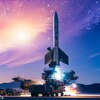
Author(s): Lt Col Chongsoo Byun, ROKAF; Maj Taeju Ahn, ROKAF; Maj Soonwoo Choi, ROKAF; and Dr. Roger Handberg Abstract: The repeated missile launches by North Korea pose a growing threat to Japan and the US mainland beyond the Korean peninsula. In response, South Korea is developing a missile defense system and a kill chain, but the increasingly diversified missile types and launch methods make it difficult to keep up. To address these challenges, South Korea is placing greater emphasis on acquiring space information, but its military space capabilities are inadequate. To effectively develop these capabilities, Korean decision makers should establish space partnerships with various countries and strengthen interoperability and technical cooperation among civilian and military stakeholders. Additionally, reorganizing South Korea’s space-related agencies will be necessary for more efficient development. Cooperation with the United States and Japan remains important, but complementary partnerships with other nations will be critical for addressing the evolving missile threat. These efforts will help to better protect South Korea and its allies against potential missile attacks. |
 |
Title: China and Brazil’s Cooperation in the Satellite Sector: Implications for the United States?
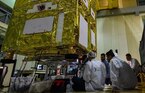
Author(s): Dr. Ana Soliz de Stange Abstract: This article analyzes the long-standing cooperation between Brazil and China in the satellite sector, which has received little attention in the literature despite its strategic importance. The competition for the use of outer space, in which China and the United States are key players, underscores the significance of this cooperation. The article argues that this cooperation has implications for US interests, which can be viewed through the lens of triangular relations in two dimensions: contestation and competition. To identify these implications, the study conducts a content analysis of bilateral agreements in the satellite sector signed between Brazil and China from 1984 to2022. The findings provide insights into the triangulation of bilateral cooperation between Brazil and China and US interests in the satellite sector. This study contributes to the broader debate on the strategic competition in the Indo-Pacific region and highlights the need for further research on the implications of Brazil-China cooperation for US interests. |
 |
Title: Cosmic Collision Course: Power Dynamics and Geopolitical Implications of Space Debris Management in the Quadrilateral Security Dialogue Countries
Author(s): Shalini Singh Abstract: This article delves into the relationships among the Quadrilateral Security Dialogue (Quad) countries and their approaches to space debris management. As the Quad nations enhance their collaboration in space exploration and security, this study addresses three key research questions. Firstly, it examines how the management of space debris illuminates power dynamics within the Quad countries—and the resulting implications for their joint endeavors in space exploration and security. Secondly, it investigates the extent to which the space debris policies of the Quad align with their broader geopolitical interests in the Indo-Pacific region, shaping their interactions with other spacefaring nations. Lastly, it explores the need to establish accountability for space debris retrieval and analyzes the existing legal frameworks surrounding this issue. The article contends that effective space debris management has become a critical element of the Quad’s cooperative efforts in space, with existing policies reflecting the countries’ geopolitical interests. Furthermore, it underscores the significance of fostering accountability and international cooperation in the realm of space debris management. |
Commentary
 |
Title: The Art of Thriving in Space: A Resilience Strategy for India’s Future in Space
Author(s): Sqn Ldr Mohit Choudhary, Indian Air Force Abstract: This article discusses the need for India’s Department of Space (DOS) to develop a strategy of space resilience to increase the ease of military and commercial access to space and prepare for great-power competition. The strategic environment affecting space includes external threats, emerging trends within the space domain, and the characteristics of the domestic space ecosystem. The article defines space resilience, examines its constituent concepts, and connects space resilience to commercial growth, deterrence, and great-power competition. Furthermore, it anticipates implicit risks in the strategy of space resilience. The article recommends that the DOS adopts a strategy of space resilience to create a flexible, responsive, and affordable space ecosystem with a robust industrial base to preserve access to space and deter an adversary from attempting to negate the use of space. The application of space-resilience concepts offers significant commercial and military advantages, such as widening the industrial base, creating a modular commercial off-the-shelf market, and simplifying launch technology. |
Kenney Paper
 |
Title: Parallel Lives in the Indo-Pacific: Edward Lansdale, Donald Wurster, and the Irregular Warfare Mind-set Author(s)Maj Joseph R. Tomczak, USAF: Abstract: The 2020 Irregular Warfare Annex to the National Defense Strategy acknowledges that the US military historically repeats a “boom-and-bust” cycle in its institutional competency for irregular warfare. The annex charges special operations forces to avoid the mistakes of the past by embracing and institutionalizing the mindset of irregular warfare—but does so without explicitly defining or describing it. To understand the attributes of the irregular warfare mind-set, particularly within the context of strategic competition, this work analyzes two American military leaders and influencers who developed an approach to irregular warfare within a complex international security environment. Two Airmen, Major General Edward G. Lansdale and Lieutenant General Donald C. Wurster, successfully navigated the intricacies of supporting a partner nation to achieve American political objectives in the Philippines during two different eras in that country’s history. First, then–Lieutenant Colonel Lansdale significantly aided the government of the Philippines in suppressing the Hukbalahap Insurrection in two separate tours of duty between 1946 and 1953. A half-century later, then–Brigadier General Donald Wurster led a joint task force in the initial US effort to counter the Abu Sayyaf Group in the Southern Philippines from 2001 to 2002. Both Lansdale and Wurster employed effective information operations, civic actions, and partner force capacity-building to achieve their military objectives and further American interests in the Indo-Pacific. In comparing the approaches of both leaders, five key attributes stand out: communicating a vision and controlling a narrative; relationship building and networking for effect; strategic listening, empathy, and respect; willingness to question assumptions and reevaluate approaches; and a bias for understanding. By comparing and contrasting the performance of these two leaders, this paper spotlights implications for the modern military: orienting organizations on problems instead of platforms, valuing preaccession and mid-career diversity of experience, and prioritizing media training and strategic communications. |