
Special Issue: Myanmar Crisis
United States Air Force sent this bulletin at 08/26/2021 09:23 AM CDT

Myanmar Crisis Special Issue, Vol 4, No 6
Senior Leader Perspectives
|
|
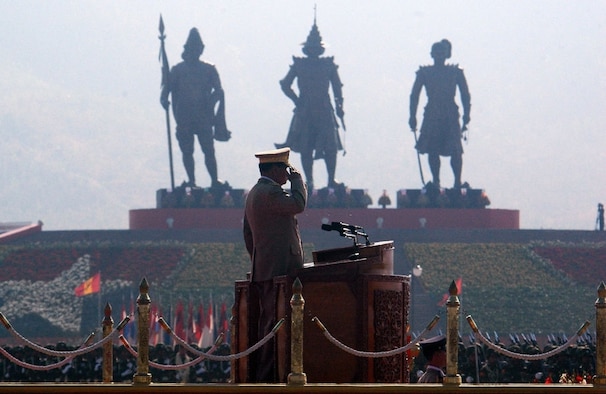 |
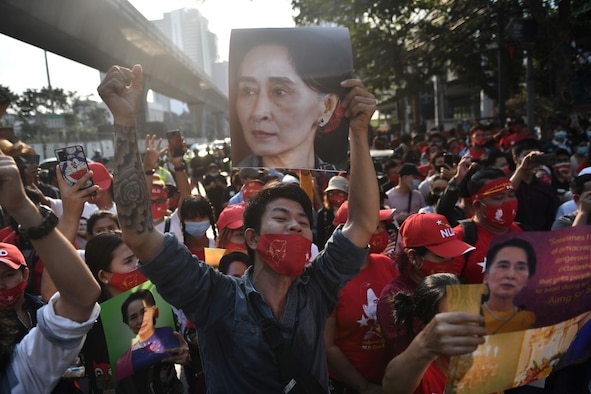
Myanmar Probably Needs a Military . . . Just Not the One It Has Ambassador Scot Marciel Taking the position that the Tatmadaw is an essential institution ignores two fundamental realities: its own record of fostering conflict and division, mismanaging and subordinating the country’s interests to its own obsession with power; and the near unanimity with which the Myanmar population despises the armed forces and will no longer live peacefully under its control. The February 2021 coup sparked a national uprising of a magnitude that should have everyone questioning long-held assumptions about the centers of power in the years ahead. |
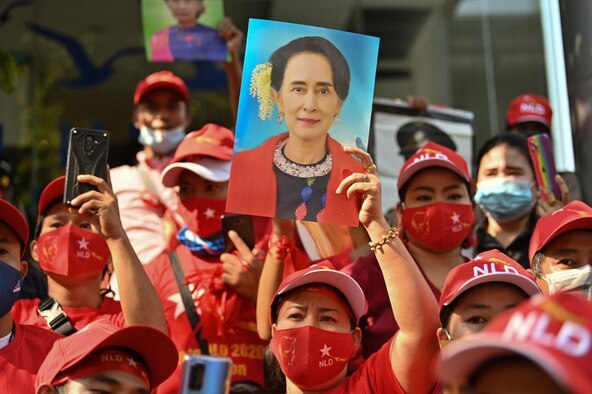 |
Women on the Front Lines in Myanmar’s Fight for Democracy LTC Miemie Winn Byrd, EdD, US Army (ret.) As the battle for democracy in Myanmar rages on at the doorstep of China, Myanmar’s women will continue to stand on the front lines to prevent the triumph of authoritarianism. It is a tall order for them to reach a tipping point against the heavily armed military—which enjoys the support from authoritarian regimes such as China and Russia—without some substantive international assistance beyond encouragements and statements. The battle for democracy in Myanmar has become a symbolic contest between democracy and authoritarianism at the heart of the Indo-Pacific region. |
Feature |
|
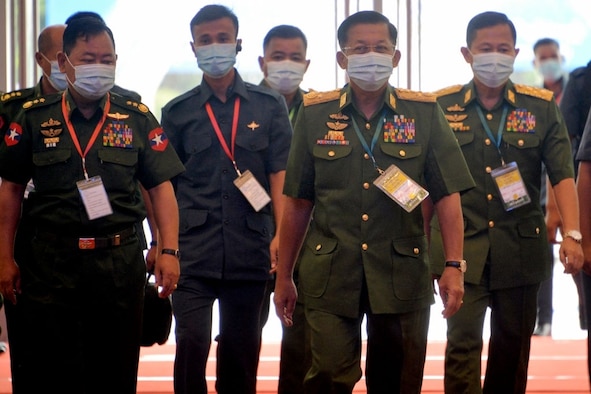 |
Myanmar in the US Indo-Pacific Strategy: Why Is China Winning and What to Do about It? Pawan Amin & Dr. Monish Tourangbam This article probes Washington’s relative lack of attention to Myanmar in its Asia rebalancing and Indo-Pacific strategies and its failure to reap the benefits of Myanmar’s reform and opening. The article also assesses the extent of the leverage of China’s power in Myanmar and its implications for Myanmar’s own ability to hedge its bets, and that of other major players to promote their interests in Myanmar. Lastly, the article analyzes the emerging trajectory of China’s role in Myanmar post the military coup and argues that Washington needs to soberly assess the value of Myanmar in its strategic calculus for the Indo-Pacific. Based on such an assessment, Washington needs to clarify the objectives of its approach to Myanmar and then arrive at its strategy to achieve those objectives, which might include recalibrating its reliance on ASEAN, its dynamics with China vis-à-vis Myanmar, and engagement with like-minded partners of the Indo-Pacific region. |
Views |
|
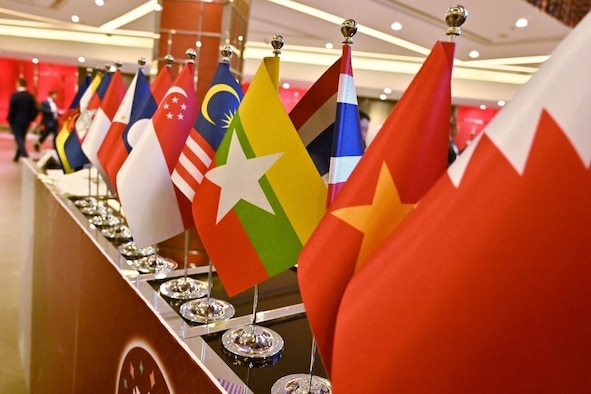 |
The Myanmar Coup as an ASEAN Inflection Point Charles Dunst ASEAN leaders would be wise to work creatively around the principle of noninterference to prevent figures such as Min Aung Hlaing from further installing themselves in the organization’s halls of power. They need to do so not on behalf of the often absent forces of good that claim to bend the arc of history toward progress, or even for liberal values, but for their own self-interest. It does not matter why they do the right thing, only that they actually do it. If selfishness forces ASEAN to act, the region and the United States will be better for it. |
 |
Myanmar’s Military Coup: Security Trouble in Southeast Asia |
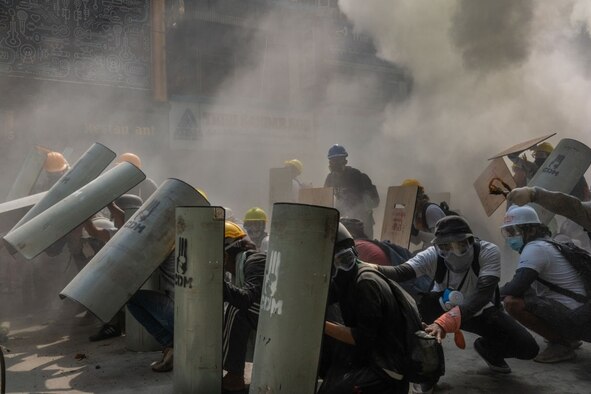 |
Between Political Violence and COVID-19: Many Citizens in Myanmar Pushed to Armed Resistance Tom Connolly The February military coup and ensuing violence have pushed many citizens toward armed resistance. Civilian militias have emerged in the cities and countryside as a means for citizens to protect themselves from the State Administrative Council’s harsh crackdown on protests. Established ethnic insurgent groups have also offered sanctuary to political dissidents, as well as combat training to activists looking to oppose the military junta. In a grim turn, the SAC and security forces have also utilized the COVID-19 pandemic to their advantage as best they can. By restricting critical oxygen supplies and reserving vaccinations for its rank-and-file members, the Tatmadaw has found yet another means of rewarding those loyal to the SAC and controlling those expressing resistance. |
YouTube Channel |
|
 |
Visit our YouTube channel for the latest webinars, round tables, and book discussions, co-hosted with our Consortium of Indo-Pacific Researchers affiliates. |
Podcast |
|
 |
Listen to the Indo-Pacific Affairs Podcast at https://rss.com/podcasts/indopacificaffairs/ or on your favorite platform. |
Air University Space Information

Questions for the Air Force? Contact Us
| STAY CONNECTED: | ||||||


SUBSCRIBER SERVICES:
Manage preferences | Delete profile | Help