
Spring Issue of the 𝘑𝘰𝘶𝘳𝘯𝘢𝘭 𝘰𝘧 𝘐𝘯𝘥𝘰-𝘗𝘢𝘤𝘪𝘧𝘪𝘤 𝘈𝘧𝘧𝘢𝘪𝘳𝘴
United States Air Force sent this bulletin at 03/08/2021 12:10 PM CST
Senior Leader Perspectives
|
|
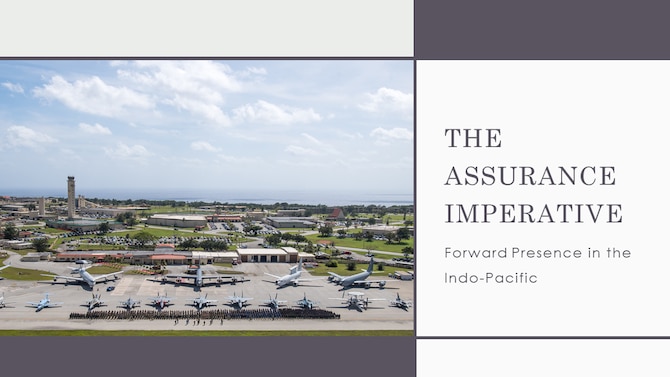 |
The Assurance Imperative: Forward Presence in the Indo-Pacific Col Scott "Barney" Hoffman, USAF As Beijing continues to assert itself through malign operations, activities, and investments in the economic, political, and military realms to undermine the international rules-based order—ironically the very rules-based order that has enabled China’s rise and which has rescued tens of millions from tyranny and lifted billions out of poverty—the United States must retain a robust, interoperable, and forward-present force that assures America’s vast array of allies and partners and deters China from undermining the free and open Indo-Pacific. |
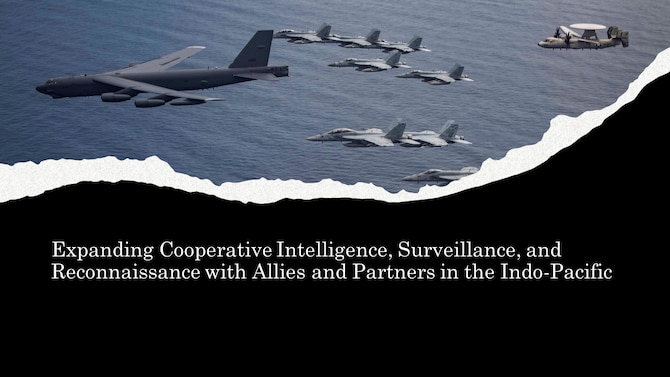 |
Expanding Cooperative Intelligence, Surveillance, and Reconnaissance with Allies and Partners in the Indo- Pacific Col Jacob J. Holmgren, USAF This article offers a set of historic, political, ideational, and material factors driving the India–Russia relationship forward that require scrutiny. In short, the authors find that while the residue of Cold War collaboration, contemporary geopolitical alignments, and ideological convergence on a polycentric global order all contribute, the material arms relationship provides the strongest and most durable driver of the relationship. |
Features |
|
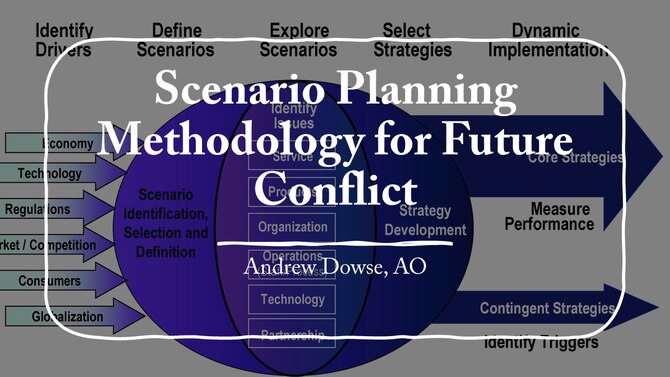 |
Scenario Planning Methodology for Future Conflict Australia’s 2020 Defence Strategic Update has highlighted new and accelerated drivers that indicate a changing and less benign strategic environment. In this light, using effective processes to prepare for new challenges is a critical task for defense planners. Feasible Scenario Spaces is an embryonic tool that may be instrumental in military scenario planning. To be effective, however, it needs to be further evolved to embrace the potential for unconventional threats, including the emerging primacy of information warfare in future conflict. |
 |
Comparing Space Agency Intervention in Taiwan and South Korea To develop their space sectors, Taiwan’s and South Korea’s space agencies intervene differently. This is despite the developmental state literature indicating that the agencies’ ideologies, mechanisms, and preferences will be similar. This article recounts the literature’s expectations about the two agencies. It then reviews what the two agencies are actually doing to develop their space sectors. This article ends by discussing the implications of the two agencies’ differences for stakeholders in Taiwan’s and South Korea’s space sectors and identifying questions to guide future research that builds off this article’s findings. |
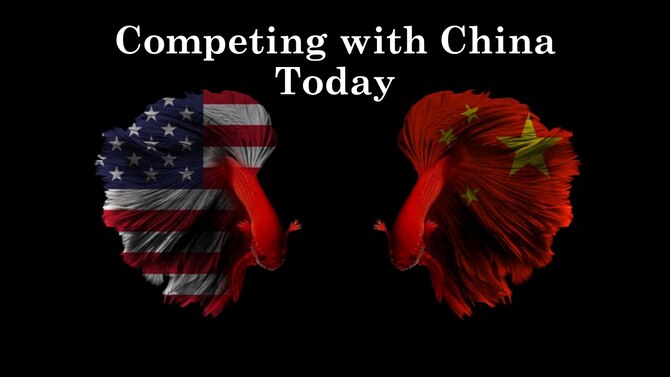 |
Competing with China Today Maj Cameron Ross, USAF, & Lt Col Ryan Skaggs, USAF As the national security apparatus continues to shift toward great-power competition, there is still a significant lack of understanding about the nature of the current competition and how the armed forces can engage within the strategic reality. This article outlines the road to competition with China, as well as the nature of the struggle, to provide clarity on the challenge such competition poses. Within that context, this article provides recommendations for how the military can translate the strategic concepts found within the National Defense Strategy into more tangible actions. |
 |
Indo-Pacific Deterrence and the Quad in 2030 Lt Col Justin L. Diehl, USAF While debate surrounding the official formation of the Quad will undoubtedly continue and all instruments of power across the diplomatic, informational, military, and economic (DIME) spectrum will be in play, this article will articulate steps that will be required for the Quad to effectively execute deterrence through the lens of military, hard-power solutions. The questions this research seeks to answer are: What will it take, in terms of strategy, investments, and will, for the Quad to credibly deter the rise of an Indo-Pacific hegemon, and how can the Quad collectively provide a military deterrence solution by 2030? Different from previous research, this article will look to provide tangible solutions and demonstrate how the Quad nations can provide that path to deterrence. |
 |
Historically Mine: The (Potentially) Legal Basis for China’s Sovereignty Claims to Land in the South China Sea Capt Aaron S. Wood, USA The impact of Beijing’s sovereignty claims in the South China Sea is broad, and these claims are not likely to change in the near future. The PRC will not easily relinquish claims to land it considers part of its sovereign territory—especially when those lands extend China’s military and economic reach hundreds and thousands of miles into the lucrative region. China’s claims of sovereignty appear valid when viewed from the CCP’s unique viewpoint but fail when those views and assumptions are not shared. The conflict between Beijing’s refusal to relinquish the PRC’s claims, and the likelihood that those claims will be rejected by the international community, will result in continued legal, diplomatic, economic, and military competition and conflict in the region. |
 |
Kashmir Imbroglio Resolved: Strategic Options for Pakistan Dr. Dalbir Ahlawat & Air Cmde Kedar Thaakar The third in an ongoing debate in the journal regarding the situation in Jammu & Kashmir, this article contends it is time for Pakistan to take a realistic stock of the ground realities of post-imbroglio Kashmir.findings. |
 |
A Region in Flux: Situating India in Sino-Japanese Ties Mahima N. Duggal & Jagannath P. Panda This article explores the future of Sino-Japanese relations while situating them in India’s perspective and evolving strategic out-look. It evaluates the tensions and turfs in Sino-Japanese ties based on the ups and downs in their relationship in the historical and contemporary times with a distinct focus on the East China Sea as a region of immense strategic importance for their political affirmations. It further examines a revisionist China’s grand strategy and advancing military and naval capabilities and the development of a nonpacifist Japanese power, to argue that Sino-Japanese ties will only become more turbulent in the near future. The article sets this discussion within the context of a more assertive, post- Galwan India that has pursued deeper security partnerships with Indo- Pacific countries, especially Japan, to map New Delhi’s Indo- Pacific calculus as Sino- Japanese ties undergo change. |
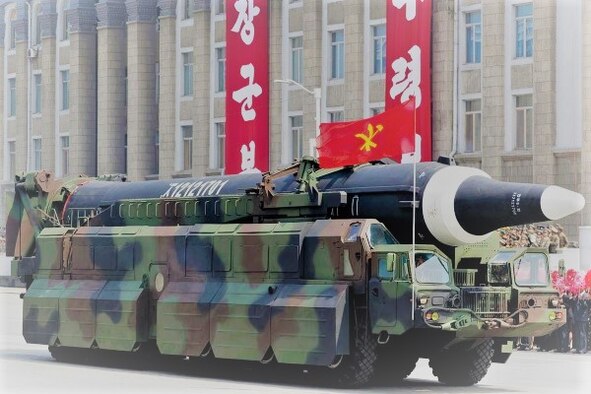 |
North Korea: Nuclear Threat or Security Problem? Dr. Stephen J. Blank The third in an ongoing debate in the journal regarding the situation in Jammu & Kashmir, this article contends it is time for Pakistan to take a realistic stock of the ground realities of post-imbroglio Kashmir.findings. |
Views |
|
 |
India’s Catalytic Reforms for Space 2.0 Era Dr. Chaitanya Giri This article briefly highlights the May 2020 space reforms and the domestic, geopolitical, pandemic-related, and Industry 4.0-driven causal factors that are influencing the evolution of India’s space industrial ecosystems. |
 |
The Quad Factor in the Indo-Pacific and the Role of India Dr. Amrita Jash The Quad can be seen as a new kind of twenty-first-century security alliance. What adds to the complexity of the grouping is the increasing polarization caused by the US–China rift, with both nations calling for others to “join” its side. The growing contingencies are pushing the Quad to take a greater role in fighting against nontraditional and traditional security risks. Here, the key queries remain: Has the Quad adopted a “fire-fighting” mode? If so, does that make China anxious? What is the role of India in the Indo-Pacific? |
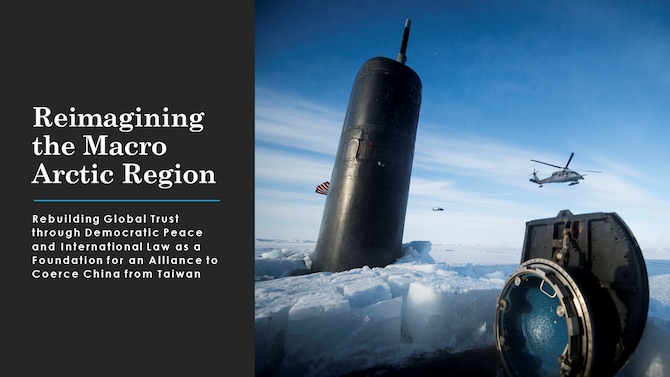 |
Reimagining the Macro Arctic Region: Rebuilding Global Trust through Democratic Peace and International Law as a Foundation for an Alliance to Coerce China from Taiwan Dr. John M. Hinck The United States should adopt a strategy of a shared governance based on international law in the Macro Arctic Region (MAR) (future combined areas of the Arctic and Indo-Pacific regions) as a foundation to employ a targeted coercive strategy to influence Beijing to abandon China’s expansionist goals in Taiwan. This article first frames how the United States can rebuild global trust. After providing reasons why Washington needs to rebuild trust, particularly in the MAR, the concepts of international law and shared governance are applied to show how the United States should lead the consensus decision making with key MAR players. Next, the article extends the previous arguments for a strategically stronger alliance in the MAR. An Indo-Pacific Alliance is needed to influence expansionist countries and to employ a progressive coercive strategy aimed to control China’s expansion into Taiwan. |
 |
Rewriting the Rules: Analyzing the People’s Republic of China’s Efforts to Establish New International Norms Maj Daniel W. McLaughlin, USAF The People’s Republic of China (PRC) hopes to rewrite the accepted norms through a combination of diminishing the credibility of existing liberal norms and the increasing acceptance of its own norms through soft-power influence and regional institutions. It sees the current system of norms and the institutions that promote and enforce them as relics of an era in which the PRC was not a great power and had no say in the establishment and development of the institutions and norms. |
 |
Reconsidering Attacks on Mainland China Lt Col Brian MacLean, USAF Demonstrating resolve and maintaining deterrence will rely heavily on America’s nuclear posture and its leaders’ demonstrated willingness to attack the homelands of adversaries conventionally to rapidly halt acts of aggression. |
 |
Indo-Pacific Demographic Shifts: Effects of the Demographics in China and India on the Regional Security Environment LT Sam Melick, USN India’s and China’s differing demographics can shift the Indo- Pacific’s security environment toward a position more favorable to the United States via economic and social factors. China’s demographic boom is starting to conclude, and internal forces may bring about change favorable to US interests in the region. Meanwhile, India’s demographic dividend could soon be collected if the Indian government prepares its country. |
 |
The Next War to End All Wars Michele Wolfe As in pre–World War I (WWI) politics, the SCS is ripe for conflict, and de-spite all DIME efforts, the United States faces an impossible battle in securing peace because of fierce geographic, historical, and nationalistic roadblocks. Due to their resources and natural boundaries, the physical regions of the SCS (like those of pre-WWI Alsace-Lorraine before it) make control of its resources and security highly desirable to its neighbors. Historically, both areas possess parallel trajectories, beginning with golden ages, humiliating declines, and preconflict struggles. Finally, each period’s nationalistic culture fervently escalates tensions regardless of US diplomacy and military presence. If the United States properly understands its casted role, it will transition from prevention to preparation for the upcoming multinational conflict. |
Commentaries |
|
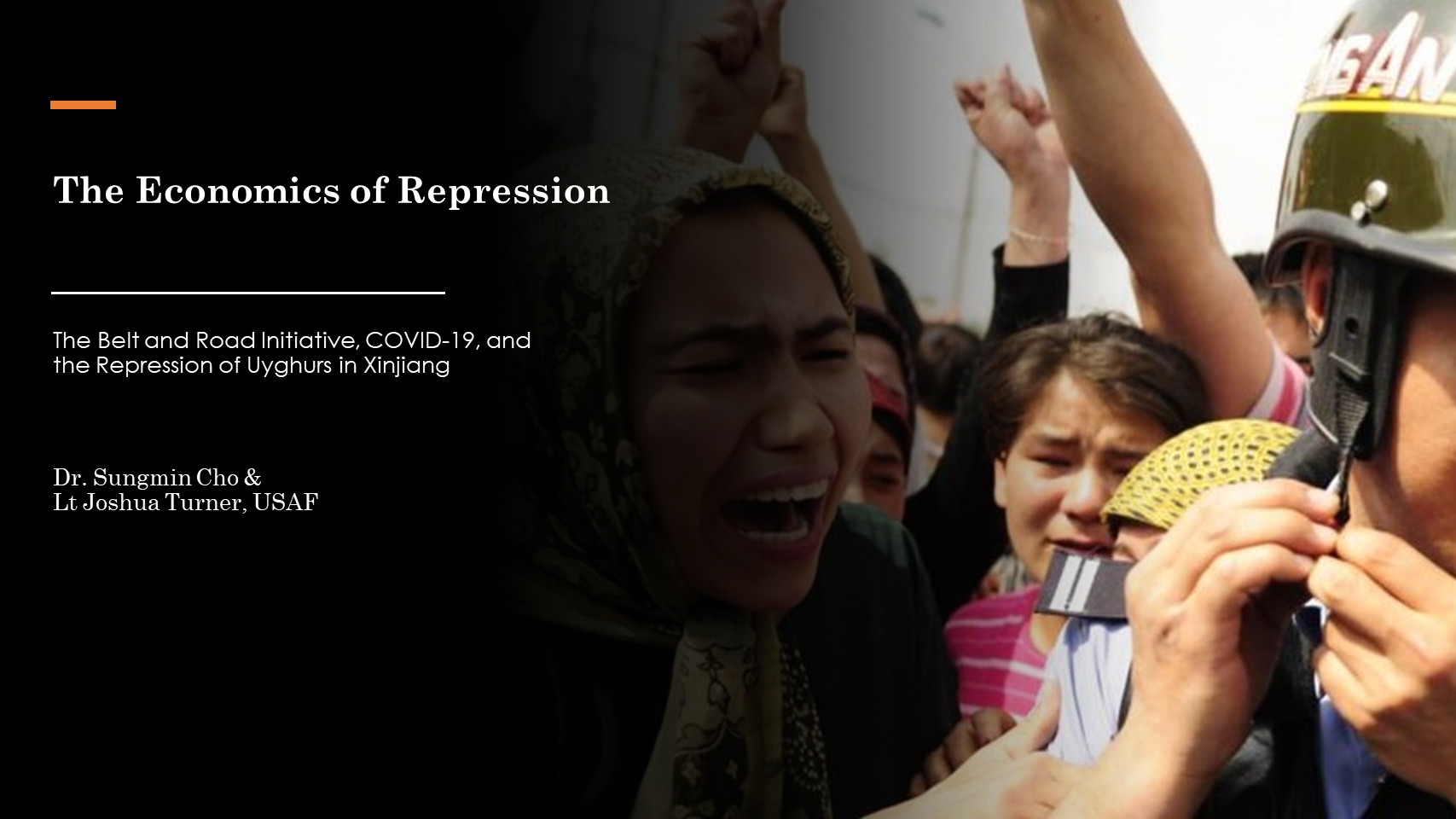 |
The Economics of Repression: The Belt and Road Initiative, COVID-19, and the Repression of Uyghurs in Xinjiang |
 |
Exposed: Commanding in the Gray Zone During COVID-19 Lt Col Jarrod Knapp, USAF Commanders must look beyond the single event or operation, understand how their decisions affect the overall campaign within the gray zone, and then measure and accept risks accordingly. |
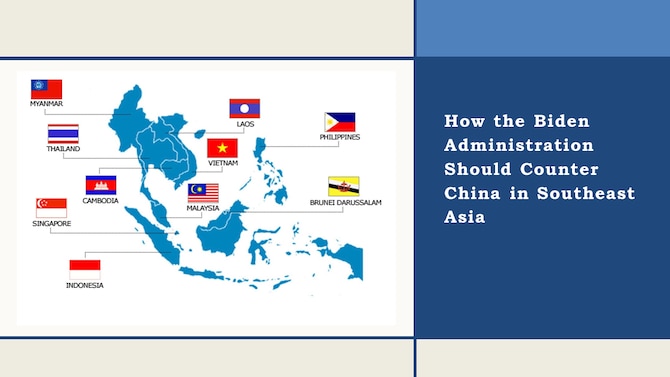 |
How the Biden Administration Should Counter China in Southeast Asia Capt David Geaney, USAF For years, Southeast Asia has become more reliant on China, striking a Faustian bargain, wherein they accept Chinese investments in return for acquiescence to Chinese hegemony and a commitment not to criticize its central government. In 2021, the Biden administration must take bold diplomatic, messaging, military, and economic actions to curtail Chinese influence and coercion in the region. Many of these actions can begin immediately and will benefit both Southeast Asia and the United States for years to come. Failure to solidify the US role in Southeast Asia will result in China becoming inextricably entrenched in the region and embolden Beijing to take even more aggressive actions against American allies and interests. |
 |
Chinese Intelligence, Surveillance, and Reconnaissance Systems Lt Col Thomas R. McCabe, USAFR, retired This article examines how China has been building a wide variety of ISR systems to provide its forces with enhanced capabilities, including systems that we must expect will be available for military use even if nominally civilian. China has said its policy of military-civil fusion will include the outer space and maritime domains; so, we must assume that all the surveillance resources PRC civilian agencies have will be integrated into crisis/wartime military ISR. |
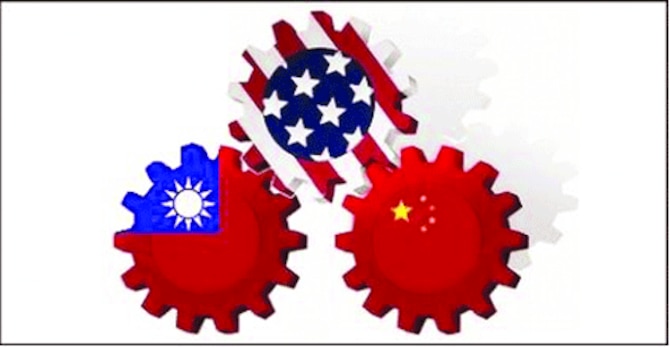 |
The Day after the Battle Kenneth W. Allen and Dr. Brendan S. Mulvaney This article focuses not on the how we arrive at armed conflict between mainland China and Taiwan, nor how the battle is fought, but rather seeks to provoke thought and discussion about the aftermath, in any number of war-termination scenarios. For arguments sake, we posit there is armed conflict, likely involving the full myriad of forces from the United States, Taiwan, and the People's Republic of China, and may or may not include allies, partners, or other third nations. |
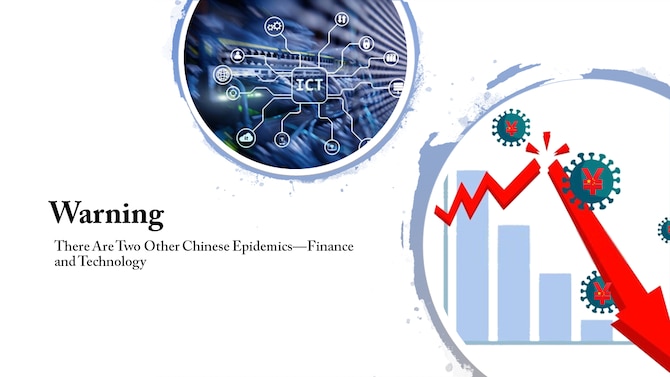 |
Warning: There Are Two Other Chinese Epidemics—Finance and Technology Wilson VornDick There are signs of systemic weakness and rising risk to the global community as China expands its market share and competes globally in the finance and information communications technology (ICT) sectors. There is the specter of an immediate pandemic in global finance and an emergent pandemic in ICTs. These pandemics may even coincide. However, both directly point back to China, as did the coronavirus pandemic. The symptoms of these two diseases are not overtly apparent. Based on reporting from Chinese sources, China appears to be at best “healthy” and at worst “asymptomatic.” |
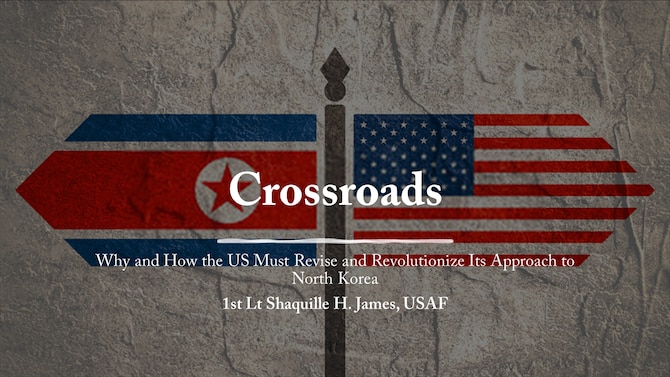 |
Crossroads: Why and How the US Must Revise and Revolutionize Its Approach to North Korea 1st Lt Shaquille H. James, USAF In the face of a changing and resilient challenge, Washington must adopt a strategy and policy that are novel, flexible, and equally resilient. This new policy must be based upon informed analysis and assessment of North Korean intentions and what can and cannot be reasonably expected of the regime. This approach, titled strategic engagement, aims to continue deterrence and pressure but simultaneously adopt a policy of engagement and openness to negotiation on a wider range of fronts separate from nuclear weapons, including the economic, cultural, scholastic, diplomatic, military, humanitarian, and civilian. |
 |
Strategic Surprise from the Bike Trail: The Republic of Korea and the Bicycle Maj Rachael Nussbaum, USAF This article examines how a network of recreational bike trails can become a tool to generate strategic surprise. The Republic of Korea, by the simple act of building recreational trails and tangibly rewarding citizens who use them, has begun to ready generations of robust, skilled defenders, a uniquely surprising strategy of defense and a transport system nigh invulnerable to interdiction. |
Cadet Perspective
|
|
|
|
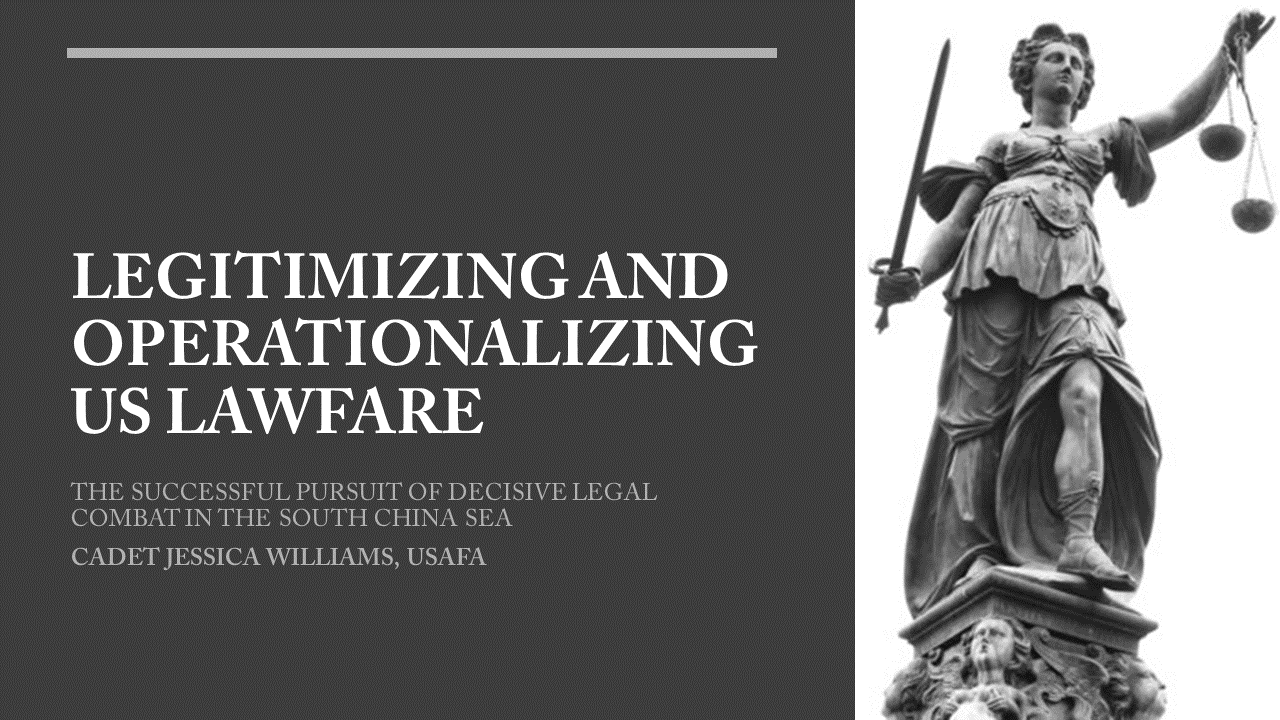
Legitimizing and Operationalizing US Lawfare: The Successful Pursuit of Decisive Legal Combat in the South China Sea |

Questions for the Air Force? Contact Us
| STAY CONNECTED: | ||||||


SUBSCRIBER SERVICES:
Manage preferences | Delete profile | Help