
no topic Update: Winter Issue of the Journal of Indo-Pacific Affairs
United States Air Force sent this bulletin at 11/24/2020 10:01 AM CST
Features
|
|
 |
戰略競爭?—Strategic Competition? Lt Col Scott D. McDonald, USMC, Retired This article lays the groundwork for further analysis by providing an overview of what strategic competition is. After defining strategic competition, the second section takes a brief diversion to discuss the relationship between—and potential for—cooperation and competition. The third and fourth sections consider how competition is viewed from the US and Chinese perspectives, before drawing conclusions in the final section about the current and future nature of the US-China relationship. |
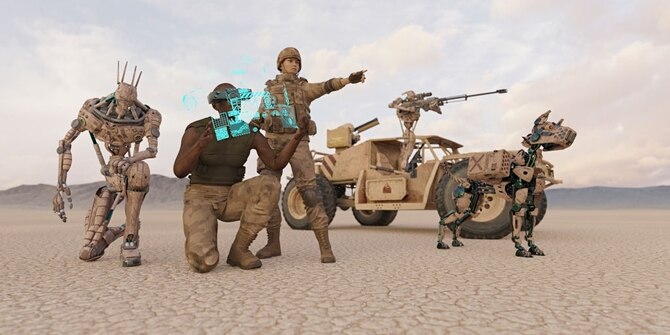 |
Risks and Benefits of Autonomous Weapon Systems: Perceptions among Future Australian Defence Force Officers Drs. Jai Galliott & Austin Wyatt The prospect of increasingly autonomous systems has seized the military imagination and rapidly generated an international debate surrounding the merits of a potential preemptive ban under international law. What has been missing to this point has been an in-depth consideration of how artificial intelligence, autonomous systems, and unmanned platforms would be perceived by the junior officers who will play a core role in their integration into future militaries. Drawing on a broad survey of officer cadets and midshipmen at the Australian Defence Force Academy conducted in 2019, this article provides an analysis of how perceived risks and benefits of autonomous weapon systems are influencing the willingness of these future defense leaders to deploy alongside them. |
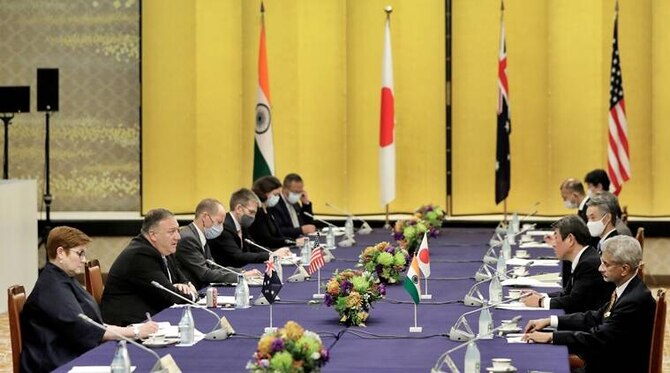 |
India and the Quadrilateral Forum as a Means of US Deterrence in the Indo-Pacific Capt Daniel Myers, USAF In the Indo-Pacific, China is waging a well-orchestrated campaign to displace US hegemony and secure a favorable balance of power. Driven by ardent nationalistic goals, the Chinese Communist Party is silencing political outliers and challenging the boundaries of international sovereignty. The first half of this article outlines Chinese political ambitions and domestic civil rights violations levied in pursuit of the government’s agenda. It then addresses how Chinese territorialism in the South China Sea has undermined the utility of bilateral US strategic partnerships. The second half of the article describes the threat China poses to India’s national security and why the Indian Air Force is particularly unprepared to meet this challenge. The article concludes by suggesting a quadrilateral treaty alliance between the United States, India, Japan, and Australia is needed to prevent further Chinese adventurism and preserve regional stability. |
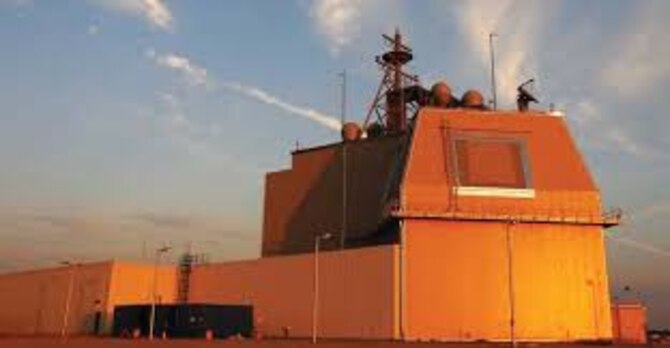 |
Japan Cancels Aegis Ashore: Reasons, Consequences, and International Implications Michael Unbehauen & Christian Decker In June 2020, the Japanese government canceled the planned construction of two Aegis Ashore ballistic missile defense sites. This decision was unexpected for many in the security establishment. However, considering the circumstances and warning signs in previous months, the decision should not have been a surprise. In fact, Japan’s reversal on the Aegis Ashore sites may indicate a larger shift in defense priorities for the country and potentially signal a transitional trend with implications beyond Japan and the Indo-Pacific region. |
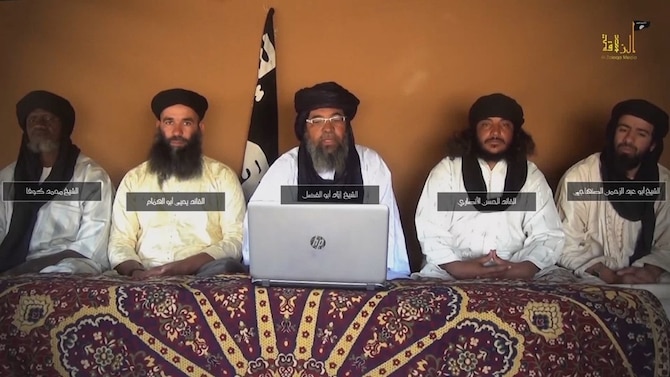 |
Lassoing the Haboob: Countering Jama'at Nasr al-Islam wal Muslimin in Mali, Part I Maj Ryan CK Hess, USAF To develop solutions to Mali’s terrorist crisis, it is first vital to understand its history and explain how a country that was once held up as an exemplar of democratic success in Africa could collapse with such rapidity. Additionally, the same factors that led to Mali’s current disaster precipitated the creation of the extremist group Jama'at Nasr al-Islam wal Muslimin (JNIM). Therefore, it is similarly important to characterize and understand the group’s history, organization, methods, and narrative. Only once armed with that understanding can one begin to develop possible strategies for countering JNIM and ameliorating Mali’s troubled situation. |
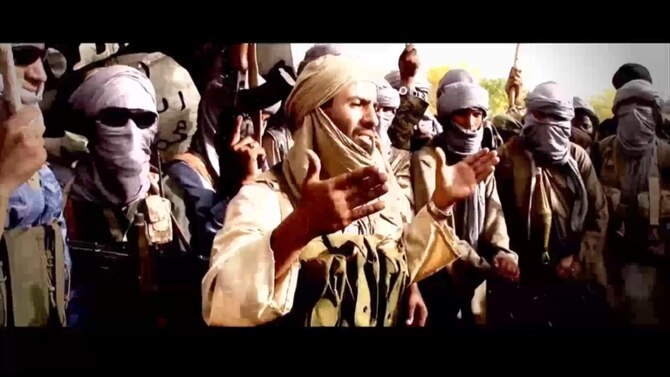 |
Lassoing the Haboob: Countering Jama'at Nasr al-Islam wal Muslimin in Mali, Part II Maj Ryan CK Hess, USAF This piece provides two strategic recommendations, both of which are inspired by lessons learned from US and international actions in Afghanistan. I argue that by developing policy based on the successes and failures of international efforts in the Middle East and South Asia, the international community might be able to ensure that the situation in Mali does not follow a similar path. |
 |
A Peacekeeping Mission in Afghanistan: Pipedream or Path to Stability? Maj Ryan C. Van Wie, USA This article analyzes how an international peacekeeping operation (PKO) can support an intra-Afghan peace settlement by mitigating information and commitment problems and fostering compliance during the settlement’s implementation phase. To frame the information and commitment problems currently hindering an intra-Afghan settlement, the author briefly reviews noncooperative bargaining theory, its application to civil conflicts, and how PKOs can lessen mutual uncertainty and foster stability. Anchoring this research on Afghanistan, the author analyzes the first peacekeeping mission in Afghanistan, the 1988–1990 United Nations Good Offices Mission in Afghanistan and Pakistan (UNGOMAP). UNGOMAP’s eventual failure to foster peace highlights Afghanistan’s complexities and the dangers of an insufficiently resourced PKO operating in a state without a viable, incentive-compatible settlement. The author applies these lessons to policy analysis, where he explores possible PKO options and their potential for incentivizing compliance with a future intra-Afghan deal. Though a viable PKO currently seems improbable given Afghanistan’s ongoing violence and the Taliban’s insistence on the complete withdrawal of foreign forces, future conditions may change, and the author highlights necessary prerequisites where a PKO may become possible. If designed properly, an Afghanistan PKO can fill a critical monitoring and verification capacity and bolster Afghanistan’s prospects for long-term stability. |
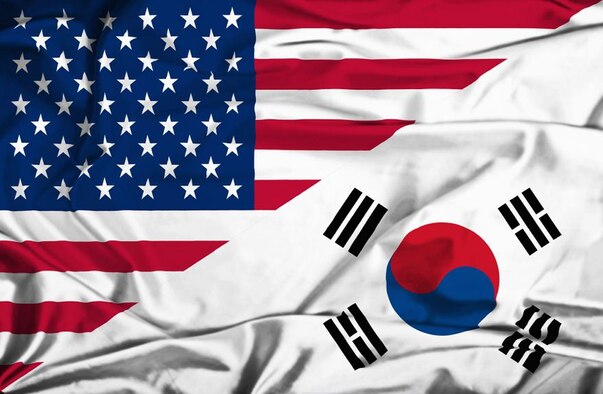 |
Path to Nuclear Weapons: Balancing Deterrence, Preemption, and Defense for South Korea Dr. Hyun Ji Rim The US–Republic of Korea alliance has been crucial to South Korean security policy calculations, especially the component of extended nuclear deterrence. Recent Special Measures Agreement negotiations on sharing military cost suggests that the price for US extended deterrence is likely to increase in the years to come. In addition to the cost of the US–ROK alliance being put in the spotlight, North Korea’s insatiable appetite for nuclear weapons, including missiles of all ranges, arguments for South Korea’s nuclear weapons development and armament are surfacing in Seoul as they did in 2016 when North Korea conducted nuclear tests. This article examines policy options for South Korea by examining costs and benefits of the extended nuclear deterrence and nuclear weapons armament. Unless there is a crisis situation shocking enough to completely change the game and lead to disruption of the alliance relationship and its structure, or a change in North Korea’s level of violence and animosity, the shared values and goals between South Korea and the United States will make the nuclear path cost-prohibitive for South Korea. |
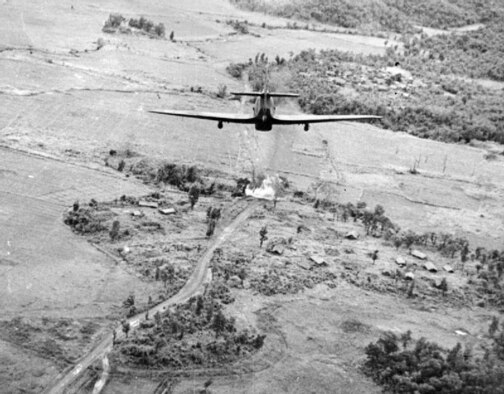 |
Stout Pilots and Aircraft: Air Transport in the 1944 Burma–India Campaigns Christopher L. Kolakowski In regions where surface communications are limited or problematic, air transport becomes the essential lifeline. The experiences of the US Army Air Force (USAAF) and British Royal Air Force (RAF) air transporters in Southeast Asia in 1944 demonstrate how air transport can sustain and facilitate ground operations. The fliers’ diverse experiences offer three basic types of case studies: the Admin Box and the Imphal Airlift (sustainment for a surrounded force), the Chindits and reinforcements for Imphal and Kohima (strategic mobility), and North Burma (facilitating and sustaining tactical ground operations). |
Views
|
|
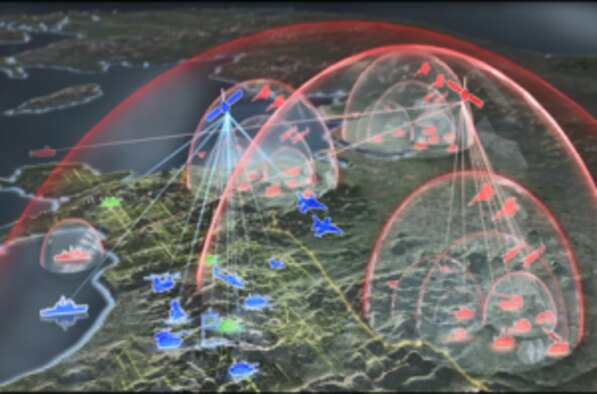 |
Penetrating Artificial Intelligence–enhanced Antiaccess/Area Denial: A Challenge for Tomorrow’s Pacific Air Forces Maj Richard Uber, PhD, USAF To ensure a free and open Indo-Pacific, the United States Air Force (USAF) must maintain its ability to freely operate in international airspace and project force forward to deter aggression. Future improvements to antiaccess/area-denial (A2/AD) systems will certainly include artificial intelligence (AI). AI is a strategic priority of our adversaries, as it can provide significant benefits for national defense. The USAF must be prepared to tackle these technical challenges to uphold our regional commitments and protect international interests in the Indo-Pacific. Three specific applications relevant to A2/AD are (1) target recognition from multiple fused data sources, (2) improved war gaming with agent-based models, and (3) blockchain-enabled autonomous systems. This article will introduce how these technologies might be integrated into future A2/AD systems and recommend some strategies for addressing and overcoming these challenges. |
 |
Indonesia: Lessons for the US–China Geo-economic Competition Kyle Richardson The United States reasserted itself as a viable Belt and Road Initiative (BRI) alternative with the creation of the US Development Finance Corporation (DFC) in October 2018 and announcement to double the US government’s Indonesian investment portfolio by 2024. To offset the BRI’s financial advantages, the US launched initiatives to coordinate its infrastructure financing decisions with Japan and Australia and to create the Blue Dot Network to promote adherence to international norms in infrastructure development. However, to compete with the BRI most effectively, Washington will need to continue rebranding FOIP to emphasize its responsiveness in helping Indonesia meet its economic goals. Over the long term, the United States will also need to accelerate industrial policies that close the technology gap with China in 5G, a key infrastructure area where Jakarta remains uncommitted. |
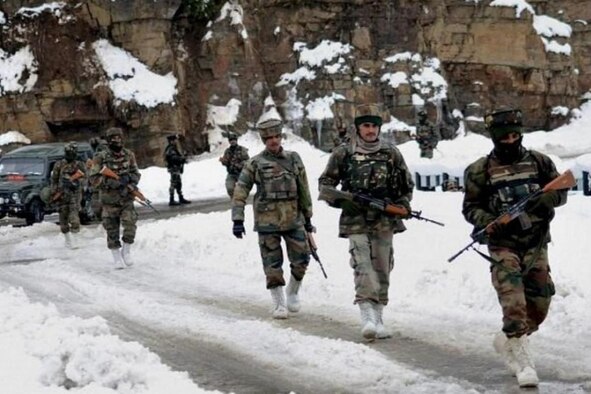 |
Sticks and Stones: Nuclear Deterrence and Conventional Conflict Dr. Kathryn M.G. Boehlefeld This article examines the background of the disputed Sino–Indian border, then explores the connection between conventional and nuclear conflict in the context of this case. It then considers why the conventional-nuclear escalation ladder is becoming more—not less—critical as we move farther away from the Cold War. Finally, the article considers the implications for other nuclear-armed states. |
Commentary
|
|
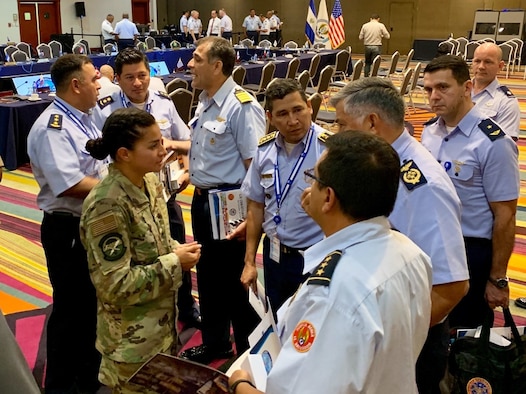 |
A War by Words: Language and Cultural Understanding in the Age of Information Warfare Capt Peter Loftus, USAF; Maj F. Jon Nesselhuf, USAF; & Col Howard Ward, USAF, Retired This article will analyze the historical role of language in China’s interactions with the outside world and the role language plays in modern US–China competition. We will also explain how the Air Force can use the Language Enabled Airman Program (LEAP) to bolster the ability of the 16th Air Force and Pacific Air Forces to dominate in the information domain, thereby playing an important role in countering China’s whole-of-society approach to great-power competition. |
Sci-fi as Strategy
|
|
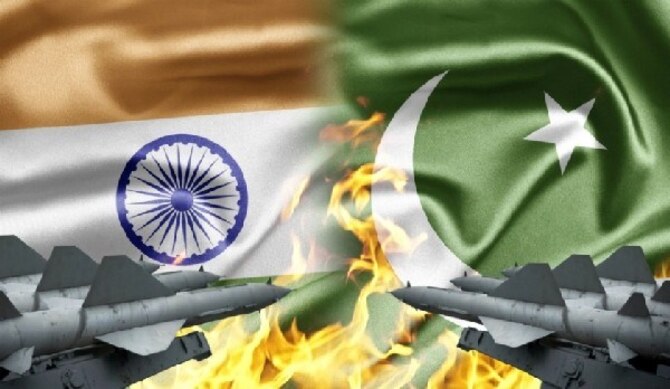 |
Space Entanglements: The India–Pakistan Rivalry and a US–China Security Dilemma Dr. J. Wesley Hutto The proliferation of space technologies to middle and regional powers raises new questions concerning contemporary international politics and the likelihood of war. Since China launched its infamous 2007 antisatellite missile test, the United States has grown increasingly concerned about the number of actors able to access these capabilities and their potential to complicate the situation on the ground during times of political and military tension. The following classroom activity was designed as a part of the Space Education Working Group at Air University, Maxwell AFB, Alabama. It ponders one potential future in which a spark in the India–Pakistan rivalry over Kashmir, accompanied by the potential use of space weaponry, might generate contagion for a US–China conflict. After reading the fictional case, students are provided with roles and questions to assist them in better understanding the international political impacts of space militarization. |

Questions for the Air Force? Contact Us
| STAY CONNECTED: | ||||||


SUBSCRIBER SERVICES:
Manage preferences | Delete profile | Help