|
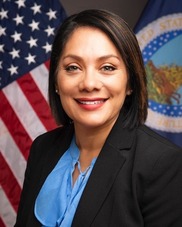
As we kick off a new year, I’d like to take a moment to reflect upon the U.S. Department of Agriculture (USDA) Office of Partnership and Public Engagement’s (OPPE’s) progress in 2024.
Last year, we were able to award $22.6 million through the 2501 Program to support 31 organizations that work with underserved and veteran farmers, ranchers and foresters in 22 states.
In addition, USDA agencies hosted 91 UDSA 1890 National Scholars, 18 Asian-American CAPAL interns, and 14 students with agricultural farmworking backgrounds in HEP/CAMP internships. This investment, both in terms of time and capital, is vital to motivating young people to pursue careers in agriculture.
We were also able to support 32 E. Kika De La Garza fellows who met directly with USDA agency staff to learn about opportunities available to their respective institutions and their students.
With Martin Luther King, Jr. Day taking place next Monday, January 20, I’d also like to take a moment to reflect upon Dr. King’s life and the values he championed: equality, justice and service to others. At USDA, we continue to honor Dr. King's legacy in all our initiatives and programs.
One of these programs is the USDA 1890 National Scholars Program, which provides full tuition and other benefits to students pursuing degrees in agriculture, food, natural resource sciences, or related academic disciplines. This year’s application window opened last week, and it will remain open until March 1, 2025. I encourage students who attend or plan to attend an 1890 land-grant university to apply.
Through our ongoing efforts in community engagement, educational outreach and support for underserved populations, OPPE strives to embody the spirit of Dr. King's vision for a better future. Let us carry forward his message of hope and unity in our work every day.
Looking ahead, I am excited about the opportunities that await OPPE in the future. I believe that together, we can continue to make a positive impact and create opportunities for all Americans.
|
|
|
 |
|
USDA Now Accepting Applications for the USDA 1890 National Scholars Program
USDA is now accepting applications for the USDA 1890 National Scholars Program, which aims to encourage students at 1890 land-grant universities to pursue career paths in food, agriculture and natural resource sciences, or related academic disciplines. The application deadline is March 1, 2025.
|
 |
|
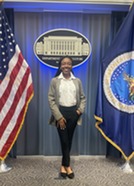
USDA 1890 National Scholar Works to Improve Access to Affordable, Healthy Food
“I was drawn to USDA and how everybody is unified with the goal of helping the world we live in,” said USDA 1890 National Scholar Reese Baker. Baker’s interest in agriculture stems from a desire to improve and eliminate “food deserts” in the Houston, Texas area, where she grew up. She’s studying business agriculture and aspires to create innovative supply chain strategies and marketing campaigns to bring fresh, affordable and nutritious food to underserved areas.
|

Mentorship and Scholarship Change USDA 1890 National Scholar’s Course
“All my life I feel like I have been preparing for the real world,” said 1890 National Scholar AJ Jackson. “This scholarship put me on the right path.” Through his internships with USDA, AJ developed important skills in writing and connecting with the public while highlighting the need for diverse voices in the industry. He discovered how powerful effective communication can be in reaching various audiences and recognized the importance of inclusion in agriculture.
|
|
|

USDA Seeks Applicants for E. Kika De La Garza Fellowship Program
USDA is accepting applications for the 2025 USDA E. Kika De La Garza (EKDLG) Fellowship Program. Through the fellowship, participants meet directly with USDA agency staff in Washington, D.C., to learn about the opportunities available to their respective Hispanic-Serving Institutions (HSIs) and students. Applications are due by March 6, 2025.
|
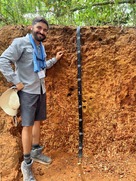
Kika De La Garza Fellow Leverages Experience to Create New Opportunities for Underrepresented Students
Dr. Felipe Aburto focuses on soil science and its impact on agriculture and the environment at Texas A&M University. He emphasized the need for more soil scientists at HSIs and credits his experience as an E. Kika De La Garza Fellow with his ability to launch a new initiative designed to attract underrepresented students to the field of soil science. Funded by USDA’s National Institute of Food and Agriculture, the Soil Science Integrated Learning and Career Opportunity Partnership (SSOIL-COP) program seeks to attract and retain underserved students, establish intercollegiate mentorship and leadership training, create and coordinate summer internships, and develop an accessible online curriculum with introductory soil science course materials.
|
|
|

2025 USDA Student Professional Development Webinars
To start off the new year, OPPE is excited to offer a series of monthly student development webinars designed to offer students foundational skills helpful for career preparation success. These virtual hour-long workshops will offer new and wide-ranging subjects presented monthly by USDA liaisons. Topics will include information about USDA scholarship and internship opportunities, career readiness, assessing abilities, developing better communication skills, and tips for applying for federal jobs and positions. Keep an eye on the USDA Youth website for upcoming sign-up information.
|

Faces of Agriculture: A USDA Speaker Series is Looking Forward to Kicking Off the New Year
Faces of Agriculture, a USDA Speaker Series, is a monthly webinar offering that dives into career opportunities in agriculture and at USDA. Agriculture is so much more than just farming. If your interests include anything from accounting to zoology, you’re likely to find a unique opportunity at USDA. To learn more about these unique positions and hear from USDA employees sharing their career journey, sign up to receive regular updates on upcoming sessions. The first Faces of Agriculture webinar event in 2025 will take place on Wednesday, February 19, 2025.
|
|
|

MVAL Takes Part in Small Business Administration Military Community Entrepreneurship Summit
On Dec. 3, 2024, USDA Military Veterans Agricultural Liaison (MVAL) Monshi Ramdass participated in the Small Business Administration’s (SBA) Military Community Entrepreneurship Summit in Las Cruces, N.M. He led the USDA panel and shared information about USDA employment, education and entrepreneurial opportunities available to transitioning service members, veterans, military spouses, nonprofit organizations and state and local government groups. Ramdass was joined by USDA subject matter experts from other USDA agencies who shared information on USDA’s Beginning Farming and Ranching Program, Rural Energy Program, Value Added Producers Gants, Rural Business Development Grants Business and Industry Loans, Rural Energy for America Program (REAP), Renewable Energy Systems (Solar, Wind), Energy Efficiency Improvements (HVAC, Lighting) and REAP Guarantee Loan. Attendees left the event with new information about USDA programs to consider incorporating into their business ventures.
|
|
|

USDA Intern Serves as Keynote Speaker at CAPAL Event
Nichole Espineli, a USDA Agricultural Research Service (ARS) intern during Summer 2024, was a keynote speaker at the CAPAL 35th Anniversary Celebration in December, 2024. She described the value of her ARS internship experience as a first-generation student; for example, she learned how policies that affect livestock and forestry issues directly impact the food supply chain. Following her internship, Nichole has continued to develop her leadership skills in the agricultural sector through an internship for the House Agricultural Committee.
For 35 years, CAPAL has partnered with federal agencies to provide public service internships to Asian American and Native Hawaiian/Pacific Islander students. On September 28, 2024, the USDA and CAPAL signed the first departmental Memorandum of Understanding to expand this partnership providing internships experiences.
|
|
|
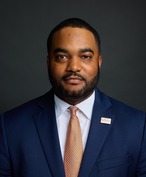
Meet Herbert Brown
Herbert Brown joined the OPPE Team in March 2023 as the USDA Liaison in Virginia. Located at Virginia State University, he develops relationships and partnerships with various federal, state and local government agencies to promote USDA programs and create collaborative opportunities for underserved communities. Brown also adds value to the Virginia’s agriculture industry by connecting producers to opportunities that enhances their farming operations. He also develops the next generation of agriculture leaders through the USDA 1890 National Scholarship Program, USDA Pathways and other student career development initiatives.
Brown started his USDA journey in 2007 as an intern with the Virginia Farm Service Agency (FSA) while attending Virginia State University. He spent over a decade of his career as an FSA County Executive Director in Southern Virginia before transitioning to Virginia State University’s Small Farm Outreach Program as assistant director. Outreach has always been his passion, and he is grateful to have the opportunity to contribute to shaping the future of agriculture.
|
|
|
That Dr. Martin Luther King, Jr.’s Civil Rights Legacy has Roots in Agriculture?
As a teenage college student, Dr. Martin Luther King, Jr. left the South to spend his summer working on a tobacco farm near Simsbury, Connecticut. It was the first time he experienced life outside of the segregation and racial violence of the Jim Crow South. It was during this time that fellow Morehouse College students at the tobacco farm elected him their religious leader, and he decided to become a minister.
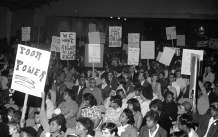
Years later, Dr. King campaigned across agricultural southern states to demand economic justice for the nation’s poor, for the rights of Black farmers, and for the need to tackle poverty across racial divides. He called attention to inequities in land ownership and food access, issues which USDA continues to address today.
Dr. King was assassinated just before the Poor People’s Campaign could take place, and his close friend Reverend Ralph Abernathy took charge of the movement. Fifty thousand people attended The Poor People’s March on June 19, 1968. Abernathy visited the USDA to discuss the demands laid out by Dr. King and thousands of Black farmers who had been denied land, food and opportunity.
Today, we see Dr. King’s legacy and the progress of the civil rights movement reflected in dedicated programs at USDA that continue to move the country towards the promise of equal rights and equal opportunity.
|
|
|
|
|
|

