|
November 26, 2024
USDA's Animal and Plant Health Inspection Service (APHIS) works to eradicate Asian Longhorned Beetle (ALB). Working together with State, Federal, and other partners to eliminate infestations using a combined approach. Such as imposing quarantines. Conducting tree inspections. Removing infested trees and sometimes high-risk host trees. Using a systemic insecticide when appropriate. Researching best practices and new methods. And involving and informing residents. The following provides information about current infestations and eradication efforts.
Announcements
Job Opportunities
Closing 11/26 - APHIS openings in Worcester, Massachusetts for ALB Plant Protection Technicians to implement domestic programs to prevent the establishment and spread of plant pests and diseases into new areas. Read the Announcement.
Closing 12/2 - APHIS openings in various locations for PPQ Supervisory Officers to protect the health, welfare, and agricultural economy and facilitate agricultural exports. Read the Announcement.
Massachusetts Department of Conservation and Recreation openings in Worcester, Massachusetts for ALB Seasonal Forestry Assistants to perform on the ground survey of host trees and host material for signs and symptoms of ALB infestation. Read the Announcement.
 |
|
Ohio Gifts Residents Free Trees
APHIS and Ohio Department of Agriculture employees developed a plan to grow non-host trees to give to residents. The next tree giveaway will be in the fall of 2025. Read the full APHIS in Action Story.
|
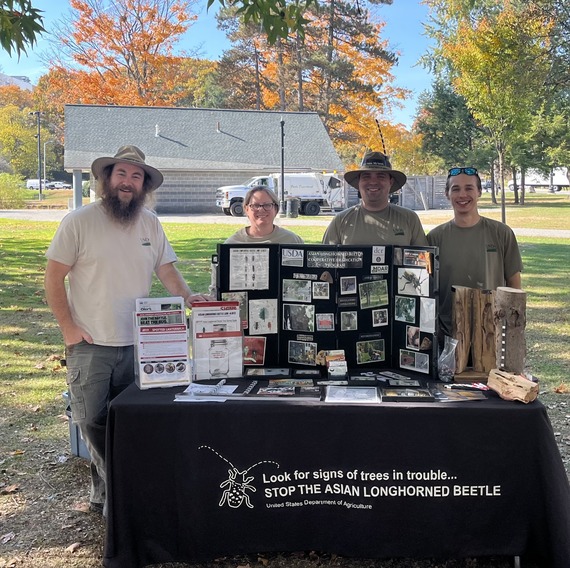
USDA APHIS employees at a pop-up outreach event at Elm Park in Worcester, Massachusetts reminding and informing residents about Asian longhorned beetle.
ALB in the United States
ALB is in 4 states: Massachusetts, New York, Ohio, and South Carolina. Eradication efforts eliminated infestations in Illinois and New Jersey. If you live in a quarantine area, please keep this tree-killing pest from spreading. Follow state and federal laws. These laws restrict the movement of woody material and untreated firewood.
SOUTH CAROLINA – First detection: May 2020
Regulated Area: 76.4 sq. miles in Charleston/Dorchester Counties
Infested Trees: 11,463
137 Charleston, 5,648 Hollywood, 3,144 Johns Island, 2,532 Ravenel
Removals: 16,578**
6,506 Infested, 10,072 High-Risk Hosts
Surveys: 470,064
Residents can dispose of regulated yard waste at Bees Ferry Road Convenience Center, 1344 Bees Ferry Road, 29414, or Hollywood Convenience Center, 5305 Highway 165, 29449. For more information, please call 843-973-8329 or click South Carolina.
** Due to high-risk host removals and acreage cuts, the actual number of trees removed is unknown.
OHIO – First detection: June 2011
Regulated Area: 49 sq. miles* in Clermont County
Tate and Williamsburg Townships
Infested Trees: 21,894
34 East Fork Recreational Area, 48 Monroe Township, 21,809 Tate Township, 3 Stonelick/Batavia Township
Removals: 118,230
21,891 Infested, 96,339 High-Risk Hosts
Surveys: 4,672,655
The wood disposal yard located at 2896 State Route 232 in Bethel is open Monday through Friday from 8 a.m. until 4:30 p.m. Wood chips are available for residents from 9 a.m. – 1 p.m. on the first Saturday of every month. For more information, please call 513-381-7180 or click Ohio.
* Monroe Township was eradicated in September 2018, resulting in a reduction of the regulated area by .5 sq. miles. Stonelick and Batavia Townships were eradicated in March 2018, resulting in a reduction of the regulated area by 5 sq. miles.
MASSACHUSETTS – First detection: August 2008
Regulated Area: 110 sq. miles* in Worcester County
Infested Trees: 24,209**
1 Auburn, 6 Boston, 1,413 Boylston, 233 Holden, 1,097 Shrewsbury, 699 West Boylston, 20,760 Worcester,
Removals: 36,265**
24,209 Infested, 12,056 High-Risk Hosts
Surveys: Inspections continue
The wood disposal yard is located at 0 Dr. Paul Ware Drive in Boylston and is open Monday – Friday from 8 a.m. until 3 p.m. For more information, please call 508-852-8090 or click Massachusetts.
* Boston (Suffolk County) declared eradication in 2014, resulting in a reduction of the regulated area by 10 sq. miles. ** Due to additional host trees removed through acreage cuts within the regulated area, the actual number of infested trees and the actual number of trees removed is unknown.
NEW YORK – First detection: August 1996
Regulated Area: 42.9 sq. miles* in Nassau/Suffolk County
Infested Trees: 7,273
2,921 Amityville, 2,327 Brooklyn, 27 Islip, 110 Manhattan, 1,831 Queens, 57 Staten Island
Removals: 24,147
7,273 Infested, 16,874 High-Risk Hosts
Surveys: Inspections continue
For more information, please call 866-265-0301 or click New York.
* Portions of Long Island were removed from the quarantine in 2024, resulting in a reduction of the regulated area by 10.1 sq. miles. Brooklyn and Queens were eradicated in 2019, resulting in a reduction of the regulated area by 58 sq. miles. A new infestation detected in the Amityville area in 2013 resulted in an increase of the regulated area by 28 sq. miles. Manhattan (New York County) and Staten Island (Richmond County) were eradicated in 2013, resulting in a reduction of the regulated area by 26 sq. miles. Islip (Suffolk County) was eradicated in 2011, resulting in a reduction of the regulated area by 7 sq. miles.
Research
USDA laboratories conduct research to learn more about the beetle. Field studies, trials, and laboratory research over the years generates information that is vital in developing the protocols used today to fight the beetle.
Resources
Latest Maps
Interactive Quarantine Map
Eradication Program Maps
Informational Webpages
APHIS Eradication Program
Informational Reporting Site
Outreach Materials
All Publications
Booklet
Door Hanger
Identification Card
Poster
Photos
Videos
Social Media
Facebook @asianlonghornbeetle
Flickr @asianlonghornedbeetle
Twitter @StopALB
YouTube @BeetleBusters
Reminders
If you live in a quarantine area, you can help by allowing program officials access to your property. Access is to perform tree surveys and remove infested and, in some cases, high-risk host trees. Also, hire companies that have compliance agreements with the eradication program for working on host trees. And don't move wood out of regulated areas. Moving wood out of regulated areas can spread the beetle and other tree pests and diseases to new areas.
Report ALB
If you think you’ve found ALB or an infested tree, record the area, capture the insect, and take digital pictures. Then contact the eradication program operating in your state. Or you can call the ALB hotline at 866-702-9938 or report online.
Contacts
ALB National Policy Manager
Kathryn Bronsky, 301-851-2147
Kathryn.E.Bronsky@usda.gov
ALB National Operations Manager
Josie Ryan, 631-229-3287
Josie.K.Ryan@usda.gov
|