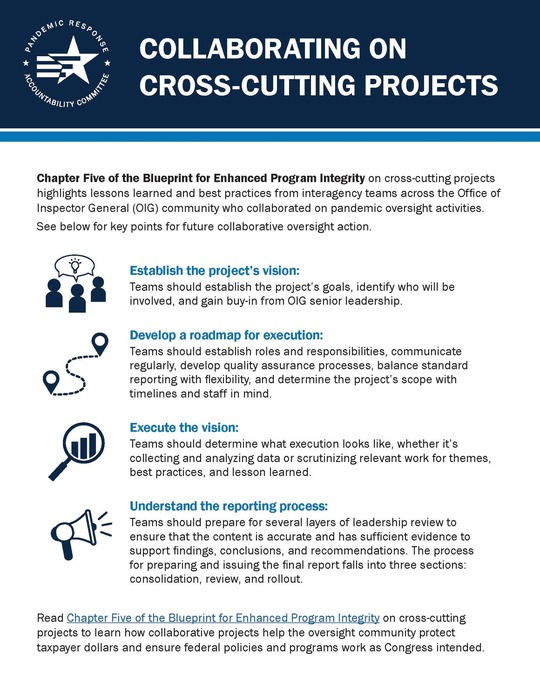
Check out our guide on conducting collaborative oversight activities, while keeping flexibility and adaptability in mind, from our final installment, Chapter Five: Cross-Cutting Projects, below:
Collaborative projects bring together staff from various OIGs, with one OIG designated as the project lead. They typically work on three types of products:
New work: A lead OIG consolidates and analyzes agencies’ data in a single report that identifies key insights or takeaways from a common theme or program.
For example, we worked with 10 of our member OIGs to explore the impact of $2.65 billion in federal funding from 89 programs and subprograms in six communities across the United States. Together, we identified four themes that provide valuable insights to policymakers, program officials, and the American public regarding the federal government’s pandemic response and how to prepare for the next major emergency: program administration and guidance, knowing your community, pre-existing challenges, and sustaining lives and recovering from the pandemic.
Summary work: OIG teams summarize previously published work to identify key insights or themes across agencies or programs.
For example, we worked with our partners to highlight what was done to stop identity fraud and help victims in pandemic relief programs. We pinpointed key lessons and best practices from earlier oversight work by members of the PRAC’s Identity Fraud Reduction and Redress Working Group.
Guides and resources: OIG teams identify and review products from across the community that capture lessons learned and best practices when conducting oversight work.
For example, we hosted an Agile Oversight Forum with the Council of the Inspectors General on Integrity and Efficiency. Recognizing the importance of an agile process, we captured experts' insights in a report that offices can use to implement more efficient, innovative, and timely oversight practices.
Collaborative projects enhance federal oversight
This work can be complicated, take longer than expected, and fall outside of the oversight plans prepared by OIGs each year. Nevertheless, the benefits outweigh the challenges, ultimately protecting taxpayer dollars from fraud, waste, and abuse and ensuring federal programs are implemented more efficiently and effectively. When staff from multiple OIGs work together, the oversight community is better equipped to identify trends or patterns and learn from one another.
Recapping what we’ve learned in our oversight
By outlining necessary controls to protect critical programs from improper payments and fraud, each chapter of the Blueprint lays the foundation for a stronger government by presenting lessons learned that can be used during crises and regularly appropriated programs. Details are in what we’ve shared previously:
-
Chapter One highlights lessons learned that can help program administrators develop and implement programs with strong internal controls.
-
Chapter Two highlights suggestions for legislators and regulators to consider when drafting legislation and policy for funding.
-
Chapter Three highlights recommendations for preventing, detecting, and responding to fraud in government programs, including conducting risk assessments, verifying applicants’ eligibility and identities prior to making an award, and using data analytics to identify potential improper or fraudulent payments.
-
Chapter Four highlights best practices for developing a whole-of-government approach that helps oversight entities prevent fraud and ensure federal programs are operating effectively and efficiently.
Learn more from our AI tool
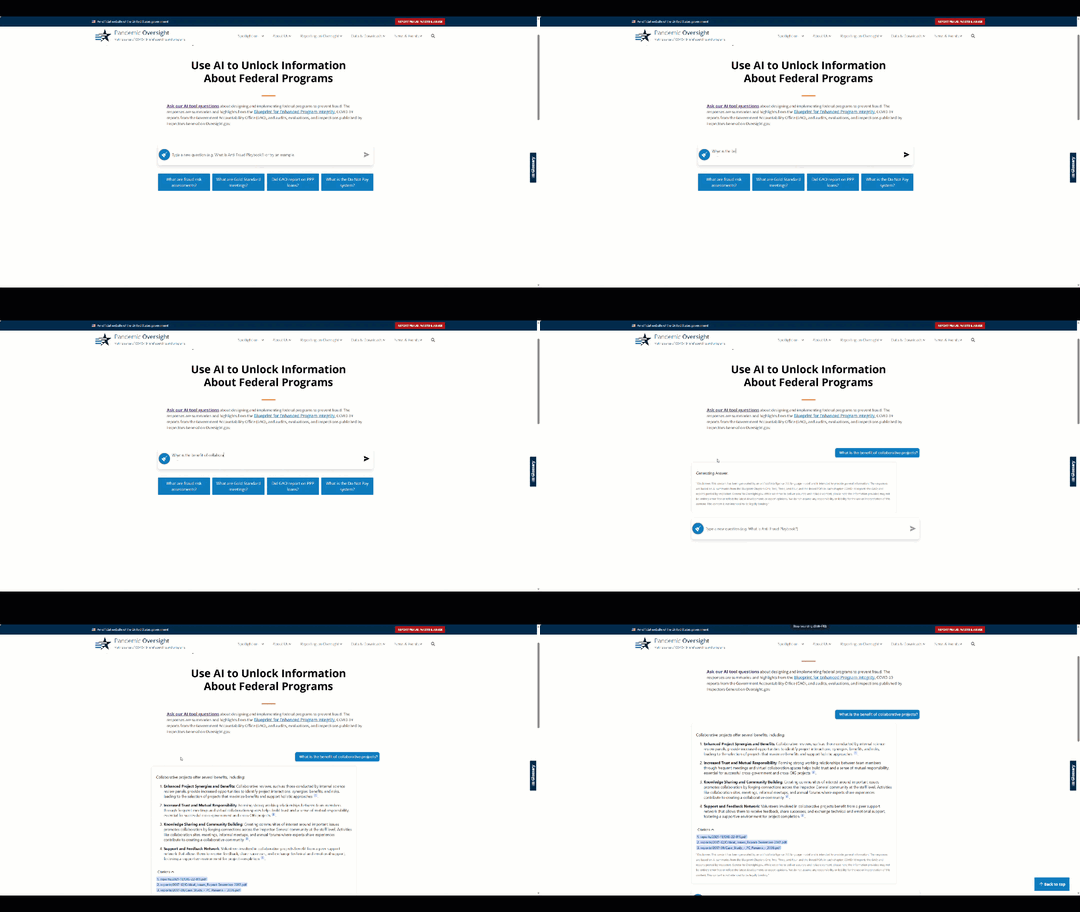
Our AI tool summarizes insights from all five chapters of the Blueprint, relevant reports from the Government Accountability Office, and federal oversight bodies to answer your questions on fraud prevention and program implementation.