|
The USAID Office of Inspector General, with criminal investigators and audit personnel posted across the world, continues to provide rigorous independent oversight of United States foreign assistance across multiple federal agencies.
Our work results in timely recommendations that improve efficiency and effectiveness of U.S. taxpayer-funded foreign assistance, identify vulnerabilities and risks at the outset of new programs, and hold bad actors accountable for defrauding American taxpayers—no matter where they are located.
To learn more about our past and ongoing oversight of humanitarian, global health, and other foreign assistance programing, please visit oig.usaid.gov.
|
|
Semiannual Report to Congress (October 1, 2025–March 31, 2026)
During this reporting period, OIG continued to achieve unparalleled investigative results in our foreign assistance oversight, including: shutting down a transnational racketeering, money-laundering, and visa-fraud scheme in Colombia; helping to secure a life sentence for an embassy staffer convicted of raping two children in Burkina Faso; and the first ever U.S. government debarment of a United Nations (UN) official involved in the Hamas terrorist attacks in Israel on October seventh. Our audits, inspections, and evaluations provided recommendations and considerations that will inform administration and congressional decision-making on U.S. foreign assistance programs going forward.
This Semiannual Report summarizes these and other independent oversight activities during the first half of FY 2026.
|
|
|
Oversight of U.S. Government Ebola Responses and Emerging Global Health Threats
This memo highlights insights and lessons from USAID OIG’s audits and investigations of American responses to the Ebola outbreaks in 2014 and 2019, designed to inform the Department of State, Congress, and other key decision-makers in executing the current response.
Situational Alert: Risk of Sexual Exploitation and Abuse in the U.S. Response to the Ebola Outbreak in Africa
Given the prevalence of sexual exploitation and abuse (SEA) allegations in previous Ebola outbreaks, and USAID OIG’s continued concerns about the capacity of implementers to safeguard and address allegations of SEA, we published a Situational Alert to inform the current response.
USAID OIG has consistently led efforts in preventing SEA within U.S. foreign assistance programs. A past USAID OIG investigation found that numerous United Nations officials sexually assaulted women and girls while performing USAID-funded Ebola work in the Democratic Republic of the Congo. This investigation resulted in the first known U.S. government debarments of UN officials determined to have engaged in SEA.
Meetings with Ambassador Bartos and United Nations Agencies in New York
In May, USAID OIG leadership met with Ambassador Jeff Bartos, U.S. Representative for UN Management and Reform, to discuss USAID OIG's longstanding work in identifying vulnerabilities within U.S. voluntary contributions to the UN, along with practical fixes.
USAID OIG additionally held meetings and attended briefings with several UN offices and agencies, including UNICEF, the UN Development Programme (UNDP), and the UN Office of Legal Affairs (OLA). We discussed our ongoing oversight of U.S. voluntary contributions to the UN, reminded cognizant officials of their duty to timely transmit allegations of misconduct involving U.S. funds, and shared our concerns regarding the UN’s application of privileges and immunities as they relate to our investigations, while advancing novel solutions. We also met with UNRWA senior leadership to discuss our ongoing investigation into current and former officials linked to Hamas.
Priority Reforms for Strengthened United Nations Transparency and Accountability
We published a list of institutional reforms, transmitted to the U.S. Mission to the UN, that USAID OIG has identified as most critical to strengthening the United Nations' internal capacity to conduct meaningful oversight and to engage substantively with U.S. oversight bodies to ensure maximum accountability and transparency over U.S. voluntary contributions.
Strengthening Oversight of U.S. Voluntary Contributions to the United Nations
We published a consolidated shortlist of highest-priority actions that USAID OIG has identified to strengthen the U.S. government's oversight of voluntary contributions to the UN. These recommendations, shared with Congress, the Department of State, and other pertinent stakeholders, are designed to strengthen future award design and enhance the U.S. government’s capacity to manage funds directed to UN agencies.
ICYMI: USAID OIG Response to Joint Inspection Unit Report
USAID OIG drafted a response to the findings in the October 2025 Joint Inspection Unit (JIU) report titled “Review of Donor-Led Assessments of United Nations System Organizations and Other Oversight-related Requests from Donors in the Context of Funding Agreements and the United Nations Single Audit Principle.” The JIU serves as the UN's independent external oversight body. This report provided a comprehensive examination of how external, donor-initiated oversight activities are affecting the functioning and efficacy of the UN system. While we agree with many of the report’s concerns about UN operations, we differ, however, on several key elements, including: how donor-led investigations of UN-related misconduct impact the UN's autonomy; the independence of UN internal oversight bodies; the scope and application of the UN single audit principle; and the scope and application of UN privileges and immunities.
|
|
INVESTIGATIVE SUMMARY: USAID OIG’s Continuing Investigation Leads to Referral of Over 100 Current and Former UNRWA Staff Linked to Hamas for Suspension/Debarment
USAID OIG independently referred the names of 101 current or former UNRWA staff for participation in the October 7, 2023, terrorist attacks and/or affiliation with the military wing (al-Qassam Brigades) of Hamas to the U.S. Department of State for consideration of suspension and/or debarment action to exclude them from working across future U.S.-funded aid organizations. This referral includes individuals who were previously submitted for suspension/debarment consideration and for whom additional information has since been identified that, in our view, warranted a supplemental referral. Therefore, to date, USAID OIG’s active and ongoing investigation has resulted in suspension and debarment referrals for 108 subjects for having participated in the terrorist attacks in Israel and/or having Hamas affiliation.
|
West Bank and Gaza: USAID Did Not Identify Key Fraud Risks for Cash Assistance and Relied on Nongovernmental Organization Assessments and Remote Monitoring
In fiscal year 2024, USAID awarded about $36 million for multi-purpose cash assistance (MPCA) activities in West Bank and Gaza. USAID OIG’s audit found that USAID did not develop a fraud risk assessment or fraud risk profile for the response. Without these measures in place, USAID was unable to demonstrate how it identified or addressed key risks to MPCA, such as cash liquidity challenges, vendor fees, price gouging, and diversion to unauthorized recipients and terrorist groups. Addressing this weakness presents an opportunity for policymakers to proactively design and implement targeted controls and safeguard critical resources in the future to reach those in need.
|
|
|
Ex Federal Finance Director Sentenced for Kickback Scheme Steering $600,000 in Contracts to a Friend
|
Following USAID OIG’s multi-year investigation, Mathieu Zahui, the former Director of Financial Management at the U.S. African Development Foundation, was sentenced in U.S. District Court to four months in prison in connection with a multi-year scheme in which he steered federal contracts to a friend's company, accepted cash payments in return, and then lied to federal investigators about it. As part of his sentence, Zahui was ordered to pay a criminal forfeiture money judgment of $12,000.
|
Federal Jury Convicts Two Defendants for $25M Wire Fraud and Money Laundering Scheme
|
Following USAID OIG's investigation, Demani Jawara Bosket, 51, of Saluda, South Carolina and his niece, Tanya Lashawn Bosket, 53, of Charlotte, North Carolina were convicted by a federal jury following seven days of trial. Both individuals were found guilty of one count of wire fraud conspiracy and one count of conspiracy to commit money laundering. This case originated from a disclosure received by USAID OIG notifying us of what appeared to be a phishing email targeting a U.S.-funded implementer’s project in India and illustrates how one small allegation can expose a much larger scheme. Demani Bosket was found guilty of six separate counts of wire fraud, and Tanya Bosket was found guilty of four counts of wire fraud. Between 2020 and 2024, the scheme bilked over $25 million from individuals and businesses in the United States.
|
INVESTIGATIVE SUMMARY: U.S.-Funded Food Commodities Diverted to Online Marketplace in Ethiopia
|
On January 13, 2025, USAID OIG received reports that USAID‑branded Ready‑to‑Use Supplementary Food (RUSF) and Ready‑to‑Use Therapeutic Food (RUTF) were being sold on a publicly accessible e-commerce platform in Ethiopia. USAID OIG conducted multiple interviews with those involved in the Ethiopian RUSF/RUTF supply chain; reviewed relevant reports and documentation; and conducted open‑source searches of producers, suppliers, and online listings. In doing so, the investigation identified indicators of potential vulnerabilities across multiple stages of the supply chain that could allow for diversion. The pharmaceutical manufacturer, several implementers, and USAID reported that they are taking ongoing measures to prevent or reduce food diversion and committed to communicating any future incidents of theft, diversion, and looting to USAID OIG.
|
INVESTIGATIVE SUMMARY: Joint Investigation Leads to Government-Wide Debarment of Former Embassy Employee Sentenced for Rape of Minors in Burkina Faso
|
A joint investigation by USAID OIG and the U.S. Department of State’s Diplomatic Security Service Office of Special Investigations has led to the 10-year, government-wide debarment of Fode Sitafa Mara, a former American embassy employee. On November 18, 2025, a Federal jury in the District of Maryland convicted Mara of four counts of aggravated sexual abuse of a minor as well as one count each of attempted coercion and enticement of a minor and attempted obstruction of justice. On February 26 Mara received a life sentence, and on May 15, the State Department debarred him from participating in all U.S. contracting and grant activities for 10 years.
|
Former USAID Employee Pleads Guilty to CARES Act Fraud
|
A former USAID employee pled guilty in federal court to charges stemming from a Coronavirus Aid, Relief, and Economic Security (CARES) Act scheme that enabled him to illegally obtain more than $176,000. According to the guilty plea, beginning in April 2020, and continuing until November 2021, Simeon Bakare knowingly and willfully engaged in a scheme to defraud the Small Business Administration. Bakare admitted he submitted, or caused the submission of, multiple fraudulent Paycheck Protection Program (PPP) and Economic Injury Disaster Loan (EIDL) applications. Additionally, through this scheme, Bakare caused the deposits of EIDL and PPP benefits into bank accounts he controlled.
Kelly O. Hayes, U.S. Attorney for the District of Maryland, announced the guilty plea with USAID OIG Acting Special Agent in Charge Eduardo Santos.
|
|
|
Audits, Inspections, and Evaluations Updates |
|
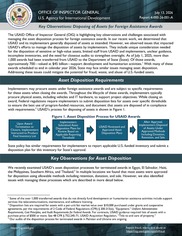
USAID OIG is highlighting key observations and challenges associated with managing the asset disposition process for foreign assistance awards. In our recent work, we determined that USAID and its implementers generally disposed of assets as intended. However, we observed issues that impacted USAID’s efforts to manage the disposition of assets by implementers. Issues included unique consideration needed for the disposition of sensitive or high-value assets, limited staff from USAID and implementers, unclear guidance, incomplete inventories, and the need for closeout audits to strengthen oversight of award recipients and asset expenditures and disposition.
As of July 1, 2025, more than 1,000 awards had been transferred from USAID to the Department of State (State). Of those awards, approximately 700—valued at $45 billion—support development and humanitarian activities. With many of these awards scheduled to end in calendar year 2026, State may face similar issues managing asset disposition. Addressing these issues could mitigate the potential for fraud, waste, and abuse of U.S.-funded assets.
|
Emergency Food Assistance: Inspections of USAID Bureau for Humanitarian Assistance (BHA) Warehouses in Djibouti, South Africa, and Texas
In May 2025, USAID OIG initiated a series of inspections looking at BHA warehouses that stored a reported $100 million in prepositioned food aid for use in humanitarian responses worldwide. All three inspections are now publicly available.
In total, we made 11 suggestions to officials at the Department of State to improve the responsible management of these warehouses. We would call particular attention to our inspection of the warehouse in Djibouti, which identified that, at the time of our inspection, more than $17 million of the food aid stored at the Djibouti warehouses was not allocated to an emergency food provider for distribution. This included $10 million in food aid at risk of reaching its best-used-by date prior to arriving at its intended destination. As a result, food aid may end up being used as animal feed or destroyed outright, resulting in waste. Furthermore, as of November 30, 2025, $2.9 million in spoiled super cereal plus remained at the warehouses, incurring more than $460,000 in storage costs since its initial arrival in January 2024.
We initiated work on this management advisory in response to a bipartisan request from Senators Murkowski and Shaheen to examine “the disposition of $9.7 million in family planning commodities, which were stored for global disbursement at a warehouse in Geel, Belgium.” We estimate that USAID has paid over $360,000 in storage and transportation costs for these commodities since January 2025 and will continue to incur monthly storage costs of over $24,000 under the now-terminated award until final disposition is complete. Further, we noted that absent disposition instructions from the United States government, commodities valued at $1.7 million may expire, and USAID risks paying additional costs due to a prolonged award closeout process.
Sudan: USAID Did Not Continuously Monitor Humanitarian Assistance or Share Unresolved Fraud and Other Allegations and Key Documents with the Department of State
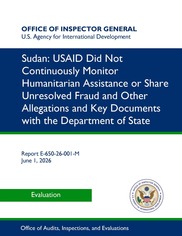
USAID OIG's recent evaluation of humanitarian assistance in Sudan found deficiencies in the continuity of oversight during the transition of assistance awards from USAID to the Department of State. These deficiencies, many of which USAID staff attributed to the Agency's limited operating status during the transition period, raise concerns that the Department of State does not have the information it needs to fully monitor the selected humanitarian assistance awards in Sudan. Addressing these deficiencies would strengthen monitoring, enable timely detection of fraud, waste, and abuse, and better safeguard taxpayer funds in Sudan and other nonpermissive environments.
|
Management Advisory: U.S. African Development Foundation’s Lack of Responsiveness to Oversight Matters Limits Transparency Into Agency Operations and Management of Funds
This management advisory was written to alert USADF leadership about an ongoing lack of information and insight into the agency's operations and management of funds. Congress charged USAID OIG with overseeing the entirety of USADF’s funding and operations, but the continued lack of response from Agency officials over the past year and a half jeopardizes OIG’s ability to carry out that mandate. The lack of timely information from USADF obstructs OIG’s oversight and limits visibility into the Agency’s operations and programming. It also exposes taxpayer dollars and sensitive U.S. government information to significant and ongoing risks. In addition, we flagged that USADF has not addressed 11 of our 12 open recommendations, some dating back as far as August 2024, related to addressing fraud risks in the Agency’s grants management activities.
|
|
Overseas Contingency Operations Reports |
|
Inspectors General Initiate Coordinated Oversight for Operation Epic Fury
The Inspectors General for USAID, the Department of State, and the Department of War have commenced legally mandated, whole-of-government oversight coordination for Operation Epic Fury (OEF). “Our oversight professionals will ensure rigorous transparency and accountability over foreign assistance dollars connected to Operation Epic Fury,” said Van Nguyen, Acting Inspector General for USAID OIG, a statutorily independent law enforcement agency. “USAID IG will hold accountable all parties that defraud or divert taxpayer dollars or evade U.S. sanctions against Iranian state actors.”
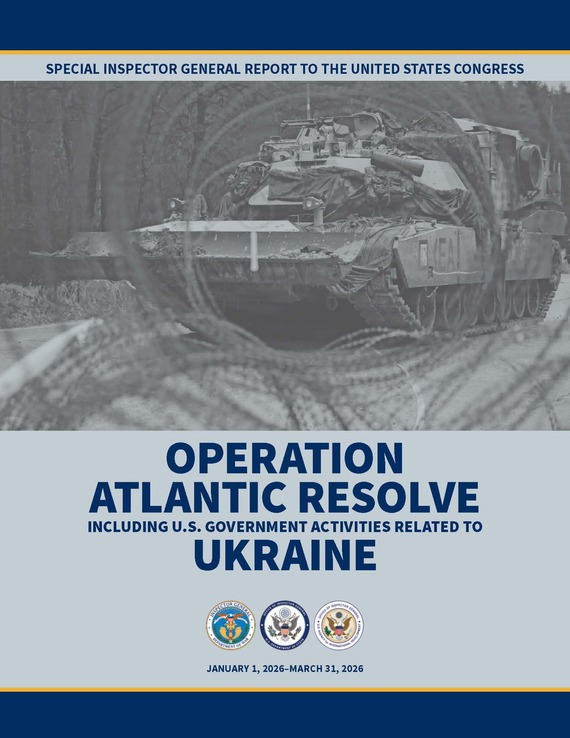
Operation Atlantic Resolve (Ukraine) Lead Inspector General Quarterly Report to Congress, January 1, 2026 - March 31, 2026
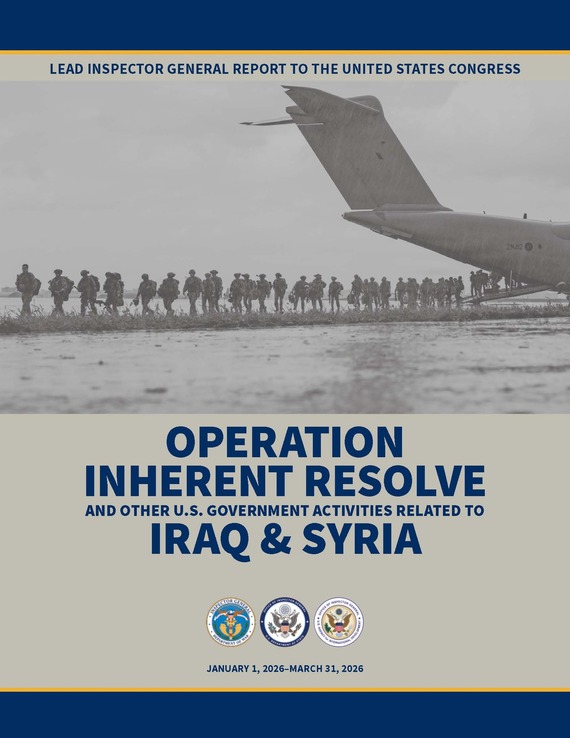
Operation Inherent Resolve (Iraq/Syria) Lead Inspector General Quarterly Report to Congress, January 1, 2026 - March 31, 2026
|
|
|
|
|