|
|
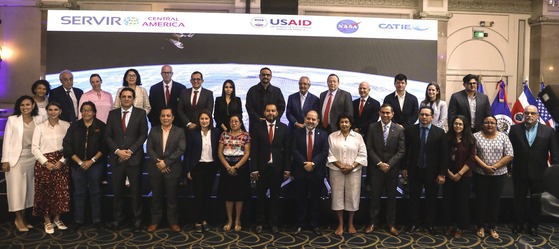
The United States Government is leading an innovative initiative to strengthen climate resilience in Central America through advanced satellite technology with the launch of the SERVIR Central America regional hub. This effort, which underlines the United States’ commitment to addressing critical environmental challenges, will significantly improve the region’s capacity to respond to climate-related threats and to improve the lives of more than 40 million people.
With an initial estimated investment of $6.6 million through USAID during the period of 2024-2029, SERVIR Central America will provide innovative solutions to urgent environmental problems using satellite data and geospatial technology. This initiative will support evidence-based decision making on local, national, and regional levels, focusing on climate resilience, agriculture and food security, ecosystem and carbon management, air quality, health, and water security, with a strong emphasis on gender equity and social inclusion.
The regional hub, a collaboration between USAID, the National Aeronautics and Space Administration (NASA), and the Tropical Agricultural Research and Higher Education Center (CATIE), will work with institutions, governments, indigenous communities, and local leaders to ensure that all voices are included in environmental decision making. The hub will also support resilience against increasingly frequent climate crises, such as hurricanes and droughts, and will address current environmental and socioeconomic challenges, including deforestation, soil erosion, and coastal ecosystem degradation.
|
|
Celebrating Achievements of "Sembrando Oportunidades"
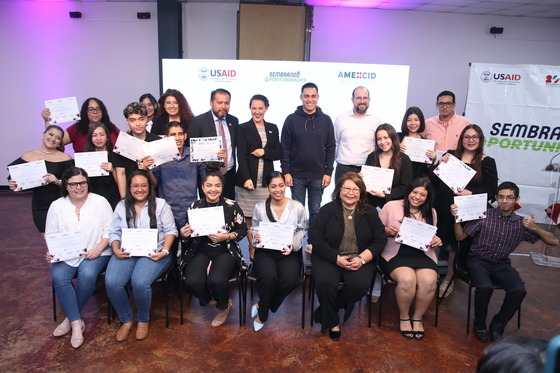
During 2024, USAID and the Mexican Agency for International Development Cooperation (AMEXCID), provided job training to 452 Salvadoran youth through their joint initiative “Sembrando Oportunidades.”
Of the participants, 337 have found job opportunities in various industries, ranging from banking to the tourism sector, and 115 have created their own sources of employment through entrepreneurship.
Through “Sembrando Oportunidades,” USAID and AMEXCID promote strategic alliances that foster youth employability, with the goal of generating employment and reducing irregular migration. This initiative directly benefits young people from 10 municipalities, including San Salvador, Soyapango, Mejicanos, Ilopango, and Apopa. The ultimate goal is to transform the lives of hundreds of Salvadoran youth by providing them with tools to envision a future full of opportunities within their own country.
This joint effort has brought professional and economic development opportunities closer to Salvadoran youth through partnerships with the private sector, including the Business Foundation for Social Action (FUNDEMAS) and the Multisectoral Ecosystem Alliance for Employability, a private sector initiative dedicated to promoting employment in the country through the Alianza por el Empleo web platform.
Thanks to this partnership with the private sector, participants received training programs on technical and soft skills in key areas such as technological education, customer service, bank cashiering, digital media, artificial intelligence, and teleoperation.
One of the latest efforts to create sustainable economic opportunities has been the “Start Me Up: Digital Media and Artificial Intelligence” course in partnership with the La Libertad Sur Mayor’s Office and the Mónica Herrera School of Communication. Since September, this course has trained over 90 young people in developing digital strategies to access job opportunities in the digital communication field or to boost their entrepreneurial ventures.
|
|
Presentation of Good Practices in Reception Centers for Returned Migrants in El Salvador, Guatemala, and Honduras
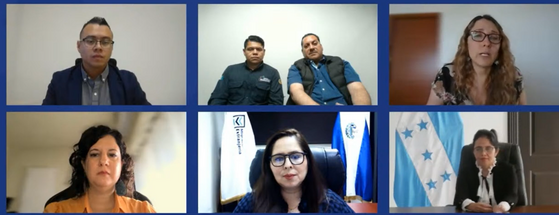
In a virtual event with the heads of the Offices of Assistance to Returned Migrants and other government representatives of Guatemala, Honduras, and El Salvador, USAID and the International Organization for Migration (IOM) presented a report on the Systematization of Good Practices and Lessons Learned in the Management of Reception Centers for Returned Migrants in the three countries.
The report serves as a reference tool for governments, civil society organizations, and international agencies working on issues related to the return and reintegration of returned migrants, outlining recommendations on processes and services that should be included when establishing a reception center. This includes how the reception process should be structured, services that should be provided, appropriate infrastructure for the center, profiles of returned migrants that need to be considered, and systems for collecting, analyzing, and transferring information for reintegration processes. The guide also describes the skills and capacities required for reception center staff.
|
|
Labor Inclusion for More Hondurans
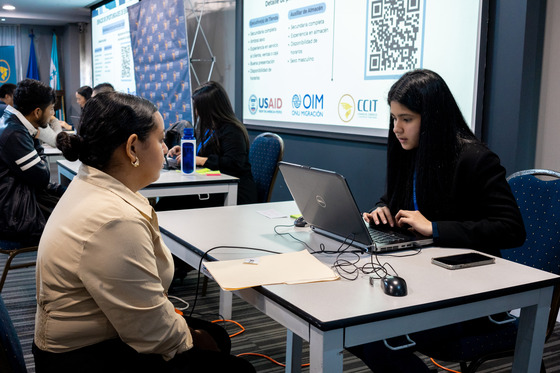
USAID and the International Organization for Migration (IOM), in collaboration with the Tegucigalpa Chamber of Commerce and Industry (CCIT), held a job fair from December 2 to 4, with the participation of 284 people. The fair promoted the labor inclusion of returned migrants, internally displaced persons, and members of local communities.
During the event, attendees were referred to PACASA, a Honduran company that produces and sells office and school supplies, to apply for vacancies in sales, customer service, and other areas. They also participated in workshops focused on developing social and workplace skills, as well as soft skills, essential for strengthening their performance in the job market.
This job fair is part of a broader labor insertion initiative to support the economic reintegration of young people and their families, thereby contributing to improved living conditions and reducing the risks associated with irregular migration.
|
|
Joining Forces to Apply the Biocommerce Approach
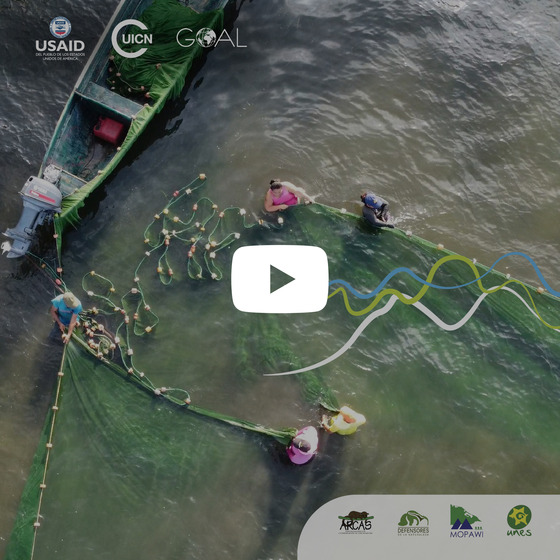
More than 420 participants in the Regional Coastal Biodiversity Project are applying new skills and best practices across 30 strengthened biocommerce entrepreneurships. This initiative helps to conserve marine-coastal areas in Guatemala, El Salvador, and Honduras while boosting the local economy.
Some of the best practices include:
- Restoration of mangroves in targeted areas
- Harvesting commercially valuable species at appropriate sizes
- Use of fishing nets regulated by national standards
- Adoption of photovoltaic energy.
These 30 entrepreneurships, which integrated biocommerce into fishing, tourism, and mangrove-related beekeeping, generated over $2 million in sales. As a result, more than 4,000 people now enjoy increased incomes.
Biocommerce encompasses activities such as the collection, production, processing, and commercialization of goods and services derived from native biodiversity, following environmental, social, and economic sustainability criteria.
Watch this new video to learn more about the exciting results achieved in biodiversity conservation in Central America, supported by USAID and the IUCN (International Union for Conservation of Nature).
|
|
|
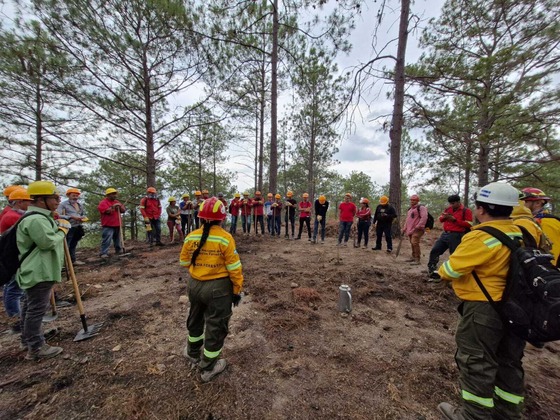
In the Sesecapa Valley of Ocotepeque, Honduras, forest fires pose a constant threat, with flames frequently ravaging wooded areas during the dry season. This year alone, the region has battled 74 forest fires with the dedicated support of forest engineer Marilis Gómez and her team of firefighters.
Leading a team of trained professionals, Marilis considers the creation of two community firefighting brigades one of her greatest achievements. These brigades now serve as the first responders to local fire outbreaks.
Aligned with the Protected Areas Management Plan of the Güisayote Biological Reserve, the Upper Lempa Watershed Project, in collaboration with the Forest Conservation Institute, identified the urgent need for comprehensive training to manage and control forest fires.
“Thanks to the training provided by the project, we formed two community brigades that can now respond immediately to fires, making a significant difference in controlling them before they spread,” says Marilis.
The Inter-Institutional Centers for Forest Fire Control (CICIF) support these efforts by providing technical resources, training, and coordination for firefighting.
“The CICIF has been a great help, equipping us with the tools and knowledge to strengthen local teams. Continuing to form more community brigades is essential,” Marilis adds.
These new brigades cover approximately 30,000 hectares across 14 communities in the municipalities of Ocotepeque, Sinuapa, Concepción, and Santa Fe. Through training, participants gained critical skills in fire safety, risk mitigation, and organizational strategies to more effectively manage forest and grassland fires.
The Upper Lempa Watershed Project of USAID with Winrock International promotes improved watershed health and resilience in the headwaters of the Lempa River, directly impacting the well-being and water security of communities in El Salvador, Guatemala, and Honduras.
|
|
|
|
|