|
BUREAU FOR INCLUSIVE GROWTH, PARTNERSHIPS, AND INNOVATION
LOCAL, FAITH, AND TRANSFORMATIVE PARTNERSHIPS HUB
|
|
Center for Faith-Based and Neighborhood Partnerships |
|
|
Colleagues,
As we bring the year to a close, the team at the Center for Faith-Based and Neighborhood Partnerships wishes all of you a peaceful and joy-filled holiday season. Reflecting on 2023, I am reminded of USAID’s work in the midst of a weary world. From the raging global hunger crisis, to the devastating impacts of climate change, and increasing conflict and violence, the needs of our neighbors around the globe are more pressing than perhaps ever before.
And yet, hope persists. Despite the darkness we have witnessed as a global community, your compassion, determination, and relentless pursuit towards a better tomorrow continue to shine as beacons of light. USAID’s mission has never been more important, and the success of our work is only possible because of partnerships with you. Thank you for your continued engagement with USAID, and I look forward to what we will accomplish together in 2024.
Amanda Vigneaud Initiative Lead, Center for Faith-Based and Neighborhood Partnerships USAID
|
|
Building Bridges in Development:
Reflecting on 2023
|
|
|
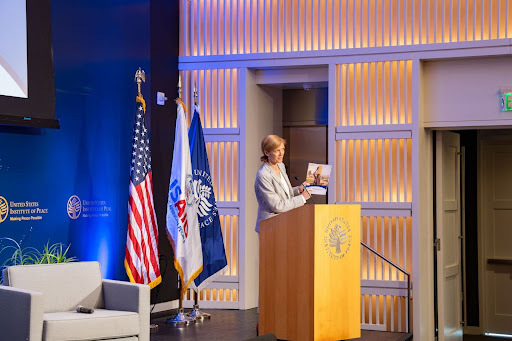
Administrator Samantha Power delivers remarks at launch of USAID's first-ever Strategic Religious Engagement Policy.
|
|
|
It’s been a busy year for the Center for Faith-Based and Neighborhood Partnerships (FBNP) team. Whether investing in community resilience with local religious communities in Burkina Faso and Peru, convening faith-based organizations in Tunisia and Indonesia, or training USAID staff in Honduras and Uzbekistan to partner with religious actors, our office remains committed to establishing partnerships and driving impact that is built to last.
In 2023, the FBNP team:
- Supported the Agency in strengthening, expanding, and diversifying our partner base by meeting with over 75 faith-based and community organizations interested in partnerships with USAID to learn more about their work and provide guidance on how to partner with the Agency.
- Launched USAID’s first-ever Strategic Religious Engagement Policy. This new policy affirms the important role of religious actors as strategic development partners and equips USAID staff with the knowledge and resources they need to effectively build these partnerships. Read the policy 2-pager and listen to Administrator Samantha Power’s remarks at the launch event hosted by the U.S. Institute of Peace here.
- Piloted “Working with Religious Actors in Diplomacy and Development,” a new training for the USAID and State Department workforce, in Washington, D.C., and in USAID Missions in Honduras, Uzbekistan, and Indonesia. The four-day training included site visits and facilitated dialogues with local religious leaders and civil society organizations to strengthen the capacity of the USAID workforce to engage faith-based organizations and religious communities. The training will be delivered at eight USAID Missions over the next two years.
- Awarded $1.5 million to integrate faith-based and community partners in USAID’s COVID-19 response. The activities galvanized collaboration between USAID and religious actors to foster more inclusive, locally led, and sustainable solutions to advance the President’s mandate to address the pandemic with faith-based communities.
- Facilitated the participation of USAID senior leadership, including the Administrator, in multiple forums to further strategic religious engagement as an Agency priority alongside localization and inclusive development. Engagements included the International Religious Freedom Summit and a USAID-hosted roundtable discussion with the leadership of international faith-based organizations. FBNP also hosted multiple religious delegations, including those from Ukraine, Côte d’Ivoire, and the Democratic Republic of the Congo to discuss challenges facing their communities and shared efforts to address urgent humanitarian and development needs.
Are you a new partner interested in working with USAID in 2024? The FBNP team will host a webinar in the coming months to provide an overview of USAID and guidance on how to partner with the Agency. Please email the FBNP team at cfbnp@usaid.gov to indicate your interest in attending this webinar, and stay tuned for more information.
|
|
Focus on the Field:
Female Peacebuilders Play a Pivotal Role in Southeast Asia and Beyond
|
|
|
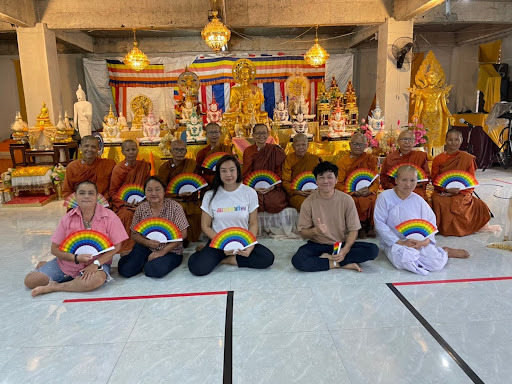
Female religious leaders participated in a gender and social inclusion training facilitated by a transgender peacebuilder from USAID partner organization International Network of Engaged Buddhists. Photo Credit: USAID/RDMA
|
|
|
Burma, Sri Lanka, and Thailand are Buddhist-majority countries with different socio-political histories and contexts, but they all face common challenges: rising violence between religious groups and increased discrimination directed at religious and ethnic minorities, women, and members of the LGBTQI+ community.
To address these challenges, USAID Regional Development Mission for Asia (RDMA) partners with the International Network of Engaged Buddhists (INEB) through Networks for Peace to work with leaders from religious and marginalized communities to create safer and more pluralistic societies. Since 2021, the INEB-led Sangha for Peace Initiative has facilitated intrafaith and interfaith discussions in all three countries to break down stigmas and barriers between groups. Educational workshops and training sessions for women and individuals from marginalized communities are incorporated to advance their empowerment and elevate their role as leaders who can advocate for their own communities.
|
|
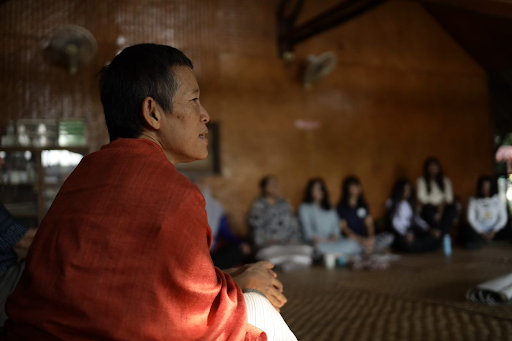 A facilitator engages in discussion with female peacebuilders on how they can create a safe space for people to share issues related to both work and personal life. Photo Credit: USAID/RDMA
|
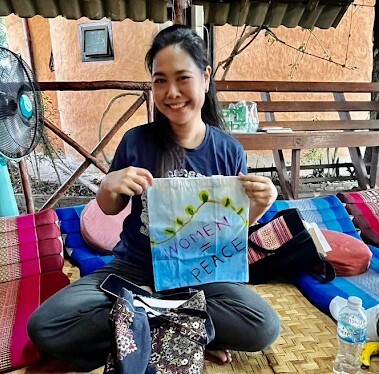 A human rights and peace studies activists and lecturer shows her painting to promote women's participation in peacebuilding. Photo Credit: USAID/RDMA
|
|
|
During one training session in Thailand, Miss Nachale, also known as Hua Boonyapisomparn, led discussions and shared her own experiences promoting inclusive practices as a peacebuilder and transgender human rights activist. The session equipped participants with strategies for addressing stigma, prejudice, and abuse towards vulnerable populations. Prior to joining Sangha for Peace, Miss Nachale shared that it never occurred to her that gender identity and gender rights could be openly discussed during interfaith dialogues, let alone directly with Buddhist monks or nuns. Today, Miss Nachale is an active participant in the initiative and has led multiple training sessions with religious leaders that focus on challenges and stigmas faced by women and the LGBTQI+ community.
In Sri Lanka, local female peacebuilders and religious actors organized a series of events to highlight and acknowledge the valuable contributions of womens’ rights and female peace activists. Bringing together 120 female activists from the northeast coast of Sri Lanka, participants engaged in meaningful discussions around gender equality and peacebuilding. Specific sessions included discussions on women's safety and security, gender equality, and empowerment through self defense. The workshop emphasized the importance of fostering a culture of partnership within the network of women activists and peacebuilders.
INEB’s workshops and training sessions are creating platforms for participants to share best practices, gain new skills and insights, and develop deeper understandings of different communities. These efforts are creating a strong network of regional leaders who are advocating for pluralism and peace throughout Southeast Asia.
|
|
FBNP Team Delivers New Strategic Religious Engagement Training in Jakarta, Indonesia
|
|
|
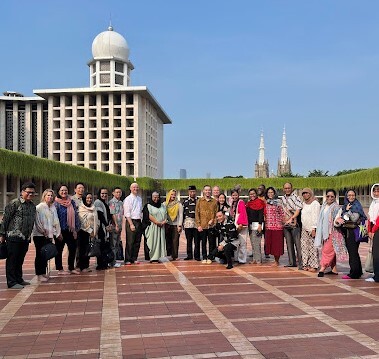
Training participants visit the Grand Istiqlal Mosque.
|
|
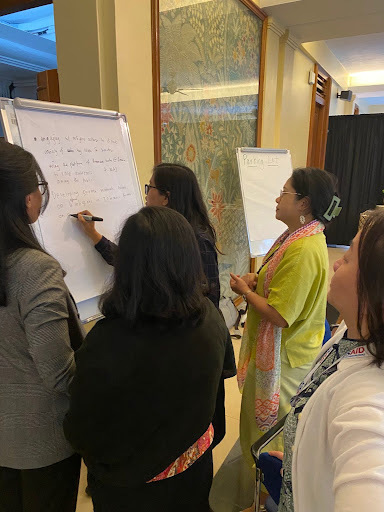
This December, a cohort of 22 colleagues from USAID/Indonesia, Department of State, and the Peace Corps participated in the fourth offering of Working with Religious Actors in Diplomacy and Development in Jakarta, Indonesia. The four-day training, conducted and facilitated by colleagues from USAID’s Bureau for Conflict Prevention and Stabilization, the U.S. Department of State’s Strategic Religious Engagement Unit, and FBNP, strengthened the capacity and skills of the U.S. Government workforce to engage faith-based organizations and religious communities. By establishing key terms and approaches to engaging religious actors through group collaboration, exercises, case studies, and religious landscape mapping, the training equips participants with the knowledge and tools needed to build partnerships with religious actors and ultimately strengthen development and humanitarian outcomes. |
|
The training also included a civil society day where participants undertook site visits to hear directly from local religious leaders and local organizations. In Jakarta, participants engaged with local religious communities, including leaders from the Grand Hindu Temple of Widhya Mandala and the Grand Istiqlal Mosque. They also spoke to development practitioners and community leaders from the Leimena Institute, Search for Common Ground, the Indonesian Legal Aid Foundation, and implementing partners from past and current USAID-funded projects. These engagements provided participants with practical opportunities to apply training principles and advance U.S. government priorities through partnerships with religious actors. |
|
Training participants engage in brainstorming sessions.
|
|
USAID Leadership Hosts Delegation from
Catholic Relief Services’ Sahel Peace Initiative
|
|
|
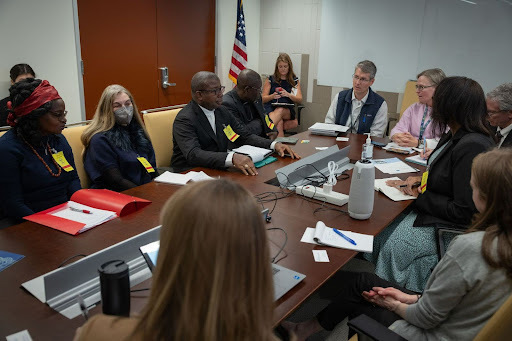
USAID met with a delegation of faith leaders from Côte d’Ivoire. Photo by Jack Gordon for CRS.
|
|
|
Over the past decade, the Sahel region of West Africa has experienced increasingly violent armed conflicts with the rapid emergence of extremist groups affiliated with Al Qaeda, the Islamic State, and Boko Haram. This has led to inter-communal violence that has killed thousands and resulted in the displacement of millions.
Last month, senior leaders from USAID’s Bureau for Africa; Bureau of Conflict Prevention and Stabilization; and Bureau for Inclusive Growth, Partnerships, and Innovation met with a delegation of faith leaders representing the Catholic Relief Services' Sahel Peace Initiative to hear how religious communities are fostering peace, stability, and social cohesion in West Africa. In 2019, in collaboration with the Catholic Church of West Africa, Catholic Relief Services “launched the Sahel Peace Initiative to raise awareness of the crisis, advocate for change, and mobilize humanitarian and development actions to save lives in Mali, Burkina Faso, Niger, Côte d'Ivoire, and Ghana.”
The delegation, which included two Ivorian Catholic Bishops and a representative from the Episcopal Subcommittee on Justice, Peace, and Environment, shared how their communities have been impacted by the conflict, including how their faith communities have worked to support internally displaced persons from the region seeking refuge in Côte d’Ivoire.
|
|
USAID Visits “Nobody’s Listening,”
an Immersive Exhibit Commemorating the Yezidi Genocide
|
|
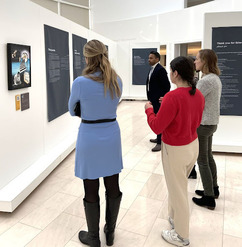 Ryan D'Souza, the exhibit curator, walks the FBNP team through the exhibit. Photo Credit: Gretchen Birkle
|
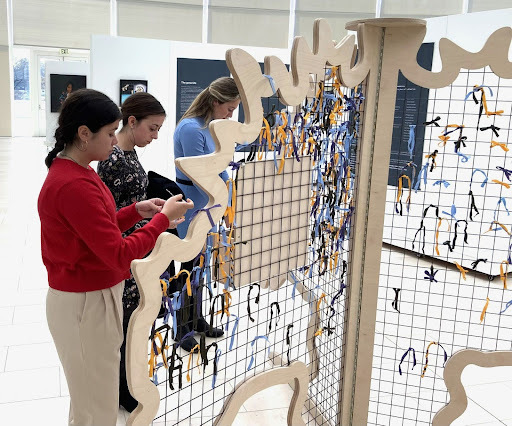 The FBNP team ties ribbons to a remembrance tree for the victims and survivors of the Yazidi genocide. Each color of ribbon represents a different call to action for the global community. Photo Credit: Gretchen Birkle
|
|
|
In December, FBNP and colleagues from USAID’s Middle East Bureau visited “Nobody's Listening,” an immersive exhibit currently on display at the U.S. Institute of Peace aimed at raising awareness of the brutal genocide committed against the Yezidi community by ISIS in the summer of 2014. The exhibit, a project from Yazda and Upstream, in collaboration with Easy Tiger, uses photography, art, and virtual reality technology to explore the consequences of the genocide and its devastating effect on persecuted communities and their cultural heritage. The virtual reality technology and design of the “Nobody’s Listening” program were funded by USAID.
The “Nobody’s Listening” exhibit runs through January 26, 2024, and is open and free to the public on most Mondays, Thursdays, and Fridays from 10:00 a.m. to 4:00 p.m. EST. Please note that the exhibit discusses events and themes of a sensitive nature. It is recommended for audiences aged 16 years and older.
|
|
Happy Holidays from USAID’s Center for Faith-Based and Neighborhood Partnerships and Friends! |
|
|
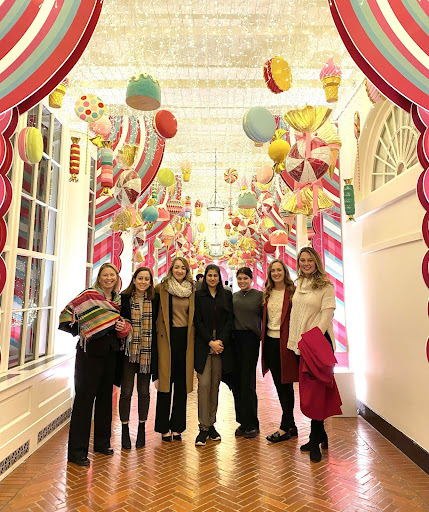
USAID’s Local, Faith, and Transformative Partnerships Hub Director Dr. Catie Lott (left) and the FBNP team visited the White House for a holiday tour. Not pictured: FBNP’s Monica McLin and Courtney Brode Roberts were in Jakarta, Indonesia, delivering USAID’s “Working with Religious Actors in Diplomacy and Development” training.
|
|
 |
|
ICYMI: On November 21, 2023, USAID announced more than $4.1 million in additional humanitarian assistance for people affected by the situation in Nagorno-Karabakh. With this additional assistance, USAID is supporting efforts on the ground to provide urgently needed humanitarian assistance for almost 74,000 vulnerable refugees and displaced persons who are sheltering in Armenia. This funding will increase life-saving food assistance and provide humanitarian protection and emergency shelter. |
 |
|
Commemorating World AIDS Day: Observed every year on December 1, World AIDS Day is an opportunity to celebrate the progress made in the fight against HIV and to recommit to the work that remains to be done. This year in a video message, Administrator Power marked the occasion by highlighting the remarkable achievements of the President’s Emergency Plan for AIDS Relief (PEPFAR) - 25 million lives and 5.5 million babies born HIV free - and calling attention to the work that must continue, as over 1.5 million children are still living with HIV and only 57 percent are getting the life-saving treatment they need. Learn more about PEPFAR here. |
 |
|
Funding Opportunity: The People-to-People Partnership for Peace Fund Grant Activity is now accepting concept note applications. Applications may be submitted for potential awards by February 9, 2024, under two categories: small awards ($100,000-$500,000 each), as well as larger awards (up to $5 million each). Under the Nita M. Lowey Middle East Partnership for Peace Act (MEPPA), the People-to-People Partnership for Peace Activity works to strengthen grassroots linkages between Israelis and Palestinians to address common challenges and enhance peacebuilding momentum to affect institutional and policy change. For more information on this opportunity and how to apply, visit the award page at Grants.gov. |
 |
|
New Feed For Funding Opportunities: WorkwithUSAID.gov has added a Funding Feed that pulls in USAID-specific opportunities from SAM.gov and Grants.gov every day. This tool reduces burdens for our partners by enabling them to perform just one search, rather than separate searches on SAM.gov and Grants.gov. Also, check out the Sub-Opportunities Portal where you can preview and apply for opportunities being offered by USAID’s prime implementing partners, who may seek subcontractors or subawardees to assist with specialized expertise or on-the-ground support. Check the Funding Tab daily for new USAID opportunities for your organization or business. |
 |
|
Save the Date: On January 17, 2024, join USAID’s Industry Liaison Team at 10:00 a.m. ET on Webex to learn about how to work with USAID. We will share tips and resources that will help your organization partner with the Agency -- such as how to find funding opportunities, requirements to be a USAID partner and more! We will also present a walkthrough of the WorkwithUSAID.gov website. Register for the event here. |
 |
|
FOLLOW US: Interested in learning more about USAID’s engagement with faith-based and community organizations? Follow the Local, Faith, and Transformative Partnerships Hub’s X account, @USAIDConnects, for frequent updates on events, opportunities for partnership, success stories, and more! |
|
|
|
The Center for Faith-Based and Neighborhood Partnerships is part of the Local, Faith, and Transformative Partnerships (LFT) Hub.
The LFT Hub focuses on strengthening USAID’s ability to partner with non-traditional and diverse actors including local, faith-based, and community organizations; schools and hospitals; minority-serving institutions; foundations; diaspora communities; cooperatives; and volunteer organizations. Learn more about how LFT is harnessing the power of partnerships through the following:
|
|
WE WANT TO HEAR FROM YOU! SHARE YOUR THOUGHTS AND IDEAS FOR FUTURE STORIES:
 |
|
VISIT US ONLINE
|
 |
|
FOLLOW US ON TWITTER
|
 |
|
SUBSCRIBE TO OUR NEWSLETTER
|
|
|
|
|
|