August 2023
We support community-led programs to build peace and resilience.
U.S. Ready-to-Eat Food Donation Will Help People Fleeing Conflict in Sudan
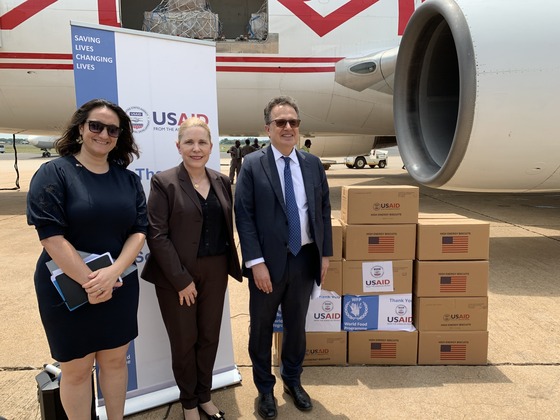 U.S. Ambassador to South Sudan Michael J. Adler, right, at Juba airport for the arrival of U.S.-donated food assistance, with Acting USAID Mission Director Rhonda Shire, center, and USAID Humanitarian Affairs Office Director Kristina Ortiz, left. Photo: Victor Lugala/USAID
U.S. Ambassador to South Sudan Michael J. Adler and USAID staff on July 25 welcomed the arrival at Juba International Airport of 40.5 metric tons of U.S.-donated, high-energy biscuits—protein-rich, ready-to-eat food that is urgently needed to help 45,000 people who recently arrived in South Sudan after fleeing violence in Sudan. The biscuits will be distributed at reception centers at border locations including Renk, Aweil, Bentiu, and Abyei, and given to South Sudanese returnees for onward river travel on routes such as Renk to Malakal—a journey that can take up to five days by boat. "The United States has already pledged over $30 million to provide emergency food, health, nutrition, protection, shelter, water, and sanitation assistance to those who are fleeing the conflict in Sudan," Ambassador Adler said. "The July 25 shipment of high-energy biscuits, worth $75,000, is but a fraction of the over $300 million in food assistance the United States has provided to the South Sudanese this year alone and almost $1.8 billion over the past five years.”
USAID Team Visits Renk, Epicenter of the Influx of Migrants Fleeing Sudan
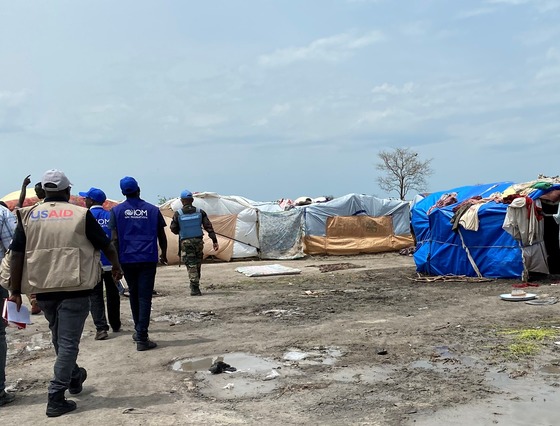 A USAID team visited a camp in Renk for people who fled conflict in Sudan. Photo: Courtney Cox/USAID
A USAID team visited Renk, Upper Nile State, on July 6 to assess the needs of those fleeing conflict in Sudan and monitor humanitarian response efforts. The team visited three of the eight sites temporarily accommodating returnees and refugees, including the transit center in Renk town created to assist the influx of people on their onward movement beyond informal settlements. Humanitarian organizations, including USAID partners, are providing emergency shelter, health care, food, treatment for malnutrition, protection, and water and sanitation services within the transit center and other sites.
Youth Who Missed Out on School Learn to Read, Write, Count
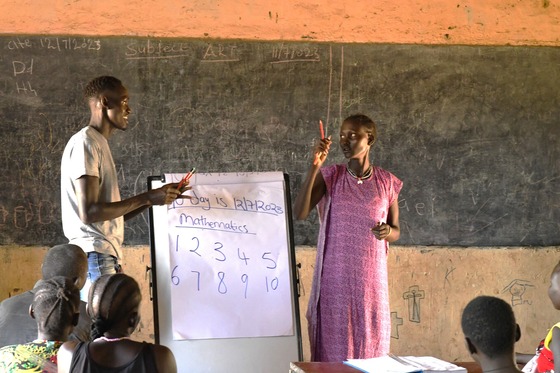 Josephine Nakuru counts numbers in class in Riwoto, Kapoeta North County. Photo: USAID Youth Empowerment Activity
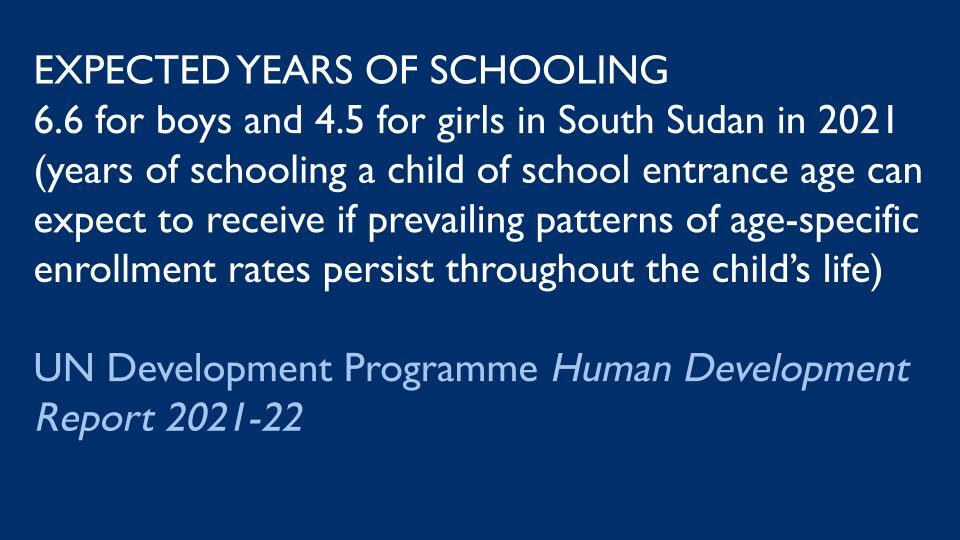
In the remote village of Riwoto, Kapoeta North County, Eastern Equatoria State, more than 200 rural youth who have never been to school are learning to read, write, and count through USAID's Youth Empowerment Activity, which is also training the youth how to start and run small businesses, find work, speak basic English, access sexual and reproductive health information, and contribute to social cohesion in their communities. Josephine Nakuru, 19, is one of the learners. A farmer and mother, she sells local brew to feed her young family, and is determined to improve her living standard. “The alphabet will help me in reading and writing names of my customers, and the numbers will help me in counting items for the shop, counting money, and managing profits,” said Nakuru.
USAID Introduces Rural Mechanized Farming to Boost Food Production
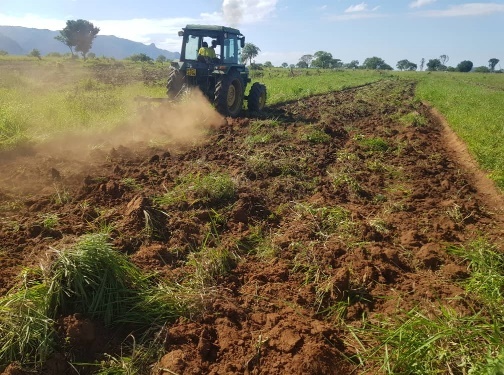 A tractor is used to plow land in Jur River County. Photo: USAID Resilience through Agriculture in South Sudan
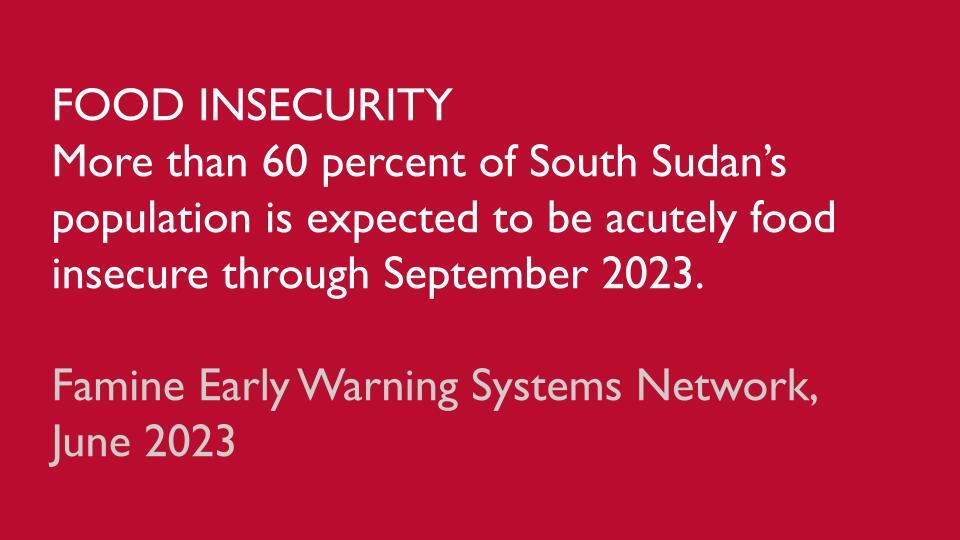
USAID Resilience through Agriculture in South Sudan Activity has expanded mechanized farming to seven counties—Akobo, Budi, Duk, Jur River, Kapoeta North, Pibor, and Wau—where farmers have cultivated more than 6,207 hectares using tractors and ox plows. Farmers in South Sudan's rural communities have long used only basic tools for digging, such as hoes and shovels, limiting what they could produce. USAID's agriculture support has enabled farmers to expand their operations, with the goals of strengthening their livelihoods, increasing food production, and reducing food insecurity in South Sudan.
Peacebuilding, Democracy, Health, Youth Activities Making Progress in Wau
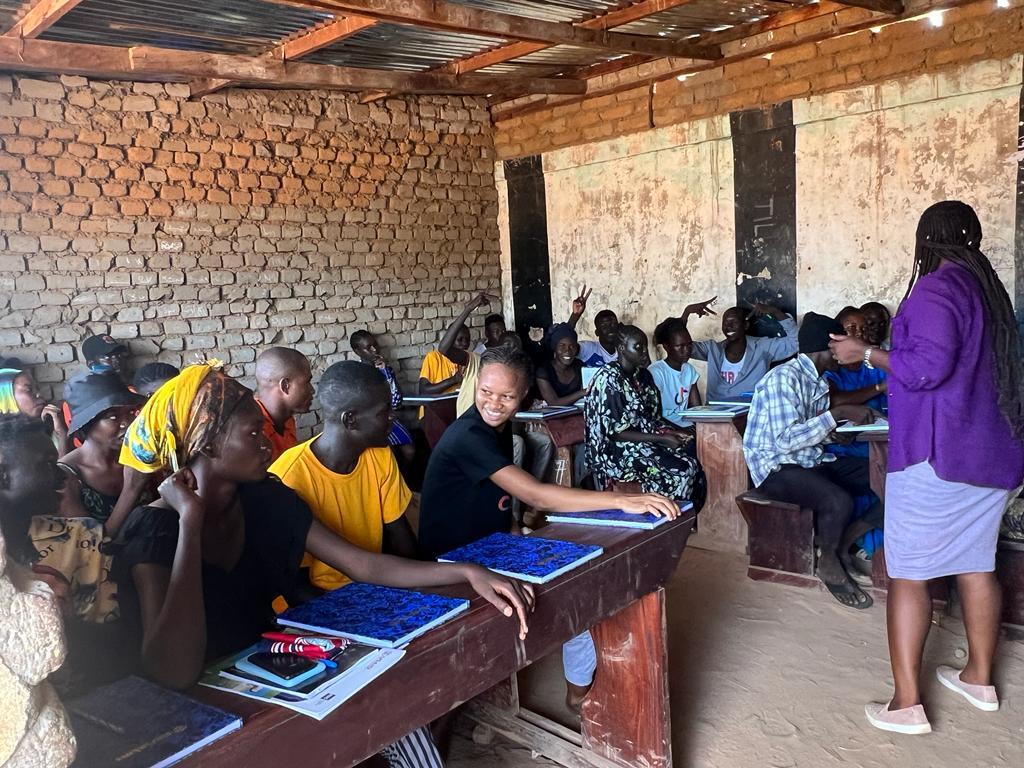 A USAID entrepreneurship class for youth in Wau. Photo: USAID Youth Empowerment Activity
South Sudanese in Wau County, Western Bahr El Ghazal State, who met USAID staff during a July 19-21 visit voiced strong support for the positive effects of USAID activities in helping to reduce conflict between farmers and pastoralists; equipping young people with skills to mentor other youth in basic literacy, numeracy, work readiness, and entrepreneurship; and providing critical health services such as HIV prevention, testing, and care. The team met with the State Relief and Rehabilitation Commission and county commissioners, station managers of the local radio station Voice of Hope, traditional chiefs, youth, and people living with HIV.
USAID Health Services Help People Living with HIV in Tambura
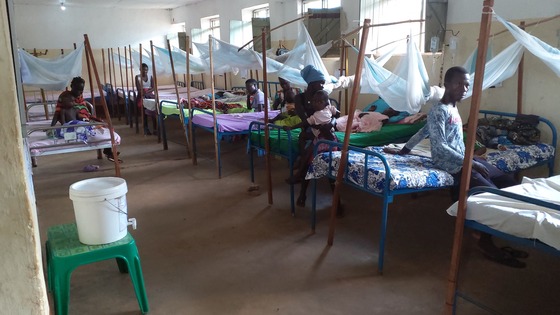 A hospital ward in Tambura. Photo: IntraHealth
A USAID team visited Tambura, Western Equatoria State, to monitor USAID-funded health activities. Western Equatoria State has the highest prevalence of HIV in South Sudan at 7.4 percent, according to the 2022 U.S. President's Plan for Emergency AIDS Relief Country Operational Plan for South Sudan. In 2021, intercommunal violence caused suspension of health services for people living with HIV in the Tambura area, except for minimum support in a camp for internally displaced persons, where HIV testing, drug refills, and counselling services continued. USAID resumed health services in Tambura in late 2021. As of June 2023, 2,486 people living with HIV in Tambura were receiving antiretroviral drugs.
Volunteers Combat Misinformation, Stigma on HIV with Outreach, Education
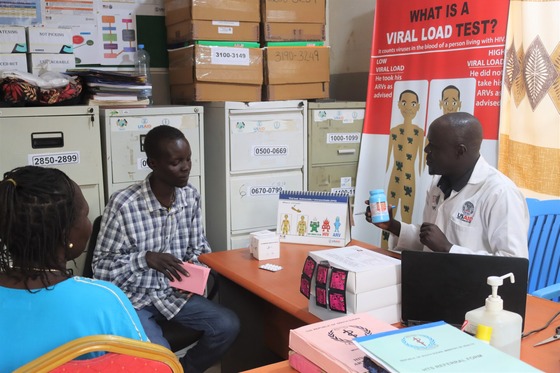 A community outreach volunteer (left) accompanies a client for antiretroviral therapy refill at a health facility in Juba. Photo: Advancing HIV & AIDS Epidemic Control Activity
To combat persistent lack of information and stigma regarding HIV/AIDS in South Sudan, USAID’s Advancing HIV & AIDS Epidemic Control Activity trained 161 community outreach volunteers to provide information on HIV and treatment for the virus, encouraging clients to proactively maintain good health. They refill medication for clients who cannot access health facilities, encourage them to join support groups to share their experiences with other people living with HIV, and help them disclose their status to trusted family members for support. This USAID initiative supports 11,345 clients in South Sudan with antiretroviral therapy, enabling them to maintain good health. “I used to be ashamed of living with HIV. However, through the support of facility health workers, I accepted my status. Now I help others accept and stay on medication,” said one client.
Professional Internship Prepares Women for Career in Humanitarian Security
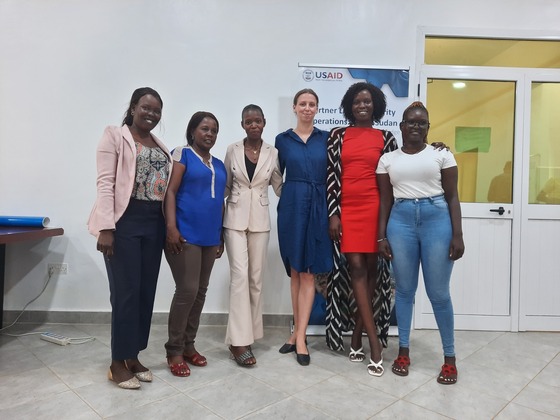 The Women in Security internship program's most recent graduates, with USAID Partner Liaison Security Operation (PLSO) South Sudan Deputy Operations Manager Veronika Polgar. Left to right: Margaret Victor Keri, Josephine Batista Nadir, Janifa Bilal Sapana, Veronika Polgar, Atak Bakita, Tigow Geng Lony. Photo: PLSO South Sudan
To help women in South Sudan prepare for a career in humanitarian safety and security, where they are significantly underrepresented, USAID since 2021 has sponsored the Women in Security internship through a program that provides security information to USAID's many partner organizations across South Sudan, to help them operate safely while delivering USAID assistance to the people of South Sudan. A dozen women have completed the six-month training program, which includes sessions by security experts, access to internationally certified online learning modules on risk and security management, and on-the-job placement with host organizations, including USAID implementing partners. Former interns have secured employment with a UN agency, humanitarian organizations, and USAID Partner Liaison Security Operations South Sudan. “Women are most affected by the security situation in South Sudan, and we are the least represented in this sector. I am very grateful for the Women in Security internship program for giving us a chance," said Tigow Geng Lony.
USAID COVID-19 Support Tracks Virus Variants to Protect Public Health
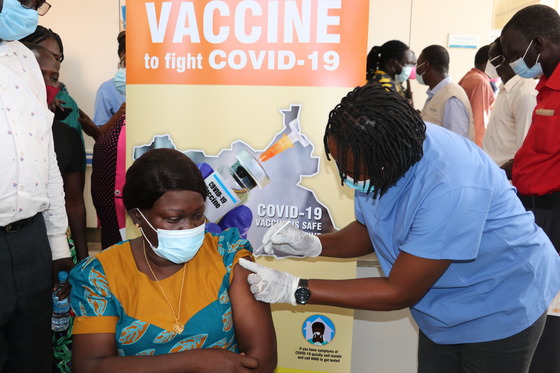 A woman in South Sudan is vaccinated for COVID-19. Photo: World Health Organization South Sudan
USAID has supported the World Health Organization in South Sudan to test and track COVID-19 variants, which indicates how the virus spreads and changes, so health professionals can make informed decisions to protect public health. This video describes why this has been important in South Sudan.
|