|
MARCH 2025
“Hazmat Highlights” is the FAA’s Office of Hazardous Materials Safety monthly newsletter with public updates from government sources related to the safe transportation of hazardous materials by air.
|
|
When in Doubt, Leave it Out
Battery transportation safety is a priority, and we provide extensive resources for passengers
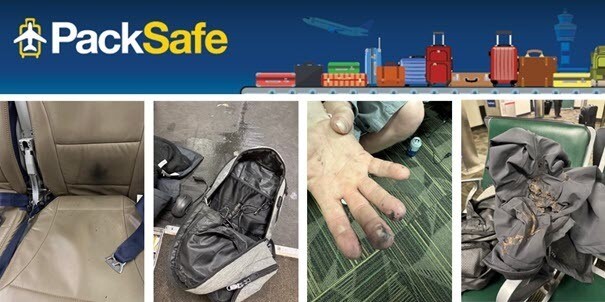 Recently a Southwest Airlines Flight landed safely at Reno/Tahoe International Airport and after arriving in the gate area, the flight crew reported a battery fire on board. Passengers evacuated the aircraft and were escorted back into the terminal.
In 2024, at least 84 lithium battery incidents on commercial aircraft were reported to the FAA, marking a record number of reported incidents in a single year, averaging over one a week.
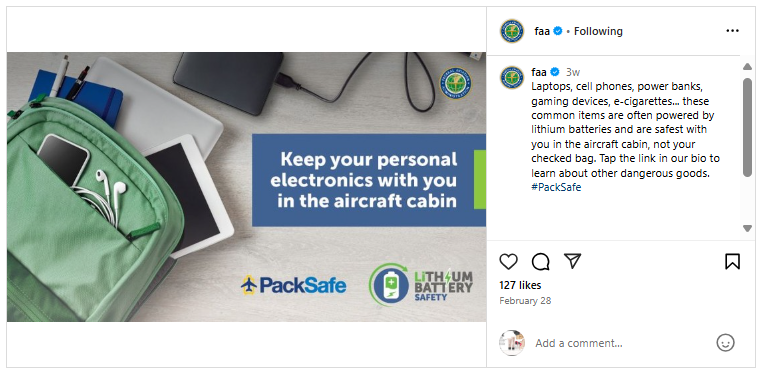
Battery transportation safety is a priority for the FAA and we provide extensive resources for passengers. The FAA recommends that passengers keep cell phones and other devices nearby in the cabin to quickly access them if necessary. Flight crews are trained to recognize and respond to lithium battery fires in the cabin. Passengers should notify the flight crew immediately if their lithium battery or device is overheating, expanding, smoking or burning.
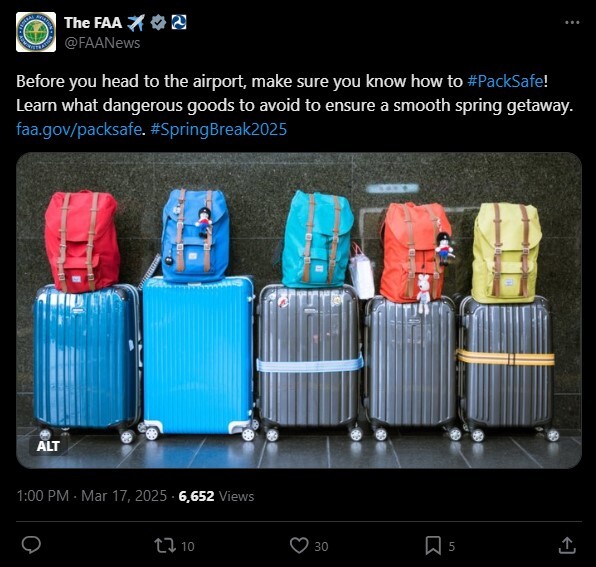
Learn more about how to PackSafe through our videos, checklists, and interactive hazardous material chart.
|
|
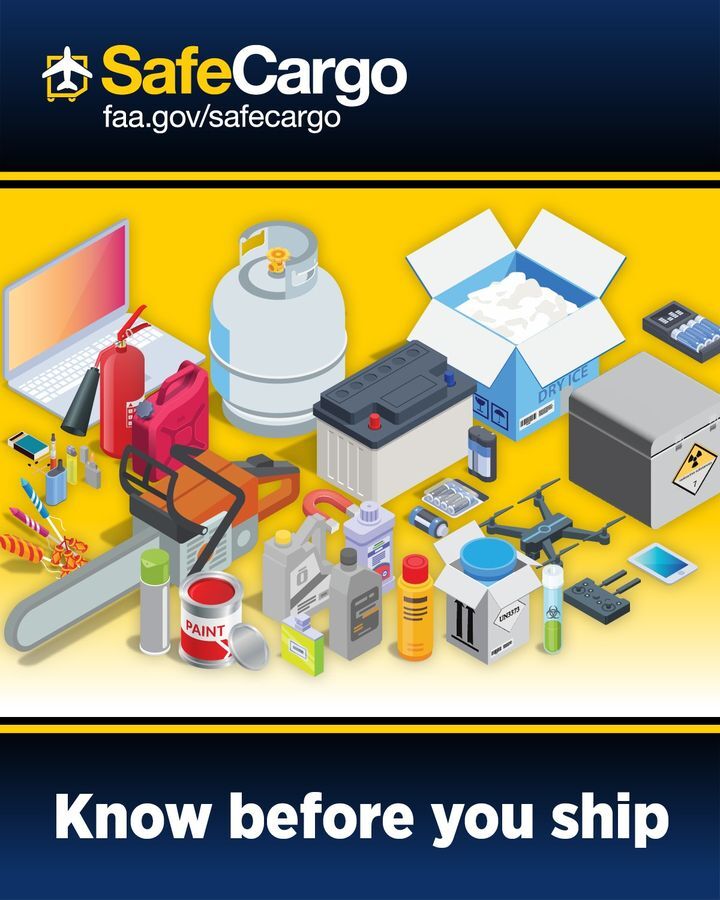
Are Your Products Safe to Ship?
Businesses: Are your products safe to ship? Find out if your products could be dangerous and how to ship them to your customers safely by air. Check with your shipping company and learn more at www.faa.gov/safecargo.
|
|
Lithium Battery Air Incidents Involving Smoke, Fire or Extreme Heat
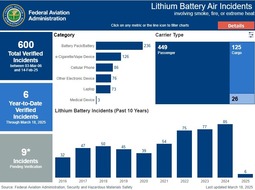
Note: These are lithium battery related events involving smoke, fire, or extreme heat that the FAA is aware of and should not be considered a complete listing of all such incidents. The methods of collecting and recording these incidents and the data involved has changed over the life span of this chart as the FAA’s Office of Hazardous Materials Safety has evolved. The incident summaries included here are intended to be brief and objective. They do not represent all information the FAA has collected, nor do they include all investigative or enforcement action taken.
This chart was last updated on March 18, 2025.
|
|
|

You can find all prior ACs, SAFOs, InFos, Orders & Notices, and other Dynamic Regulatory System (DRS) material by clicking on the buttons below.
|
|
 RECENT NOTICES
|
|
 Opportunity for Collaboration: RD&T Releases RFI on Pressure Relief Devices
The RD&T Branch is pleased to announce the release of a Request for Information (RFI) titled “Determining the Effectiveness of Pressure Relief Devices (PRDs) on Composite Overwrapped Pressure Vessels (COPVs)”. This RFI aims to gather more information to inform bonfire testing for various PRDs on different COPVs. The knowledge gained will help guide the RD&T program’s future research efforts and support the development of improved safety guidance for COPVs. We invite professionals and experts in the field of COPVs to contribute their expertise by responding to the RFI. Your input is invaluable in advancing safety and innovation in this important area.
Read the RFI on the Federal Register here. We look forward to your responses and collaboration!
PHMSA's Newsroom
Read the latest from PHMSA's newsroom by clicking here.
|
|
Aviation Safety Reporting System (ASRS) 'CALLBACK' Newsletter Highlights
What Would You Have Done?
This month, CALLBACK again offers the reader a chance to “interact” with the information given in a selection of ASRS reports.
Read the full newsletter from ASRS here.
|
|
|
Are You REAL ID Ready?
 On May 7, 2025, U.S. travelers must be REAL ID compliant to board domestic flights and access certain federal facilities.
Learn more at TSA's REAL ID page.
|
|
Date: March 13, 2025
Hazard: The lithium-ion batteries can overheat and ignite, posing a fire hazard to consumers.
Read more about this recall.
|

Date: March 20, 2025
Hazard: The lithium-ion battery in the recalled power banks can overheat and ignite, posing fire and burn hazards to consumers.
Read more about this recall.
|
|
|
|
|