|
JANUARY 2025
“Hazmat Highlights” is the FAA’s Office of Hazardous Materials Safety monthly newsletter with public updates from government sources related to the safe transportation of hazardous materials by air.
|
|
Airline Passengers and Batteries
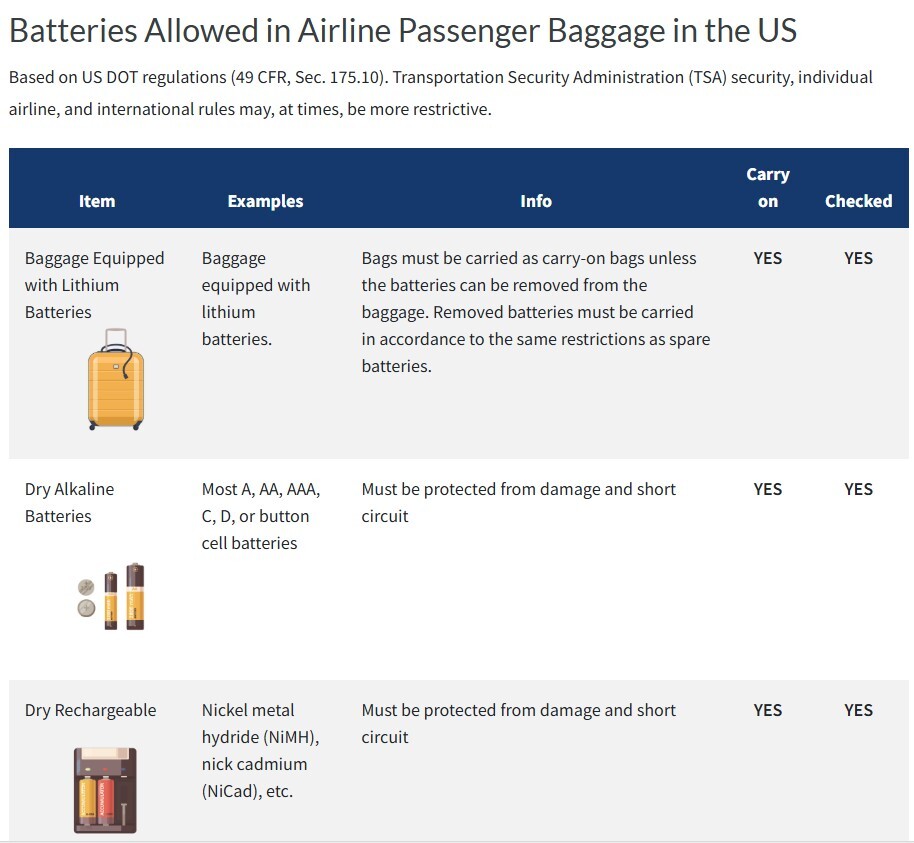
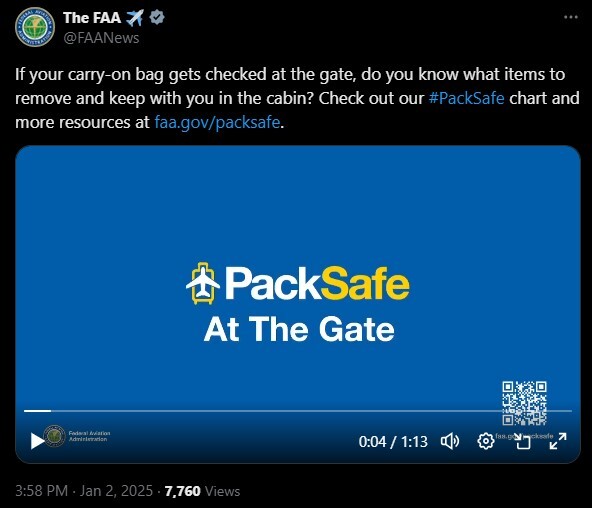
The FAA published its new Airline Passengers and Batteries Resources webpage on FAA.gov to provide passenger-related information regarding traveling with batteries in an easy-to-use chart that addresses several battery types and common items passengers might bring. The page also answers frequently asked questions related to why batteries should be transported in carry-on baggage, how to determine the watt-hour rating, quantity limitations, and damaged battery restrictions.
Learn more at www.faa.gov/packsafe.
|
|
Is Cargo Safety Part of Your Logistics Plan?
If your company ships or manages products that include dangerous goods, be sure cargo safety is part of your logistics plan. Learn about shipping lithium batteries, aerosols and more as cargo on aircraft at www.faa.gov/safecargo.
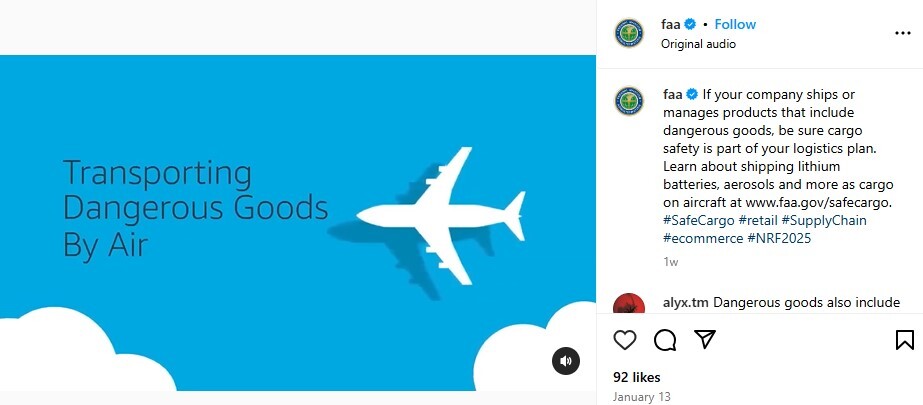 Click here to visit the FAA on Instagram.
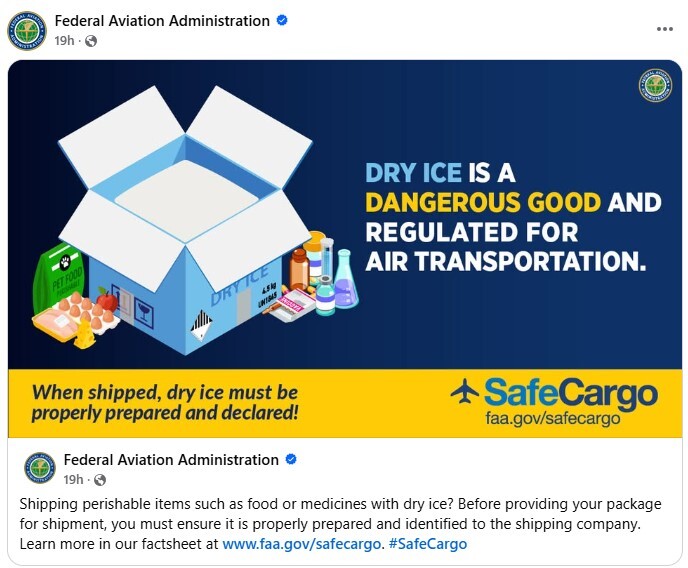
Dry Ice is a Dangerous Good
Shipping perishable items such as food or medicines with dry ice? Before providing your package for shipment, you must ensure it is properly prepared and identified to the shipping company. Learn more in our factsheet at www.faa.gov/safecargo.
 Click here to visit the FAA on Facebook.
|
|
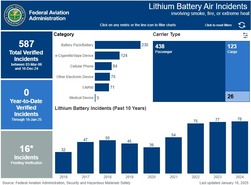
Lithium Battery Air Incidents Involving Smoke, Fire or Extreme Heat
Note: These are lithium battery related events involving smoke, fire, or extreme heat that the FAA is aware of and should not be considered a complete listing of all such incidents. The methods of collecting and recording these incidents and the data involved has changed over the life span of this chart as the FAA’s Office of Hazardous Materials Safety has evolved. The incident summaries included here are intended to be brief and objective. They do not represent all information the FAA has collected, nor do they include all investigative or enforcement action taken.
This chart was last updated on January 16, 2024.
|
|
|

You can find all prior ACs, SAFOs, InFos, Orders & Notices, and other Dynamic Regulatory System (DRS) material by clicking on the buttons below.
|
|
 RECENT NOTICES
|
|
 Spotlight: Enforcement Discretion on New International Standards
Happy New Year! As we move into 2025, we understand that many offerors and carriers of hazardous materials in international transport will soon be adhering to new requirements—including the 2025–2026 International Civil Aviation Organization's Technical Instructions for the Safe Transport of Dangerous Goods by Air (ICAO Technical Instructions) and Amendment 42-24 of the International Maritime Organization, International Maritime Dangerous Goods Code (IMDG Code).
Currently, the Hazardous Materials Regulations (HMR; 49 CFR Parts 171-180) authorize use of the 2023–2024 ICAO Technical Instructions and Amendment 41-22 of the IMDG Code. PHMSA is evaluating whether to adopt the updated ICAO Technical Instructions and new Amendment to the IMDG Code in a future rulemaking.
Read PHMSA's full article here.
PHMSA's Newsroom
Read the latest from PHMSA's newsroom by clicking here.
|
|
Aviation Safety Reporting System (ASRS) 'CALLBACK' Newsletter Highlights
When VMC Turns IMC
This month, CALLBACK shares incidents that resulted in hazards and subsequent domino issues from flying in or into Instrument Meteorological Conditions (IMC). The hazards and concerns represent significant threats to pilots, regardless of qualification, experience, or aircraft capability.
Read the full newsletter from ASRS here.
|
|
|
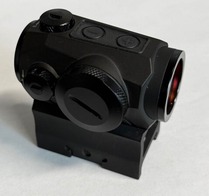
Date: January 8, 2025
Hazard: The recalled firearm sights contain a button cell battery that violates the mandatory federal regulations for consumer products containing button cell batteries because the button cell batteries can be easily accessed, posing an ingestion hazard. The products include a button cell battery which is not in child-resistant packaging as required by Reese’s Law. In addition, the products do not bear the required warnings. When button cell batteries are swallowed, the ingested batteries can cause serious injuries, internal chemical burns and death, posing an ingestion hazard to children.
Read more about this recall.
|
|
|
|
|