|
AUGUST 2024
“Hazmat Highlights” is the FAA’s Office of Hazardous Materials Safety monthly newsletter with public updates from government sources related to the safe transportation of hazardous materials by air.
|
|
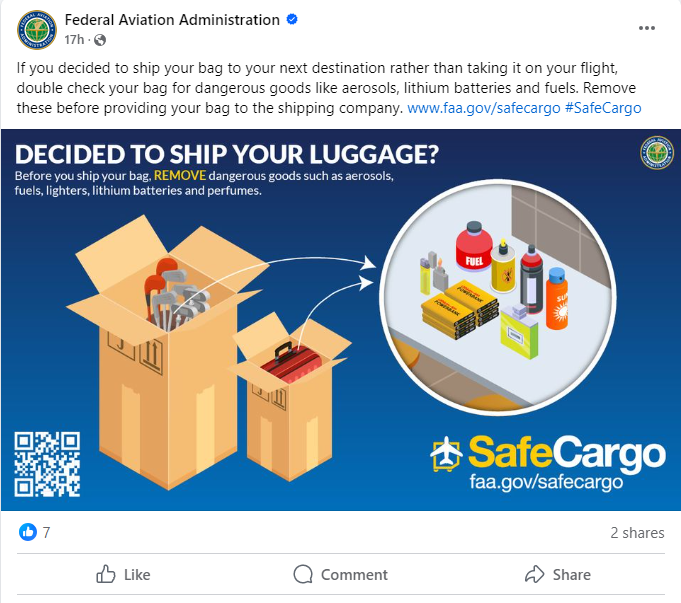
Decided to Ship Your Luggage?
If you decided to ship your bag to your next destination rather than taking it on your flight, double check your bag for dangerous goods like aerosols, lithium batteries and fuels. Remove these before providing your bag to the shipping company. www.faa.gov/safecargo
 Click here to visit the FAA on Facebook.
|
|
PackSafe At The TSA Checkpoint
Laptops, lighters, e-cigarettes, lithium batteries, paint, aerosols, fuel... these are just a few of the many common items you use everyday that are considered dangerous goods and have restrictions on how or if they can be packed in your luggage for air travel. Before you head to the TSA security checkpoint, find out what items should not be in your carry-on bag. Learn more about what items may need to be limited or left behind when you pack for your next trip at http://www.faa.gov/packsafe.
Click here to watch the short video PackSafe At The TSA Checkpoint.
Check out the PackSafe Resources for Passengers for more videos and information to help you plan your trip.
|
|
|
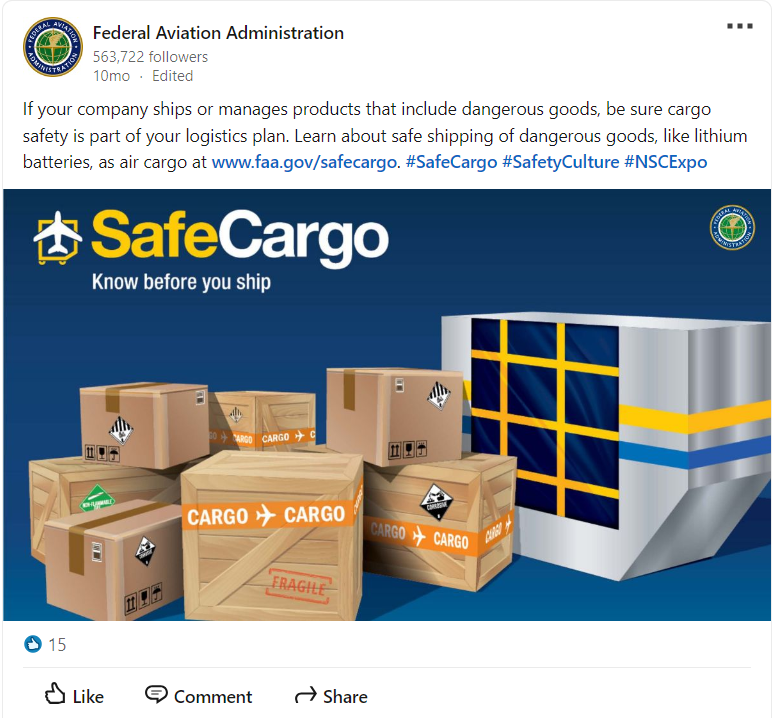
Is Cargo Safety Part of Your Company's Logistics Plan?
If your company ships or manages products that include dangerous goods, be sure cargo safety is part of your logistics plan. Learn about safe shipping of dangerous goods, like lithium batteries, as air cargo at www.faa.gov/safecargo.
Click here to visit the FAA on Linkedin.
|
|
Dangerous Goods Operations Manual Information
A certificate holder's Dangerous Goods (aka Hazardous Materials) Operations and Training program constitutes the foundation for safely transporting dangerous goods by air. Improperly prepared and mismanaged dangerous goods can increase the risks to passengers, crew, aircraft, property, and environment. Mitigation of the hazards and risks posed by these materials are best addressed by individual certificate holder within the context of their own systems.
Read more about Dangerous Goods Operations Manuals here.
|
|
|
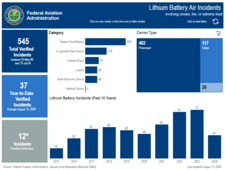
Lithium Battery Air Incidents Involving Smoke, Fire or Extreme Heat
Note: These are lithium battery related events involving smoke, fire, or extreme heat that the FAA is aware of and should not be considered a complete listing of all such incidents. The methods of collecting and recording these incidents and the data involved has changed over the life span of this chart as the FAA’s Office of Hazardous Materials Safety has evolved. The incident summaries included here are intended to be brief and objective. They do not represent all information the FAA has collected, nor do they include all investigative or enforcement action taken.
This chart was last updated on August 15, 2024.
|
|
|

Check back next month for new ACs, SAFOs, InFos, orders and notices!
You can find all prior ACs, SAFOs, InFos, orders and notices by clicking on the buttons below.
|
|
 RECENT NOTICES
|
|
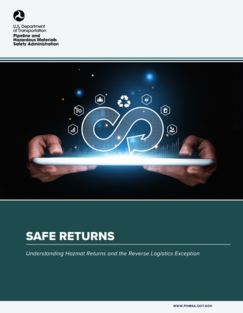
Do You Deal With Hazmat Returns?
Many consumer products are classified as, or contain, hazardous materials (hazmat), due to the risks they pose to health, safety, and property when in transportation. The Hazardous Materials Regulations (HMR; 49 CFR Parts 171 – 180) set requirements for the transportation of these materials in commerce, including classification, packaging, hazard communication, training, and more. Hazardous materials pose a unique challenge in reverse logistics, as consumers, retail employees, and others in the returns process may lack the proper training and awareness to package and ship these materials safely.
Read PHMSA's full Safe Returns brochure here.
|
 Notice of Public Meetings: International Standards on the Transport of Dangerous Goods
PHMSA's OHMS will be hosting public forums in advance of four international meetings to allow the public to give input on current proposals being considered by the International Civil Aviation Organization's (ICAO) Dangerous Goods Panel (DGP) and the United Nations Sub-Committee of Experts on the Transport of Dangerous Goods (UNSCOE TDG). The international meetings include:
- ICAO TDG Working Group 24 (WG/24), tentatively scheduled for October, in Montreal, Canada.
- The 65th session of the UNSCOE TDG, scheduled for November 25 to December 3, 2024, in Geneva, Switzerland.
Each of these public meetings will be held approximately two weeks before the corresponding international meeting at U.S. Department of Transportation (DOT) Headquarters in Washington, DC (1200 New Jersey Avenue SE, West Building), with a remote participation option available. Specific information for each meeting, including date, time, conference call-in number, and details for advance registration will be posted when available on PHMSA’s website under “Upcoming Events.”
The Federal Register announcement can be found here.
PHMSA's Newsroom
Read the latest from PHMSA's newsroom by clicking here.
|
|
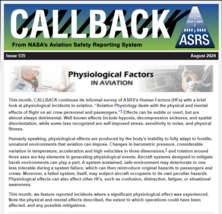
Aviation Safety Reporting System (ASRS) 'CALLBACK' Newsletter Highlights
The Dog Days of Summer
This month, CALLBACK features reported incidents where a significant physiological effect was experienced. Note the physical and mental effects described, the extent to which operations could have been affected, and any possible mitigations.
Read the full newsletter from ASRS here.
|
|
|
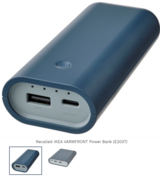
Date: August 15, 2024
Hazard: The power banks can overheat, posing a fire hazard.
|
|
|
|
|
|