Welcome to the Children, Young People and Learning (CYPL) SEND & Inclusion newsletter. This is a dedicated publication for professionals and parent carers who are champions of SEND in West Sussex.
Please share this newsletter with colleagues and parent carers. If you know of anyone who would like to be added to the distribution list, you can subscribe here.
Contents
Updates
- Welcome from Claire Hayes and introduction to Jo Hill
- SEND Reform update
- Response to feedback from parents, presented by the West Sussex Parent Carer Forum at the June SEND and Alternative Provision Board
- A unique opportunity to learn from autistic children, young people and adults: Autistic and Wonderfully Wired conference
- Local Area SEND Inspection
- Quality Assurance update
- Specialist Education Advice and Outreach Service (SEAOS) Impact 2025 - 2026: Strengthening Inclusion Across West Sussex
- Guide to SEND Services on the Local Offer
- The WSCC Autism Action Award (AAA)
Working with our partners
- New resources to support school age vaccinations for children with SEND
- West Sussex Parent Carer Forum
Spotlight
- Selective or Situational Mutism: October is Selective Mutism Awareness Month
Events
- SEND courses for professionals
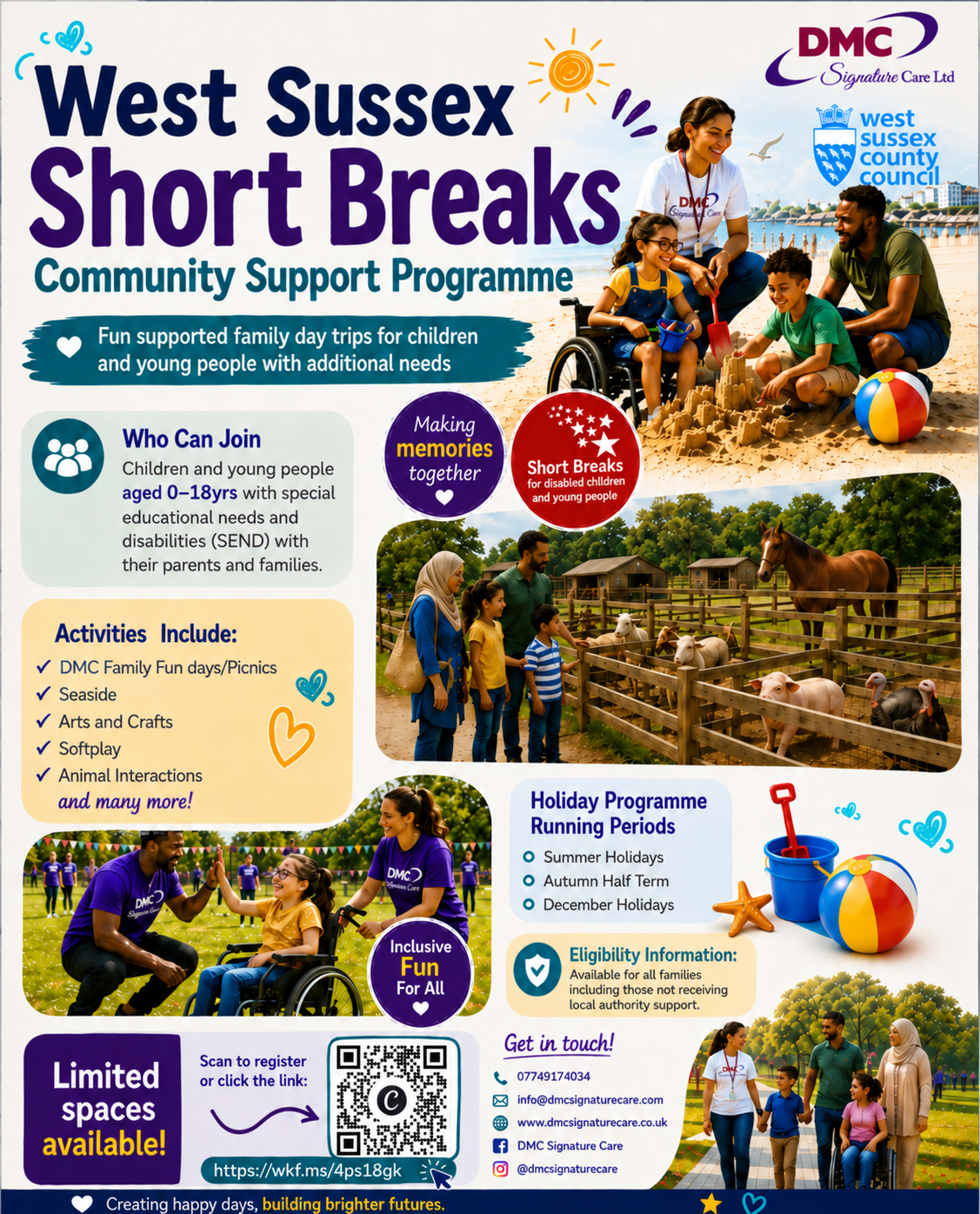
- West Sussex Short Breaks
- RISE Partnership Online Training Programme 2026/27: a programme of national training


Welcome to the new academic year
Welcome back to a new academic year. We hope you and your families had the opportunity to enjoy a restful summer break and spend quality time together.
As we settle into the 2026/27 school year, we would like to share updates on some important SEND and inclusion developments taking place across West Sussex.
Interim SEND Reform Implementation Lead
We are pleased to welcome Jo Hill, who has joined West Sussex as our Interim SEND Reform Implementation Lead.
Jo brings extensive experience in SEND services and has previously worked within West Sussex. In her new role, she will be supporting the implementation of the West Sussex SEND Reform Plan and working with schools, families, and partner organisations to help improve outcomes and experiences for children and young people with SEND.
|

Jo said:
"I'm delighted to be returning to West Sussex and taking on this important role. Over the coming months, I will be working closely with colleagues, schools, and our wider SEND community to help drive positive change and ensure that children and young people with SEND can access the support they need to thrive.
I look forward to building relationships with families, SENCOs, and partners across the county, and to sharing updates on our progress as this work develops."
If you would like to get in touch with Jo, you can contact her by email at jo.hill@westsussex.gov.uk.
We look forward to keeping you informed about SEND Reform developments and working together to improve outcomes for children and young people with SEND across West Sussex.
|

Education, Health and Care Needs Assessments (EHCNAs)
West Sussex continues to receive increasing numbers of requests for Education, Health and Care Needs Assessments (EHCNAs). This rise in demand is placing significant pressure on SEND services across the county.
Alongside responding to this demand, work is continuing on the West Sussex SEND Reform Programme. We are currently in the mobilisation phase, putting in place the workforce, structures and arrangements needed to support the delivery of the programme and improve services for children and young people with SEND and their families.
Local Inclusion Networks (LINs)
As part of SEND Reform, West Sussex is developing Local Inclusion Networks (LINs), which will become part of a future locality-based support offer, building on the principles of the Experts at Hand model proposed by the Department for Education.
LINs are intended to bring together specialist expertise and services to work more closely with schools and education settings. Their aim is to strengthen collaboration, provide earlier support for children and young people, and help meet needs within local communities wherever possible.
Further information about the initial LINs offer will be shared through engagement activities with schools. The intention is that LINs will support both maintained schools and academies.
Inclusion bases
An ‘inclusion base’ is an overarching term that describes a dedicated space within a mainstream school, where children and young people with special educational needs, or those requiring behavioural or pastoral support, can access targeted teaching and specialist interventions delivered by a teacher-led team.
There are two types of inclusion bases.
1. Specialist Inclusion Bases
In West Sussex, these were previously known as Specialist Support Centres (SSCs). In other areas, they were known variously as:
- SEN Unit
- Resourced Provision
- Pupil Support Unit
These SSCs receive funding from the Local Authority and offer places to children with Education Health and Care Plans. In line with the Department for Education’s changing terminology, these settings will now be referred to as Specialist Inclusion Bases (SIBs).
2. Support Bases
These are dedicated spaces within a mainstream school, where children and young people with special educational needs, or those requiring behavioural or pastoral support, can access targeted teaching and specialist interventions delivered by a teacher-led team. They are set up and run by the school themselves and support children and young people from within their setting.
|
 |
|
At the June SEND and Alternative Provision Board, the West Sussex Parent Carer Forum delivered a presentation on feedback from parents on education.
You can read the response from Andy Parker, Head of Service, SEND and Inclusion (A), which is published on the Local Offer here.
|
 The West Sussex Autism in Schools Project, part of the Autism and Social Communication team, is delighted to invite parent carers and professionals to a truly unique and inspiring conference.
Developed in collaboration with autism ambassadors from schools across West Sussex, this event provides an invaluable opportunity to hear directly from autistic children, young people and adults. Through their lived experiences, attendees will gain a deeper understanding of the positive messages they would like those supporting them to hear, along with practical suggestions for meaningful and effective support.
 |
|
Conference details
Date: 22 October 2026
Venue: Hickstead Showground
Cost: £20 per ticket
Tickets can be purchased via Eventbrite.
|
What is a SEND Local Area Partnership Inspection?
In a Local Area SEND Inspection, Ofsted and the Care Quality Commission (CQC) look at how well the whole Local Area Partnership works together to identify, assess, and meet the needs of children and young people with SEND.
Who is in the Local Area Partnership?
The partnership includes:
- The Local Authority (West Sussex County Council)
- The NHS Integrated Care Board (NHS Surrey and Sussex Integrated Care Board and NHS services)
- Education providers (schools, colleges, early years settings and alternative provision)
- Social care services
- Other commissioned SEND services and partners who support children and young people with SEND
When will the West Sussex Partnership be inspected?
The West Sussex Partnership was last inspected in 2023. You can read the report and our improvement plans here.
Our next inspection will be any time after November 2026, when Ofsted and CQC will be keen to hear directly from young people, families and the professionals who work with them. You can read more about how to be involved here.
Learning audit cycle
Learning audits take place on a half termly basis and focus on understanding the impact of Education, Health and Care Plans (EHCPs) on outcomes and experiences for children and young people with SEND.
As part of this, we seek feedback from the child/young person and their parent carer, and their education setting. If a child in your education setting is selected for audit, then the auditor will reach out to you by phone or email and invite you to explore your experiences of the EHCP and its impact for the pupil.
Thank you to all schools for your engagement and support throughout this year's audit cycles so far. Your participation has been invaluable in helping us identify strengths and opportunities for improvement.
What have we found?
Two audit cycles have been completed since April 2026, resulting in a total of 29 individual audits. Of these, 66% were graded Good, with one audit identifying Outstanding practice. 28% of audits were graded Requires Improvement, and one audit was graded Inadequate.
As part of the audit process, feedback was received from 10 parent carers and 14 education settings. The findings indicate a strong foundation of SEND practice across the partnership, while also highlighting areas where targeted practice improvement activity is needed to improve consistency in the experiences of children, young people and their families.
Strengths identified include improved outcomes for children and young people, child-centred and strengths-based planning, and effective co-production with families. There were also examples of strong multi-agency working, with provision within plans generally well linked to identified needs and intended outcomes.
Areas for improvement include the timeliness of assessments, annual reviews and EHCP amendments, alongside ensuring plans are consistently updated following annual reviews or significant changes in circumstances. Writing SMART outcomes remains an area for development. Audits also highlighted the need for children's social care and health needs to be more consistently reflected within EHCPs.
Future dates
We are pleased to share the audit cycle schedule for the remainer of 2026/27:
- Autumn 2 Audit Cycle: 9 November – 4 December 2026
- Spring 1 Audit Cycle: 11 January – 5 February 2027
- Spring 2 Audit Cycle: 26 February – 25 March 2027
We look forward to continuing our collaborative approach to quality assurance and improvement.
Back to the floor - preparation for adulthood
In April/May 26 we completed a ‘back to the floor’ event to consider how we support children and families to prepare for adulthood. This involved time spent with practitioners within social care teams and Special Educational Needs Assessment Team (SENAT), alongside audits and workshops.
We found areas of strengths, such as annual reviews consistently focussing on this from year 8/9 and strong examples of Children We Care For being well prepared.
We have an action plan, which we are now progressing to work on the areas of improvement. For example, we found that some of our social care teams would benefit from increasing their knowledge and skills. We also found that children not attending school or with low attendance miss out on support to meet these needs. Overall, we concluded that we should be supporting children from an earlier age to prepare for and plan for greater independence and adulthood.
What do we do with the learning
Our findings are regularly reviewed by leaders across the local partnership to consider implications for practice and inform improvement planning. This includes considering feedback from families received as part of audits.
An example of this is improvements seen in detailing provision within Education Health and Care Plans, which was identified as an area for development. The Educational Psychology Service worked with SENAT to ensure that provision is actionable and in the last two audit cycles this was identified as a strength.
Another example is that quality assurance work around annual reviews has informed a current piece of work to update the annual review form.
We will capture further information about the impact of what we learn and subsequent actions within the you said, we did page on the Local Offer.
Future quality assurance plans
Future plans include a focus on children not in full-time education (or receiving suspensions/exclusions), children known to youth justice service and the quality of social care contributions to Education Health and Care Needs Assessments.
If you have any questions, please get in touch with our Quality Assurance Service by emailing cscqualityassuranceteam@westsussex.gov.uk
|

During 2025-26, the Specialist Education Advice and Outreach Service (SEAOS) continued to support schools across West Sussex through specialist outreach, coaching, training, consultation and resource development. Working alongside mainstream schools, SENCOs and leadership teams, SEAOS has helped strengthen inclusive practice while improving outcomes for children and young people with SEND.
Improving outcomes for pupils
Evidence collected through Target Monitoring and Evaluation (TME) data demonstrates positive progress across Communication and Interaction, Cognition and Learning, Social, Emotional and Mental Health (SEMH), and Physical and Sensory Development. Across the programme, nearly all pupils showed progress from their starting points, with some pupils achieving exceptionally high gains of 70-90% in targeted areas. Physical and Sensory Development and SEMH were the strongest areas of progress in many cohorts, highlighting the impact of personalised interventions and targeted support strategies.
Developing staff confidence and expertise
A key strand of SEAOS work has been supporting professionals through high-quality professional development. SEAOS delivered a wide range of professional development opportunities throughout the year. More than 50 professionals from 20 schools attended Communication and Interaction workshops, while SEMH workshops reached 78 professionals from 27 settings. Training focused on practical, evidence-informed approaches including Attention Autism, Makaton, co-regulation, emotional regulation, and EBSA.
Feedback from participants demonstrated high levels of satisfaction and increased confidence in supporting pupils with SEND. Schools reported that training and outreach support provided practical strategies that could be implemented immediately in classrooms.
Practical support that makes a difference
Introduced during the summer term, the telephone consultation service widened access to specialist advice. Schools reported increased confidence following consultations, with 100% of respondents stating they would recommend the service. SENCOs particularly valued the practical advice, problem-solving support and guidance around EHCP targets and resources. One SENCO described the service as "a valuable service."
Strengthening SEND leadership and whole-school inclusion
Feedback from schools highlights the wider impact of SEAOS beyond individual pupils. Schools reported improved staff confidence, increased SEND knowledge, stronger provision and greater access to specialist expertise. One school commented:
"The support has made such a difference to the pupil and the staff working with him."
Another noted:
"The workshops were brilliant, informative with practical advice."
A particularly strong example comes from a Primary School, where leaders reported that SEAOS support had increased SENCO confidence, strengthened SEND leadership and improved whole-school provision. The Headteacher highlighted that access to specialist expertise would have a lasting impact on the school's SEND provision and the confidence of staff.
Creating lasting change
The evidence from 2025-26 demonstrates that SEAOS is helping schools build sustainable and inclusive practice. Through outreach visits, coaching, modelling, professional development, consultation and leadership support, the service is increasing schools' capacity to meet the needs of children and young people with SEND within their local communities. Most importantly, SEAOS is helping create learning environments where pupils with SEND can engage, participate, progress and thrive.
|

Families have told us that navigating Special Educational Needs and Disabilities (SEND) systems and processes can sometimes feel difficult and overwhelming. To support this, we have created a quick guide bringing together information about SEND services available in West Sussex.
This resource can be shared with families and young people, but it is also a useful guide for practitioners and staff who want to better understand the range of support available.
|
The Autism Action Award (formerly Autism Aware Award) is a supportive programme culminating in an award for education settings, recognising that they demonstrate an effective and positive whole school approach to supporting their autistic pupils/students and pupils with social communication differences.
The revised AAA programme was developed with schools, parent carers, West Sussex staff and those with lived experience of autism.
The award has three main areas of focus:
- School staff and school environment to become autism/neurodivergent affirming
- True co-production with parent carers – building relationships and networks of support
- Developing positive autism self-awareness and skills in autistic children and young people to ensure their voices are heard.
The programme runs every year, and settings can choose the pace at which they work through the programme. It embeds the practice developed through the Autism in Schools Project and offers schools the opportunity to work towards bronze, silver or gold levels and reaccredit every three years.
The revised AAA was piloted in the 2025-26 academic year with seven schools achieving the award as follows:
- Sackville Secondary School – Silver
- West Hoathly Primary School – Gold
- Woodlands Meed School and College – Gold
- Forge Wood Primary School – Gold
- Baldwins Hill Primary School – Silver
- Horsham Nursery – Silver
- Chidham Parochial Primary School – Silver
|
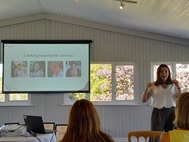
On 22 September 2026, the Autism and Social Communication Team hosted an awards ceremony hosted at the Hickstead Showground. Andrew Parker, Head of SEND & Inclusion (A) handed out the awards. Attendees at the event were also treated to a presentation from Dr Jess Morgan on ‘Navigating puberty and neurodivergence’. Jess shared her knowledge and insights from her experience as both a former paediatrician and a former primary teacher.
Building on the success of the first year of this revised AAA format, there are currently 15 settings working through the AAA programme.
|


Two new leaflets have been published to provide guidance for schools and parents to support the delivery of the school aged vaccination programmes to children with special educational needs and disabilities (SEND).
|

As an independent organisation run by and for parent carers, we understand how important it is that parent carers’ experiences are heard and valued.
We share information, signpost families to helpful services and, importantly, bring parent carers’ experiences and priorities into local decision-making, helping to shape SEND services across West Sussex.
How can you get involved?
-
Become a professional member – Membership is free, keep updated with our work and events straight to your inbox.
-
Come along to our Together for change panel – Whether you have some work to share for discussion or want to attend to provide your professional feedback.
-
Use our website – find SEND information, useful resources, local updates, events and opportunities for families.
-
Follow us on social media – keep up to date with our latest news, events, and opportunities for parent carers to have their say.
-
Share our information with your families – so they can get involved, find peer to peer support, join and event and have their voices heard!
-
Just visit wspcf.org.uk
|
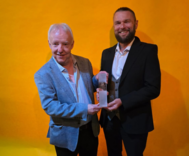
The Chichester College Group and the SENAT Colleges Team were shortlisted for a national SEND award in the summer. This was in recognition of their innovative and collaborative approach of placing Special Needs Officers within colleges to manage annual reviews and work proactively with young people and parent carers.
We are delighted to report that Chichester College Group has won the Best Use of External Special Needs Professionals Award at the National SEND Awards.
After being shortlisted in 2021 and 2023, this fantastic achievement recognises the collaborative approach to inclusion across the Group, with colleagues and partners working together to ensure learners are at the heart of every opportunity.
The award was collected by Simon Brown, Director of SEND and Additional Learning Support at Chichester College Group, alongside Paul Morrison, SEND Post-16 Team Manager, Colleges Team at West Sussex County Council, reflecting the strength of partnership working in supporting learners to succeed.
|


This October, we are recognising Selective Mutism Awareness Month, an opportunity to deepen understanding of selective mutism, a communication anxiety that affects many children and young people in our schools.
By raising awareness and promoting inclusive practice, we can help ensure that everyone with selective mutism feels safe, supported, and able to participate in ways that work for them.
While the medical term remains selective mutism, some individuals and families prefer the term situational mutism. This reflects the understanding people are not consciously "selecting" when to speak. Instead, certain situations or environments may trigger heightened anxiety preventing them from speaking.
According to the Selective Mutism Information & Research Association (SMiRA):
"Selective mutism (SM) is an anxiety disorder which prevents those affected from speaking and communicating in certain situations, such as at school or in public."
Understanding selective mutism and recognising the needs of children and young people affected by it is essential in helping them feel safe, supported and able to thrive.
As with many areas of child development and wellbeing, a proactive approach that includes early identification, intervention, and support can make a significant difference to outcomes for children and young people.
Key facts about selective mutism
Prevalence
The NHS estimates that selective mutism affects approximately 1 in 140 young children in the UK, meaning that at least one child in most primary schools is likely to be affected.
Studies suggest this rate decreases to around 1 in 550 among older children and young people, highlighting the positive impact that early identification, intervention and support can have. Early intervention can help children develop strategies to manage anxiety more effectively and build confidence across a wider range of situations.
Creating a sense of safety
Perhaps the most important principle when supporting a child with selective mutism, whether diagnosed or undiagnosed, is helping them to feel safe.
Every interaction can either strengthen or diminish a child's sense of safety. Building positive relationships, reducing pressure to speak, and creating understanding and supportive environments are all key factors in helping children with selective mutism feel secure and confident.
It is not "just shyness"
A common misconception is that selective mutism is simply shyness, reluctance to speak, or a refusal to communicate. In reality, selective mutism is a communication-based anxiety disorder that affects communication in certain situations.
Children and young people with Selective mutism may experience a "freeze" response in particular situations, making it extremely difficult or impossible for them to communicate verbally, despite being able to speak comfortably in other environments.
Understanding this distinction is important, as misconceptions can result in missed opportunities for early identification, support, and intervention.
Communication beyond words
People with selective mutism can often communicate effectively without using spoken language.
There are many valuable ways to gather children and young people’s views and perspectives, which don’t involve the need to speak, including:
- Talking mats
- Drawing
- Writing
- Observations
- Photographs
- Visual prompts
These approaches help ensure everyone has a way to communicate their thoughts, feelings and experiences. There is more useful information on Tools for Schools.
Safeguarding considerations
Safeguarding arrangements for children and young people with selective mutism require careful planning and consideration.
Schools should consider how a pupil would communicate if they felt unwell, needed help, or wished to share a concern or safeguarding disclosure. Identifying alternative methods of communication and ensuring staff understand and support these methods t is essential to keeping children safe and ensuring their ‘voices’ are heard.
Current work the local authority is undertaking
The local authority is working collaboratively with health colleagues and a group of parents to improve the experiences of, and support available for, children and young people with selective mutism. This partnership is focused on strengthening information, guidance, and resources for schools and families, enhancing workforce knowledge and understanding across SEND and Inclusion services, and reviewing the support available to children, young people, and their parents. Through this work, we aim to promote greater awareness, improve access to support, and ensure that children and young people with selective/situational mutism feel understood, included, and able to thrive.
Local Authority websites (Local Offer, Tools for Schools and Thriving in Education) are currently being updated to include further information on selective mutism which includes resources and information about training.
Further information and training
Final thoughts
Supporting children with selective mutism starts with understanding. By increasing awareness, challenging misconceptions and creating safe, supportive environments, we can ensure that every child has the opportunity to be heard, whether through words or other forms of communication.
|

 |
|
We have worked to bring together SEND-related training opportunities from across the directorate, making it easier for staff to identify relevant learning and development opportunities to enhance their knowledge, confidence and practice in all areas of SEND. While the training is primarily aimed at practitioners, some learning opportunities are available to all staff and parent carers. |
Through the RISE contract, funded by the Department for Education, the Council for Disabled Children (CDC) conducted a SEND workforce survey, designed to understand workforce learning needs and identify key content for new training. CDC are organising a programme of online national training sessions, from September 2026 to March 2027, based on feedback from this survey and topics will include:
- Navigating Health and SEND
- Understanding the SEND reforms: what are they and the impact on you
- Experts at Hand
- Coproducing in times of change
- SEND in the Early Years
- Understanding the social care offer for inclusion
- Inclusion Bases
Each training session is intended for a different audience. These training sessions will take place online on MS Teams, at a range of times.
For ease, you can find all the trainings and their registration links via the CDC Events and Training Calendar.
If you have any questions about the RISE training programme in general, or would like to get in touch with a member of the RISE Team, please contact RISE@ncb.org.uk
|

The Local Offer website is our gateway to SEND information for families and young people (0-25). Whether you have a diagnosis or not, visit the Local Offer website for:
- A directory of services, community groups and activities
- The SEND support you can expect from childcare and education settings
- Information about NHS SEND services, including assessments and support while you wait
- Signposting to financial support, including grants and benefits
- Help with navigating Education, Health and Care Assessments, Plans and Reviews
- Support for preparing for adulthood, employment, and transitioning to adult social care
Tools for School is where you will find resources and information to support the inclusion of all West Sussex children and young people in early years, schools, post 16 and other education settings.
-
SEND Toolkit, for SEND resources, strategies and information, classroom guide to ‘Ordinarily Available Inclusive Practice’
-
Child's Journey, for Transition, child voice, person centred planning, parent views and home school partnership, preparation for adulthood
-
Inclusion, for Examples of best practice, the Inclusion framework and support for creating inclusive education
-
Advice and Support, for advice and support around meeting the needs of children and young people in school or education settings
The Family Information Service (FIS) is provided by West Sussex County Council. We offer free, impartial, up-to-date information to all families on childcare, as well as activities and services for 0-25 year olds.
As a council we are working together with our partners across education, health and social care, and importantly our families, to secure the best possible outcomes for all our children and young people. Here you will find more information about how we plan to improve our SEND services.
West Sussex SENDIAS, provides impartial information, advice and support to children and young people who have SEND (special educational needs and/ or disabilities) for those aged 0-25 and their parent carers.
Thriving in Education is where you will find support and information for children and young people's mental health and emotional wellbeing.
 Some of the services listed in this newsletter or on the Local Offer site are provided by private service providers and not by West Sussex County Council. These do not have a recommendation or endorsement from the local authority. If you decide to use a service / provision, you should be aware that you are responsible for doing your own checks to ensure they are suitable and fit for purpose. West Sussex County Council will not be liable for any damages or losses suffered by anyone who relies on the information in this newsletter.
|