|
Welcome to the latest edition of the Early Help Newsletter. In this edition you can find an update about the All IN Short Breaks programme for children and young people with SEND, a warning about baby sleep pillows being unsafe, and information on training and development opportunities to support your practice.
If you have information on your service area you would like to share in the next early help newsletter, please email Kate.Bentham@shropshire.gov.uk or if you know of a colleague who would also like to receive this newsletter they can also email Kate to be added to the distribution list.
‘By treating our children and young people with respect, love and trust and with the right amount of encouragement we can inspire them to dream big, build relationships and connections that matter and together with kindness and a sense of belonging we can do great things.’
Shropshire Council’s Children and Young People’s vision statement
Whether you think a parent or family needs some support, or you are worried a child might be at risk of abuse or neglect, there is only one number you need – 0345 678 9021. From this number you will receive the support you need to get the right help at the right time to support families and safeguard children.
The Parenting Team will be delivering free SLEEP TIGHT groups from February 2026
These 5 week workshops cover:
- Recognising the role of sleep hygiene to improve sleep
- Identifying causes of sleep issues and appropriate practical strategies to try
- Completing sleep diaries and identifying potential sleep issues
For the dates and venues please see the Family Information Service Directory - Information to help families in Shropshire
|
The Parenting Help and Support Line are here for all parents, including those parent carers of children and young people with SEND, with a friendly listening ear and practical advice on everything from behaviours that challenge to sleep issues. No judgment, just support.
Call 01743 250950 Monday - Thursday, 9.30am - 4.30pm or Friday, 9.30am - 3.30pm or email: parenting.team@shropshire.gov.uk
|
It’s fair to say that all parents from time to time need some help and support with issues that impact on family life. There is help and support available in Shropshire through our Early Help coffee and chat drop ins – some of which are also stay and play sessions.
You can get free Information, advice and support on all aspects of family life, at our Family Drop-Ins. You can chat, have a cuppa and see how we can help you with:
- Family life
- Parenting support
- Domestic abuse support
- Money worries
- Housing support
- Special Educational Needs and Disabilities (SEND)
- and much more
To find your local drop in please visit the Shropshire Family Information Service Directory.
|

The spring term Meet and Chat SEND sessions start this month for parent carers of a child with Special Educational Needs and Disabilities (SEND)
Parent Carers can join us for an informal drop-in session where they can ask questions, get advice, and explore the support available to them within Shropshire. Speak to a range of professionals who can help with:
- Education, health, and Care Plans (EHCPs)
- School support and advocacy
- Health and Wellbeing for children with SEND
- Social care and family support
- Mental health and emotional wellbeing
- Advice for navigating SEND challenges
Each session will have different professionals available, but parent carers are encouraged to come along, have a chat, and find the help they need!
Visit the Family Information Service (FIS) directory for information on dates and venues.
|
Information on the open access clinics run throughout Shropshire by Health Visitors has been updated. You can find out where they are and when they run by clicking on the Shropshire Family Information Service Directory
They offer parents the chance to get their baby weighed but also to access information, advice and support on a range of topics, including:
- Infant feeding and breastfeeding advice
- Child development
- Emotional health and wellbeing
- Parenting and local support groups
- Behaviour
- Sleep
Please promote these great clinics to parents who may benefit from attending. Parents who would like support but are unable to get to a session, can also get help by calling 0333 358 3654 or texting the team on 07520 635212.
|
Worried about your relationship or feel you’re arguing too much? Not all arguing between parents is harmful but when it’s intense or happens a lot of the time, there can be a negative impact on the children.
If your relationship is going through a difficult phase, you can find ways to argue ‘better’, resolve disputes and reduce conflict at home with our range of free courses, resources and apps. Have a look at the Getting on better pages of the Early Help website.
|
Kids Shropshire Universal Autism Support Service provides free, early intervention and person-centred support for families with autistic children and young people aged 0–19
No diagnosis is needed to access their services. They support families with neurodiverse children, including those with ADHD and PDA.
They hold regular training sessions, coffee mornings and family events.
They aim to:
- Improve understanding of autism
- Share practical support strategies
- Enhance emotional wellbeing and quality of life
To access the service complete a self-referral form which can be found on their web page, it is a quick and easy form: Shropshire Universal Autism Support Service - Kids you will also find information of their up and coming training and events. Once parent carers have completed a referral form they will be sent a link to book a telephone appointment.
You can also be part of their community by following them on Facebook: Kids Shropshire Facebook Page
|
|
Shropshire Council is pleased to announce that Shrewsbury Town Foundation will manage the delivery of the All In Short Breaks Programme from April 2026.
All In offers clubs and activities to Shropshire children and young people with special educational needs and disabilities (SEND) who are unable to access universal services.
You can find out more about what Shrewsbury Town Foundation plan to offer here.
Parent carers of any children or young people who are existing All In members you do not need to do anything, and they should have received an email from on 22 December 2025 with full details of the change.
If you know of any children or young people who would like to join the programme they can apply here.
|
|
 |

A young carer is a young person aged from 5 to 17 years of age who helps to look after (or ‘care’ for) a family member who has a physical disability, mental illness, or alcohol/drug addiction. There are around 650 known young carers in Shropshire, but there are probably lots more children and young people who are caring, but just see this as being part of a family.
Helping to look after or ‘care’ for someone can be rewarding, but tiring too. It can affect schoolwork and seeing friends, and knowing who you can speak to is really important.
Young carers may:
- Feel lonely or not be able to join clubs or after school play dates
- Feel tired from having too much to do
- Worry about time to do homework
- Feel worried about fitting everything into the day – caring, school, homework
- Feel they don’t fit in – they feel different to other young people
- Being bullied at school
Young carers tell us they want to be treated like any other child or young person.
The Shropshire Young Carers service holds monthly young carer groups across the county and hosts various activities during school holidays. We aim for the young carers to have fun, do crafts and games, but also relax with other young people who will relate to their own situation. Our focus is respite and support for young carers.
To refer a young person to the Young Carers service, please gain agreement from the family and call EHAST on 0345 678 9021
|

This year, Children's Mental Health Week 2026 will take place from 9-15 February 2026.
Place2Be's official Children's Mental Health Week 2026 resources are available for you to download! Whether you're a primary school, secondary school, family, community group or workplace, they’ve got activities and resources for you.
The theme for Children's Mental Health Week 2026 is 'This is My Place', and the aim is to support the systems around children and young people to help them feel they belong. Find out more about this national campaign here Place2Be's Children's Mental Health Week - Official site
Our Family Information Service has recently updated the information it holds on services and organisations that support children’s mental health. You can access this information on their directory Children's Mental Health list. If you know of others, please email ShropshireFIS@shropshire.gov.uk
|

The Healthy Smile Team and SC Public Health are hosting a free oral health training session on 28th January from 10:00 to 11:10. All partners can attend by booking via Eventbrite
The session covers child and family oral health, with practical evidence-based advice and resources for partners to use and share. Additional resource links will be provided.
|

Togetherness have updated their online learning pathways postcards.
The international community language postcards have now been updated in the new branding and are available for your uses.
The postcard translations have been informed by the top 10 main languages spoken in England and Wales
Please note, these are generic postcards and not the tailored ones with our code. However you can pass our code (DARWIN18) on alongside these postcards.
Having promotional material in the language which is predominantly spoken by a parent will help inclusivity as well as engagement.
|

Language is more than words — it reflects our values and shapes identity. For neurodivergent children and young people, the language used around them can either help them feel included and respected or cause them to feel excluded and stigmatised.
Shropshire, Telford and Wrekin's Neurodiversity Workstream advocates the use of neuro-affirmative language — language that's respectful, inclusive and supports an individual’s right to be themselves without pressure to ‘conform’ to neurotypical expectations. The Neuro-Affirming Language Guide has been produced to help create environments where neurodivergent children and young people feel seen, heard, and valued.
The Neurodiversity Workstream is encouraging professionals across education, health and social care to adopt the principles and use the guide in their work with children and young people.
This guide is for everyone. When we change our language, we change lives.
-
Parent carers — share this guide with those supporting your child
-
People working in education, health, or social care — share it with your team, start conversations about how language shapes practice and commit to ongoing reflection and learning
Led by educational psychology services across Shropshire and Telford & Wrekin, this resource was co-produced with colleagues from 0-25 and adult services through a multi-disciplinary approach involving: neurodiversity practitioners, social care and health professionals, speech and language specialists, and individuals with lived experience.
|

If you are working with a family who use a baby sleep pillow, please tell them to stop as they are unsafe.
The Office for Product Safety and Standards has issued a Safety Alert warning parents and carers to stop using these products for babies under one.
These soft pillows and cushions are often marketed for baby sleep or for a baby to be placed unsupervised. But doing so can cause suffocation or overheating, which can lead to serious injury in babies, including death.
Despite what some online product listings suggest, pillows are not recommended for babies until they are at least 12 months old.
The safest place for your baby to sleep is on a clear, firm, flat surface.
Learn more: Product Safety Alert: Baby Sleep Pillows (PSA8) - GOV.UK
|

NSPCC Learning has updated its resources on navigating puberty and sexual development for children and young people who have a learning disability.
The resources include a guide for parents on navigating puberty, and a series of symbolised booklets exploring bodies and behaviours.
New content includes a guide for parents and carers on humping and thrusting behaviour to help them understand and respond to this behaviour in a supportive, non-shaming and proactive way. Navigating puberty and sexual development
|
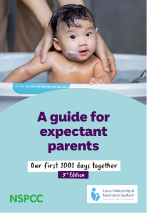
Having a baby is an exciting journey, but it can become overwhelming. A flood of advice from well-meaning voices can leave expectant parents confused. This FREE guide from the NSPCC offers clear advice to help expectant parents feel confident and supported
- Learn about pregnancy, birth, and the baby's early years.
- Hints and tips that can be used alongside NHS Choices.
- Find comfort and confidence in their new role.
This parenting guide is full of helpful tips to assist from the moment baby arrives until they turn two.
Expectant parents can speak to their Midwife or Health Visitor to get their copy or it can be downloaded here NSPCC Parenting Guide — LMNS
|

We have been made aware of a situation involving a potentially contaminated batch of cocaine currently in circulation in the Shrewsbury area, which is causing harm. Investigations are ongoing, but current information suggests ‘Pink cocaine’ is suspected (also known as ‘tusi’ or ‘tucci’) as the drug was pink, but ‘2CB’ was also mentioned.
- ‘Pink cocaine’ is not cocaine most of the time. ‘It’s usually a mix of different drugs, and what’s in it can change batch to batch, which makes it riskier than a single known substance. It has commonly been found to contain ketamine plus other stimulants/empathogens.’
- ‘2CB’ belongs to the "2C" family of phenethylamines and is known by street names such as ‘Nexus’, ‘Bromo’, ‘Toonies’, and ‘Venus’.
If you have any intelligence that could be linked to this incident, please share it with Shropshire’s DrugAlerts inbox at: drugalerts@shropshire.gov.uk
Here is some harm reduction guidance provided by WithYou Harm Reduction Advice Cocaine.pdf
|
Registration is now open for PACC's 2026 Healthy Lives Holiday Programme.
Healthy Lives offers a variety of activities to support physical and mental wellbeing, providing young people with SEND with opportunities to catch up with friends and be active.
You can register here: Healthy Lives Programme Registration
More information about the Healthy Lives programme can be found here: PACC Healthy Lives Programme
Please share this information with any families who you think would benefit from this offer.
|
People in Shropshire have died, and it’s important that we learn from these cases and understand what we can all do to prevent further serious harm and deaths.
The SSCP are offering four different webinars ranging in length from 60 - 90 minutes which will be repeated between January and April 2026, which are intended to increase your knowledge, understanding and how you can make a difference in your everyday practice.
Click on the link to register and add the date to your calendar. We look forward to seeing you there.
Understanding Intrafamilial Domestic Abuse
Domestic Abuse Related Deaths: Homicide & Suicide
Domestic Abuse-Why do men not come forward?
The Voice of the Person
The focus will be hearing the voice of the person. The aim is to identify and share good practice when the adult or child's voice has been heard, and what we can do differently when we haven’t heard their voices.
|
The Zero Suicide Alliance offer short, free suicide awareness online training courses that can be taken by anyone who wants to learn basic suicide awareness and prevention skills and wants to know what to do if they’re ever in a situation where someone they know or see may be struggling with thoughts of suicide.
The training will take you through:
- suicide risk factors
- suicide warning signs
- coached scenarios sharing approaches for how you can talk to someone you’re worried about
- videos from people sharing real experiences
- where to find information about available support
At the end of the course, you’ll get a training certificate to download.
The hope is that through the training, more people will feel equipped and confident to talk to someone who may be struggling.
This is a short online course that can be taken at your own pace. We recommend allowing yourself at least 40 minutes.
Click here to find out more ZSA suicide awareness training courses
|
Kinship carers (family or friends who step up to raise a child when their parents aren’t able to) tell us their journey can be overwhelming and confusing. To help navigate this complex system, Kinship, the leading kinship care charity, run workshops and events both online and in-person.
Each workshop covers a specific topic, is free to attend, and carers can book as many as they like. Their workshops are supportive spaces where carers can connect with other kinship carers.
Workshops include…
- Formalising your kinship care arrangement
- Financial support for kinship families
- Dealing with emotional challenges as a kinship carer
- Working with your local authority children’s services
- Raising children with diverse ethnic heritage and cultural identity
- Using stories to discuss emotions and identity
- Preparing for sensitive conversations with kinship children
- Supporting your kinship child at school
- Understanding how to keep children safe online
- Overview of the EHCP and SEND process
- Managing contact for kinship families - practical tools and tips
- Managing contact for kinship families - the emotional journey
- Understanding the effects of drug and alcohol misuse
- Understanding fetal alcohol spectrum disorder (FASD)
Explore their events below running from January to March, Free training and events for kinship carers | Kinship
|
Training opportunities for anyone working with or supporting children, young people or their families in Shropshire local authority area.
Tuesday 3rd February – Substance Misuse and Young People
09.30 – 12.30 via Teams
An interactive training session suited to those directly working with Shropshire’s children and young people.
This session will link and discuss all things regarding substances, alcohol, addiction, exploitation, how artificial intelligence (AI) will influence future exploitation. This session will look at new tools, trends, theories and ways of working with young people who misuse substances. Also includes a brief overview around Child Exploitation (CE) in Shropshire. This session is aimed at all-levels of knowledge and experience. The aim is to upskills professionals and carers to deliver education and how to have conversations with young people on substance awareness, harm reduction, signs and indicators of substances, where to signpost, services and resources available.
Group 1 and Group 3 cost £32 per delegate
Group 2 cost £50 per delegate
Shropshire Council staff have pre-funded places (so no cost)
Click here for further information and to book a place on this training.
Click here for information on our Group pricing structures
Thursday 5th February – Helping Children Understand Parental Conflict
13.30 – 15.30 via Teams
This training introduces a number of activities and tools that can be used to help young people make sense of the complex adult relationships around them. The aim is to help children talk more openly, manage their feelings, and realise they’re not alone. A skills-based approach using easy to access games and resources for primary and secondary aged children.
Pre-funded (so no cost) for anyone working with children and young people in Shropshire local authority area.
Click here for further information and to book a place on this training.
Wednesday 11th February – Coercive Control and Trauma Informed Practice
09.30 – 13.30 The Lantern
The aim of this training session is to increase your understanding around what coercive control is, the tactics that may be used by an abuser and how to adopt a trauma informed approach.
This module will look at:
- What is domestic abuse - recap
- What is Coercive Control
- What the legislation says
- The impacts on a person
- What is trauma and how it can impact a person
- How we can work in a trauma aware and informed way
- Support available to victims and perpetrators.
Group 1 and Group 3 cost £50 per delegate
Group 2 cost £73.50 per delegate
Shropshire Council staff have pre-funded places (so no cost)
Click here for further information and to book a place on this training.
Click here for information on our Group pricing structures
Any questions regarding any of the courses above please email joint.training@shropshire.gov.uk
Join the Joint Training mailing list
Sign up to the Joint Training mailing list to receive our regular newsletter, updates on upcoming courses and other important information. To do this, simply click on this link:- SIGN UP to Joint Training updates
|
|