|
This week's headlines and highlights |
|
Welcome to the UKRI bulletin, featuring the latest news, funding announcements and stories about research and innovation in action. |
|
THIS WEEK'S TOP STORY: £100 million boost in AI research will drive innovation |
|

£100 million boost in AI research will drive innovation.
EPSRC will fund nine new research hubs located across the UK that will deliver revolutionary AI technologies.
The hubs will provide focused investment to enable AI to evolve and tackle complex problems across applications from healthcare treatments to power-efficient electronics.
It comes as £19 million is invested to accelerate trustworthy and responsible AI.
The Secretary of State for Science, Innovation and Technology, Michelle Donelan, announced the funding for 21 projects to accelerate the adoption of trustworthy and responsible AI. The projects are funded through the UKRI Technology Missions Fund to secure the UK’s global leadership in emerging and future AI technologies.
|
|
 |
|
Virus family history could help to predict the next pandemic. A new study has identified 70 virus lineages – groups of related viruses – that pose the biggest risk. The findings support ongoing efforts to prepare for so-called Disease X that is expected to cause the next global pandemic. A BBSRC grant to Roslin Institute supported the work. |
|
|
 |
|
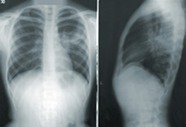
Scientists have found the strongest evidence yet that our brains can compensate for age-related deterioration by recruiting other areas to help with brain function and maintain cognitive performance. University of Cambridge and University of Sussex researchers found this was the case specifically in older people’s brains. MRC and BBSRC grants funded the study. |
|
|
 |
|
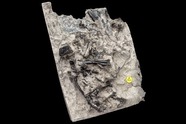
A new species of Jurassic pterosaur has been discovered on the Isle of Skye. Scientists from the University of Bristol, Natural History Museum, and Universities of Leicester and Liverpool have announced the find. The results show that combined with other recent fossil finds, including from NERC-funded Natalia Jagielska, the early history of pterosaurs is more complex than first thought. Image: Trustees of the Natural History Museum London. |
|
|
ON THE BLOG : People, culture and environment at the heart of research |
|
The latest instalment of our Voices blog is out. We hear from Rebecca Fairbairn, Director of Research Excellence Framework (REF), Research England.
Rebecca talks about how the definitions of research excellence are changing across the world, how we are now looking in a much more open way at what excellence looks like, and which outputs from research matter.
Research integrity, reproducibility of results and the impacts of research on society and the economy are all key considerations.
Read more and view the Voices series.
Also on the blog this week, Dr Francesca Foliano, an ESRC-funded ADR UK Research Fellow, talks about how internal migration affects young adults. Read more.
|
|
More UKRI research and innovation in action |
|
 |
|
Winners of the UKRI Quantum Testbed Competition will develop and deliver quantum computing testbeds at NQCC’s facilities in south Oxfordshire by March 2025. The seven successful applicants will receive funding through the UKRI Technology Missions Fund and the UK’s National Quantum Computing Centre (NQCC). It is part of a funding competition delivered by Innovate UK. |
|
|
 |
|
Faster and more accessible support for individuals with mental health concerns is the aim of a new network for immersive digital mental health therapeutics. Innovate UK’s new £20 million Mindset programme aims to accelerate treatment through immersive digital therapies. Mindset is a partnership between Innovate UK and the Health Innovation Network (HIN) South London. |
|
|
 |
|
Vital new microchip technology needed in almost every electrical device in the world from mobile phones to medical equipment can be developed thanks to a £26.8 million investment in semiconductor technology. Two new Knowledge Centres will deliver new semiconductor technologies to market, boosting UK industry and enhancing our workforce capability. Funding from EPSRC and Innovate UK.
|
|
|
AND FINALLY: Mystery of moths’ warning sound production explained |
|
|
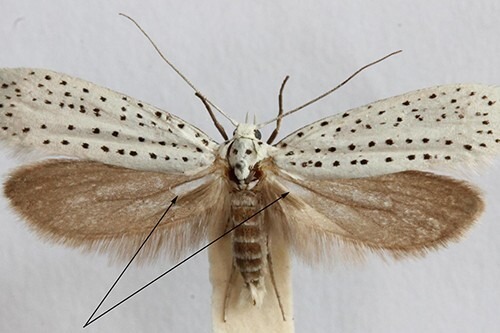
The mystery of moths’ warning sound production has been explained.
The workings of the ultrasonic warning sounds produced by the wings of a species of moth have been revealed.
EPSRC-funded researchers at The University of Bristol discovered that moths of the genus Yponomeuta (so-called ermine moths) have evolved an acoustic defence mechanism against their echolocating predators—bats.
|
|
|
|