|
This week's headlines and highlights |
|
Welcome to the UKRI bulletin, featuring the latest news, funding announcements and stories about research and innovation in action. |
|
THIS WEEK'S TOP STORY: Reality head-up display that could improve road safety |
|
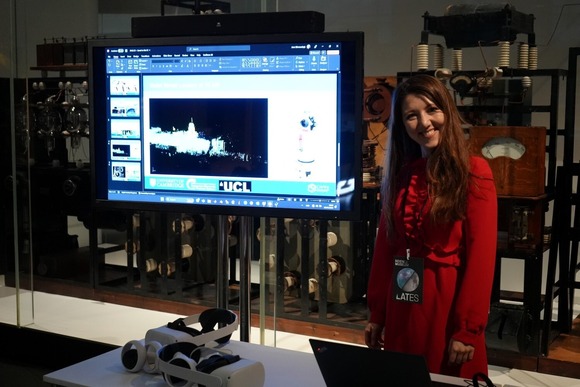 New research has led to an augmented reality head-up display that could improve road safety.
Doctoral student Jana Skirnewskaja, supported by EPSRC, is developing new in-car technology that could help drivers see hazards.
The new system can effectively ‘see through’ objects to project holographic representations of road obstacles that are hidden from the driver’s field of view, aligned with the real object in size and distance. For example, a road sign blocked from view by a large truck would appear as a 3D hologram so that the driver knows exactly where the sign is and what information it displays.
|
|
 |
|
Childless by choice becomes the new norm for UK adults according to a new survey by the University of Southampton and National Centre for Social Research. The ESRC-funded survey found a rise in young adults intending not to have children and also explored issues facing young parents like the cost of childcare. |
|
|
 |
|
Scientists are on a mission to unlock the Southern Ocean’s carbon secrets. The team embarked on a 30-day expedition on board the NERC-funded British Antarctic Survey RRS Sir David Attenborough to investigate how carbon dioxide moves and transforms in the Southern Ocean. Researchers are hoping to learn more about the biological and chemical processes that draw carbon deep into the Southern Ocean. |
 |
|
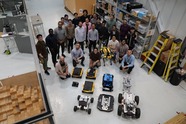
Autonomous robots could be employed in nuclear decommissioning. EPSRC-funded engineers have suggested that nuclear power stations could be decommissioned in the future with the help of autonomous robots known as ‘SMuRFs’. The wheeled, four-legged and airborne robots, remotely controlled by human supervisors, can collaborate and complete tasks that are difficult or harmful for humans to complete alone.
IMAGE CREDIT: University of Glasgow
|
|
|
 |
|
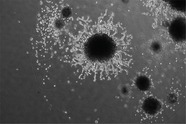
Lab grown ‘mini placentas’ could help scientists better understand pre-eclampsia according to researchers at the University of Cambridge, Wellcome Sanger Institute and Friedrich Miescher Institute in Switzerland. The MRC-funded researchers have developed mini placentas to help understand, predict and prevent the condition. Pre-eclampsia affects one in 25 pregnancies in the UK, and carries the risk of serious complications.
IMAGE CREDIT: Friedrich Miescher Institute/University of Cambridge
|
|
|
ONE TO WATCH : The citizen scientists helping improve the health of the River Wye |
|
|
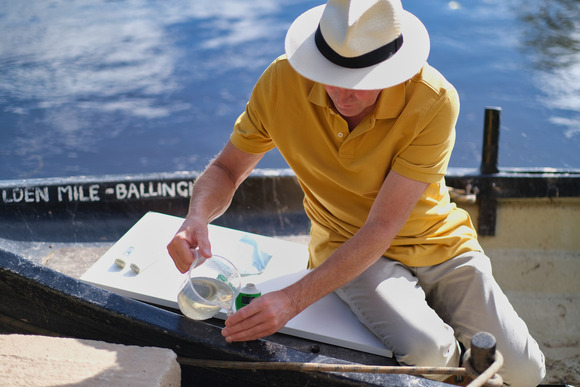
One to watch: The citizen scientists helping improve the health of the River Wye.
Members of the public are collecting data on water pollution in the River Wye and supplying it to agencies and regulators, thanks to the work of a team of NERC-funded researchers at Cardiff University, led by Dr Liz Bagshaw. Over 180 citizen scientist groups have since adopted the project’s methods, providing samples of water across 15,000 points in the UK. This data is freely available and used by regulators, helping to improve freshwater systems across the UK.
|
|
More UKRI research and innovation in action |
|
AND FINALLY: BAS scientists count the largest penguin colony in the world… from the air |
|
|
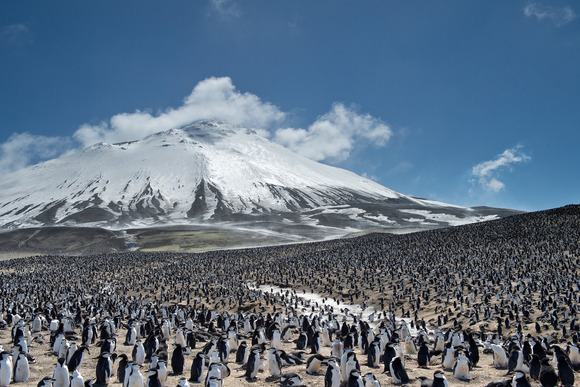
Researchers from the NERC-funded British Antarctic Survey (BAS) have carried out aerial surveys of the remote volcanic Zavodovski Island in the sub-Antarctic to count the largest penguin colony in the world.
Zavodovski Island – an active volcano with a sheer coastline exposed to rough seas – is home to over one million breeding chinstrap penguins. Scientists spent three weeks on the island, collecting data using ground counts and aerial surveys from drones. If accurate, colonies could be monitored in this way in the future, avoiding risky and expensive expeditions to the island.
|
|
|
|