|
This week's headlines and highlights |
|
Happy New Year. Welcome to the UKRI bulletin, featuring the latest news, funding announcements and stories about research and innovation in action. |
|
THIS WEEK'S TOP STORY: Watch this space - moon mission set to launch Monday |
|
|
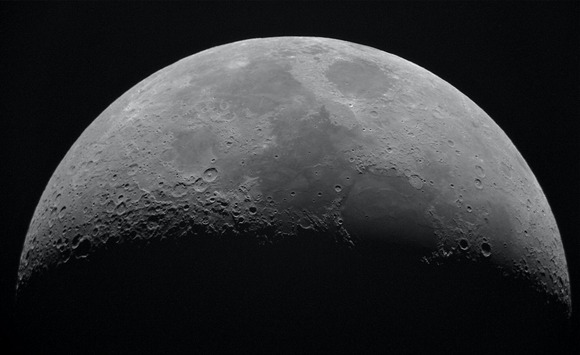
An attempt to become the first private company to land a probe on the moon is due to launch on Monday.
NASA's Peregrine Mission 1 will be carrying the UK-built Peregrine Ion Trap Mass Spectrometer (PITMS), an instrument developed by scientists from The Open University and STFC’s RAL Space.
If successful, the mission by US firm Astrobiotic, will study the behaviour of water on the moon.
For years, scientists believed the moon was bone dry and any water detected in the samples from Apollo missions were a contamination from Earth. In 2020, Nasa confirmed water molecules were present in sunlit areas of the moon.
The moon landing will be attempted in February.
|
|
ON THE BLOG: Crystal ball gazing 20 years ahead |
|
|
In our latest Voices blog Simone Boekelaar, Head of Horizon Scanning, Innovate UK, explains how business and society must reflect now on the emerging technologies that will drive future growth and profoundly affect the way we live.
"Business naturally thinks short term. It’s my job to crystal ball gaze and look ahead 20 years or more to new technologies and trends emerging and how we might prepare for them and take advantage of them", she says.
Read more and see the full series of blogs here.
|
|
More UKRI research and innovation in action |
|
 |
|
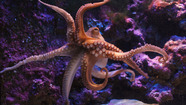
Octopus DNA has been used to discover that the West Antarctic Ice Sheet (WAIS) likely collapsed during the last interglacial period around 120,000 years ago – when the global temperatures were similar to today. The findings could support decision-making around adaptation and mitigation measures in coastal regions. |
 |
|
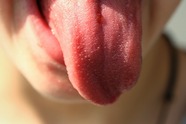
Artificial Intelligence (AI) and 3D images have shown that the surface of our tongues are unique to each of us. A study led by the University of Edinburgh can help us discover individual food preferences and support early diagnosis of oral cancers in the future, experts say. Includes funding from UKRI's CDT in Biomedical AI.
|
 |
|
BBSRC has a new Executive Chair. Professor Anne Ferguson-Smith is a highly respected developmental geneticist and epigeneticist. Professor Ferguson-Smith, awarded a CBE for services to medical research last year, was appointed by the Secretary of State for Science, Innovation and Technology, Michelle Donelan. |
|
|
AND FINALLY: In the media - BBC showcases amazing James Webb telescope images |
|
|
The BBC showcases a series of amazing images that have been produced by the James Webb telescope in the two years since its launch. Click to see them.
The once-in-a-generation spacecraft is allowing scientists to determine how the first galaxies were formed and to see our own solar system in never-before-seen detail.
UK scientists and engineers played a vital role in realising the mission, which included funding from STFC.
The UK led the European Consortium through STFC's UK Astronomy Technology Centre that, partnered with US institutes, designed, built and tested MIRI, one of the four main science instruments.
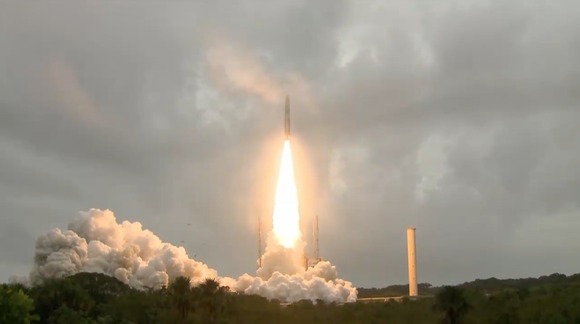
Image: Ariane 5 rocket launching with the Webb Telescope on board, credit: ESA.
|
|
|
|