|
This week's headlines and highlights |
|
Welcome to the UKRI bulletin, featuring the latest news, funding announcements and stories about research and innovation in action. This is our last newsletter until January. Seasons greetings to all of our readers. |
|
THIS WEEK'S TOP STORY: Rare but serious risk to train safety from solar storms |
|

Research co-lead, Physics PhD researcher Cameron Patterson, says “Space weather poses a serious, if relatively rare, risk to the rail signalling system”.
Solar storms can trigger powerful magnetic disturbances on Earth, creating Geomagnetically Induced Currents (GICs) which could interfere with electricity transmission and distribution grids.
Their impact is already being considered in aviation, electricity generation and transmission, and the space sector. The paper’s authors are urging the rail sector to consider the safety risks too.
|
|
THE ONE TO WATCH: How research can be 'everyone's business' |
|
|
A new resource aims to give more people the chance to become researchers.
The Research Methods Toolkit has been developed by a group of researchers including service users, survivors, academics, students, project co-ordinators and artists.
Co-director of the ESRC Centre for Society and Mental Health, Professor Hanna Kienzler, who led the development of the toolkit, said: "research should be everyone’s business. We hope this toolkit can provide resources to those people who have questions about the world we live in so they can find the answers. This way we can generate richer and more nuanced insights to inform how our societal structures, services and policies can change for the better."
|
|
More UKRI research and innovation in action |
|
 |
|
£10 million is being invested in cancer and chronic health conditions. Innovate UK and the Office for Life Sciences will invest in 17 projects as part of the advancing precision medicines competition. Precision medicine offers new ways of treating disease based on individual patient characteristics and can enable earlier and more accurate diagnosis of diseases, including cancer.
|
|
|
 |
|
Innovate UK invests over £25m in net zero projects. The Net Zero Living programme is launching a UK-wide package of funding and guidance to help regions and local communities tackle the barriers to climate action projects, speed up their progress to net zero, share expertise and unlock investment opportunities.
|
|
|
 |
|
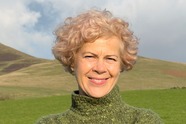
Professor Louise Heathwaite is the new Executive Chair of NERC. The Secretary of State for Science, Innovation and Technology, Michelle Donelan, made the appointment. UKRI Chief Executive, Professor Dame Ottoline Leyser, said: "Professor Heathwaite has an outstanding record in environmental sciences, university leadership and as a scientific advisor to government".
|
|
|
AND FINALLY: Being ‘in the zone’ leads to positive brain changes |
|
|
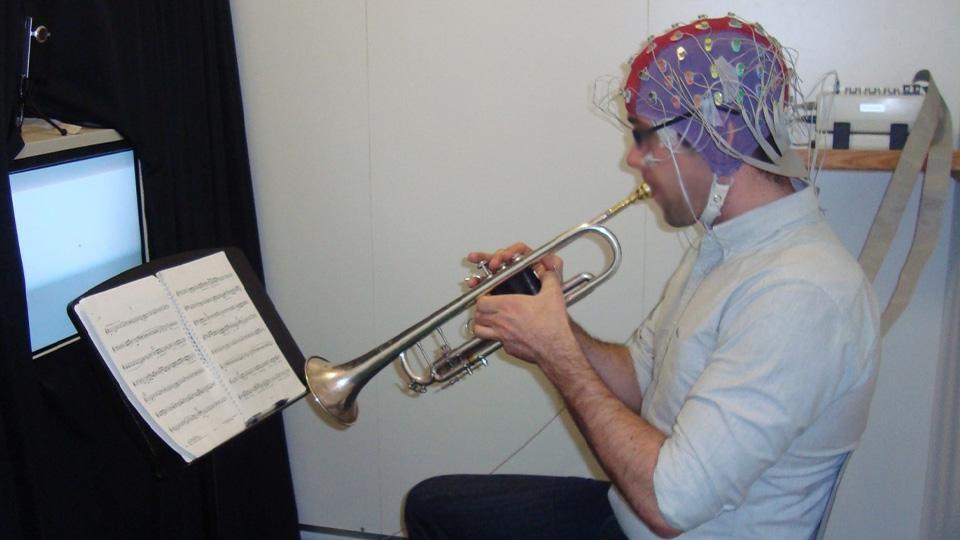
Being ‘in the zone’ or in a deeply immersive state leads to positive changes in the brain.
A Goldsmiths, University of London study analysed musicians’ brain responses after they performed.
If the musicians were immersed, feeling a mix of focus and enjoyment, their brain activity was heightened. In expert musicians this was more pronounced, showing their brains might be more finely tuned to reap the benefits of being in a state of flow.
The results may help us understand the impact of peak performance on wellbeing.
The first author was supported by an ESRC-funded doctoral fellowship.
|
|
|
|