|
This week's headlines and highlights |
|
Welcome to the UKRI bulletin, featuring the latest news, funding announcements and stories about research and innovation in action. |
|
THIS WEEK'S TOP STORY: Could cancer drugs be made in space? |
|
|
A pharmaceuticals factory in space could help prevent hours of treatment for cancer patients.
Current antibody cancer treatments involve intravenous infusions in hospital, which are both time consuming and invasive.
Start-up company BioOrbit aims to transform how the treatment is administered by crystallising antibody cancer therapy drugs in space.
This way they could be injected under the skin at home, just like with insulin.
Find out more. BioOrbit is based at the European Space Agency Business Incubation Centre, managed by STFC.
|
|
 |
|
The first wireless map of a worm’s nervous system could help us understand more about eating disorders. Researchers showed how every neuron in a C. elegans worm communicates wirelessly, giving insight into how emotions and behaviour may be controlled, as well as conditions like eating disorders, OCD and PTSD. The work was led by the MRC-funded LMB in Cambridge. |
|
|
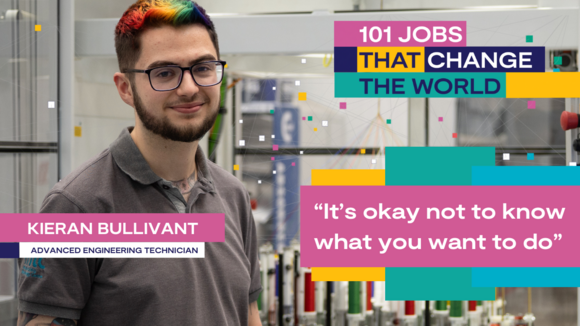
THE ONE TO WATCH: Laser cutting technician on why he loves his job |
|
More UKRI research and innovation in action |
|
 |
|
A digital detox may not improve wellbeing. Social media users who reduced their use for a week saw decreases in both positive and negative emotions. The study, supported by ESRC, showed restricting the use of social networking sites produced varied effects on mood but did not increase the desire to be on social media. |
|
|
 |
|
Research outlines how sex differences have evolved. MRC-funded research at the Francis Crick Institute shows that sex differences in animals vary dramatically across species, organs and developmental stages and evolve quickly at the gene level but slowly at the cell type level. |
|
|
 |
|
Four new vaccine hubs will address challenges of vaccine manufacturing and delivery in developing countries. The academic hubs led by four UK universities have received a share of £33 million of UK aid funding via the Department of Health and Social Care (DHSC), and a further £1.5 million from EPSRC. |
|
|
AND FINALLY: Female helpers increase sparrow egg size |
|
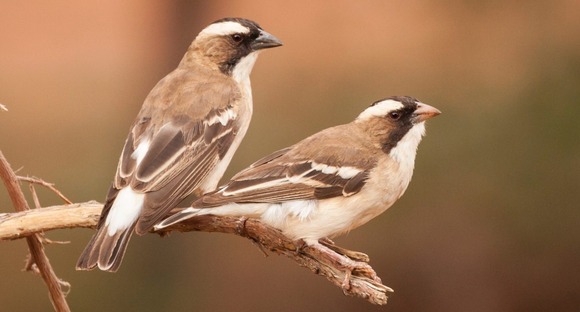
White-browed sparrow weavers live in family groups where only a dominant pair breeds and their grown-up offspring, particularly females, help to feed nestlings.
The BBSRC-funded study, by researchers at the University of Exeter, found that mothers increased the size of their eggs when they had more female helpers on hand but not when the number of male helpers increased.
Image credit: Andy Young.
|
|
|
|