|
This week's headlines and highlights |
|
Welcome to the UKRI bulletin, featuring the latest news, funding announcements and stories about research and innovation in action. |
|
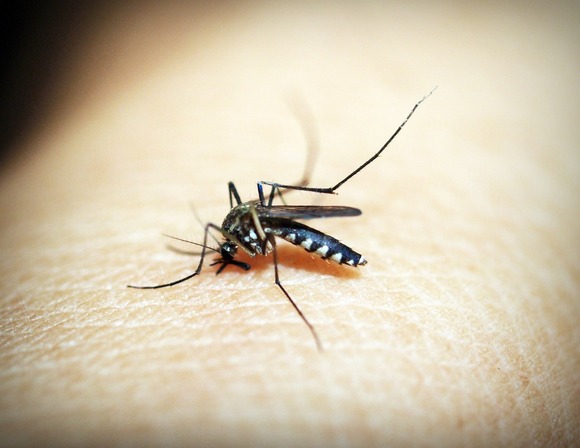
THIS WEEK's TOP STORY: Oxford malaria vaccine receives World Health Organisation approval |
|
In 2021 there were 247 million recorded cases of Malaria worldwide with more than 600,000 deaths, mostly in under-fives.
The new vaccine will save thousands of lives because it can be made cheaply and produced on a mass scale.
The vaccine was developed by the University of Oxford and the Serum Institute of India and comes after 30 years of vaccine research at the University of Oxford, including support from UKRI.
|
|
 |
|
The Secretary of State has announced £70 million in funding as part of an international commitment to help combat challenges such as cyber attacks and supply chain disruption. The funding for Future Telecoms, from UKRI’s Technology Missions Fund, aims to strengthen the country’s ability to stay connected at the most critical times.
|
 |
|
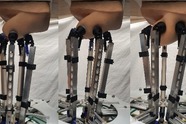
A 3D printed robot could help diagnose breast cancer early. During tests on a silicone breast and its digital twin, the ‘manipulator’ device designed at the university of Bristol was able to apply very specific forces over a range similar to those used by human examiners. EPSRC supported the study. Image: George Jenkinson. |
 |
|
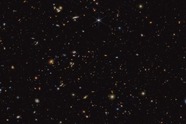
In the media: Jupiter sized planets that are free floating in space have been observed by the James Webb Space Telescope (JWST). As the BBC reports, the objects are moving in pairs and astronomers are struggling to explain them. STFC’s UKATC and RAL Space played a key role in the JWST. |
|
|
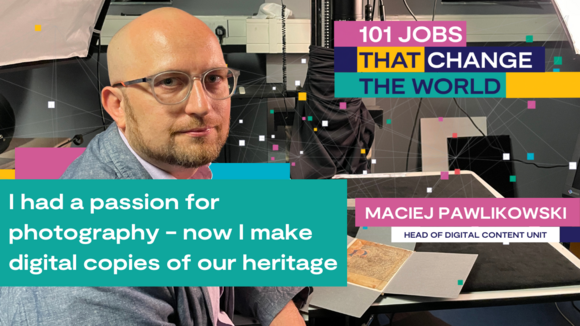
THE ONE TO WATCH: 101 Jobs that Change the World: Check out our latest episode |
|
Introducing Maciej Pawlikowski: he started taking photos from his mum’s rooftop growing up and now he leads a team of photographers and picture librarians at the University of Cambridge.
The team is digitising its extensive collection of medieval manuscripts and historical objects, adding them online so they can be accessed by the public for study and research purposes.
|
|
More UKRI research and innovation in action |
|
 |
|
“Anti-tangle” molecule could aid search for new dementia treatments. BBSRC-funded researchers from the University of Bath have identified a molecule that can prevent tangling of a brain protein that is linked to diseases such as Parkinson’s. The findings may provide insights into new ways of treating or diagnosing the early stages of dementia. |
|
|
 |
|
Scientists to measure CO2 storage in volcanic rock. Researchers from the University of Edinburgh have been awarded £1 million from NERC’s Pushing the Frontiers scheme to develop a carbon storage technique known as mineralisation, where the reactivity of basalt converts the carbon dioxide rapidly into new minerals. |
|
|
 |
|
The deep-blue sea is turning slightly greener. Research from the NERC-funded National Oceanography Centre has shown that 56% of the global sea surface has undergone a significant change in colour in the past 20 years. The change is attributed to communities of microscopic photosynthesising organisms known as phytoplankton. |
|
|
AND FINALLY: Finalists for prestigious Celebrating Impact Prize 2023 announced |
|
The Celebrating Impact Prize 2023 finalists have been announced.
The annual ESRC prize is in its 11th year and is an annual opportunity to recognise the success of ESRC-funded researchers in achieving and enabling outstanding economic or societal impact from their research.
All finalists will have a film made about their work and its impact and have attended media training. The winner receives £10,000 to spend on further knowledge exchange, public engagement or other communications activities.
|
|
|
|